

The Kansas Department of Wildlife and Parks (KDWP) pays landowners to enroll their property on a seasonal basis. Hunters simply need to check the current access dates before heading out.
Over 97% of Kansas is privately owned, which is why WIHA matters so much here. HuntWise overlays current WIHA and iWIHA boundaries on satellite imagery, so you can see property lines while hunting and confirm you're inside a legal access window before you park.
Kansas's version of walk-in access is unusually generous for hunters: unlike Texas's paid APH Permit, WIHA costs nothing beyond your regular license. The tradeoff is that enrolled tracts and access windows shift every season, since landowners re-enroll year to year.
Keep reading to find out exactly how to check current boundaries, what iWIHA adds to the mix, and what else you need before heading out.
What Is Walk-In Hunting Access?
At its core, walk-in hunting access means a state agency pays landowners to let public hunters onto private ground, cutting out the need to track down individual permission. Depending on the state, hunters get in through either a low-cost permit or, as with Kansas, no extra step beyond a standard license.
Programs go by different names depending on the state (WIHA in Kansas, IHAP in Iowa, PLOTS in North Dakota), but they all work on the same basic idea. The state acts as the middleman between landowner and hunter, and access can change from year to year as landowners enroll or drop out.
Kansas actually pioneered this model. Launched in 1995, WIHA is one of the oldest and most widely copied walk-in programs in the country, and it remains completely free to use beyond your standard Kansas hunting license.
How to Find Walk-In Hunting Access in Kansas
WIHA works differently from a single-permit system like the one in Texas. Instead of buying an annual pass, you check current enrollment and access dates every time you plan a hunt, since both can change season to season.
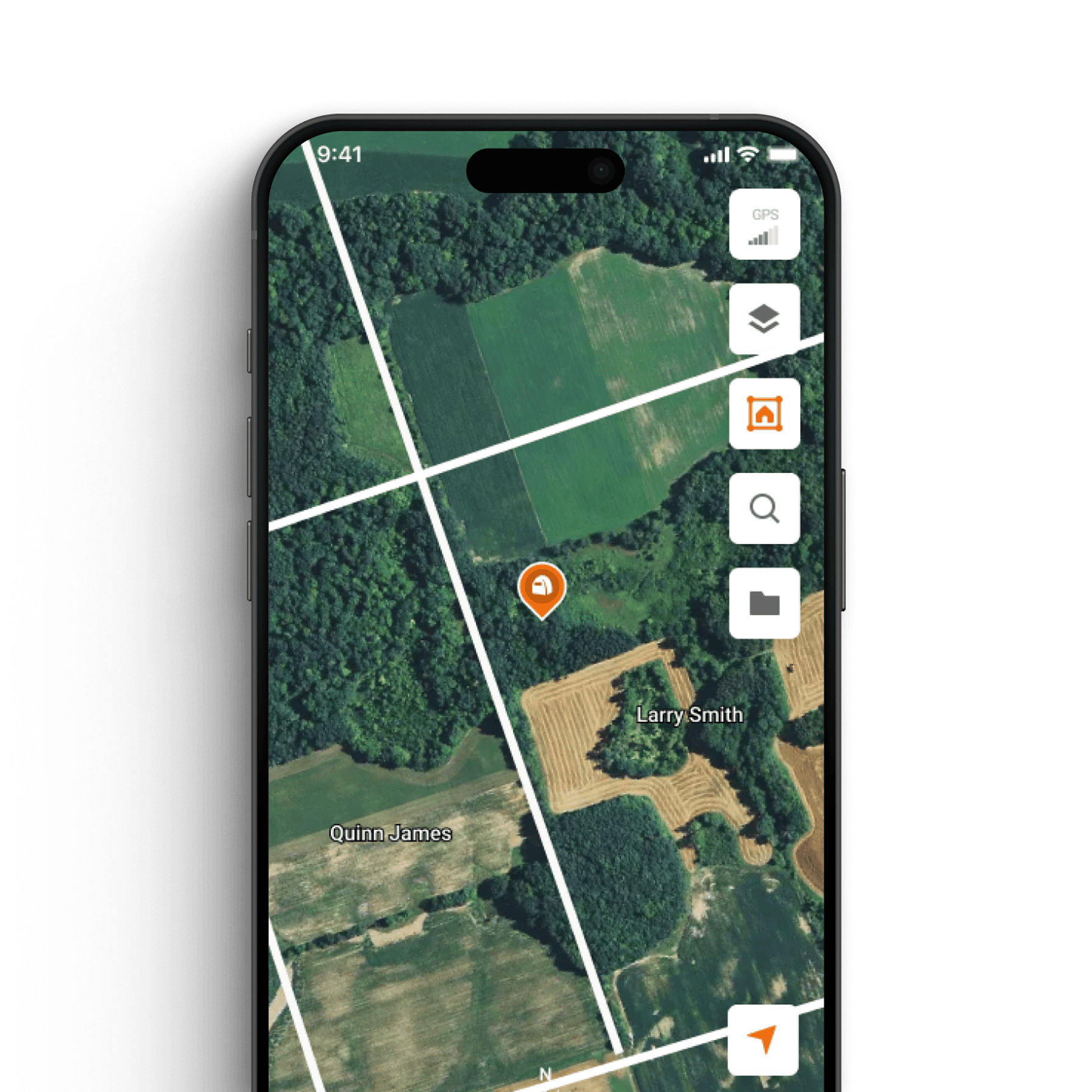
Here's how to use it:
- Open HuntWise and enable the Public Land layer. Turn on this mapping layer to see State Wildlife Areas and other public boundaries across Kansas on satellite imagery. Download your target county before you leave home so the map works without service.
- Check the current-season WIHA and iWIHA atlas. Enrolled tracts and access dates change every year, so confirm your target property is still active before you plan around it. Kansas's online Hunting Atlas shows current Fall and Spring properties, including exact access windows for each tract.
- Confirm whether your tract is standard WIHA or iWIHA. iWIHA properties carry the same rules as WIHA but add a daily hunter cap and require check-in and check-out through your Go Outdoors Kansas account. Skipping the check-in step on an iWIHA tract is a violation even if the land itself is open.
- Cross-check WIHA boundaries against other public land options. State Wildlife Areas and the Cimarron National Grassland operate under different rules than leased WIHA ground, so confirm which category your target tract falls into before you go.
- Download your target tract to HuntWise before you go. Cell service is unreliable across much of rural Kansas, so save your boundaries in advance. Use HuntWise to confirm your GPS position against the tract line in the field, even offline.
KDWP's Where to Hunt page hosts the current WIHA and iWIHA atlas, access-period details, and check-in instructions for the current season.
Why Kansas Hunters Should Use the WIHA Program
With so little public land in Kansas, WIHA does most of the heavy lifting for hunters without a lease or family ground. It's the reason a hunter with no local connections can still access more than a million acres of prime pheasant, quail, deer, and waterfowl habitat each fall.
That access comes with real limits, though. WIHA and iWIHA tracts remain private property, and hunting there outside the posted access window is treated as trespassing, not a technicality.
Before locking in a hunt, it's worth checking target species against KDWP's official season dates. WIHA access periods don't always line up with the full statewide season for a given species.
Knowing exactly which tracts are currently enrolled, and for how long, keeps a legal walk-in hunt from turning into a citation. It's also why KDWP requires hunters to check the current atlas each season rather than relying on last year's map.
What Are the Types of Hunting Land in Kansas?
Kansas walk-in access splits into two distinct programs with different rules, alongside the state's other public land options.
Hunting Land in Kansas | ||||
| Land Type | What It Is | What to Hunt Here | Public vs. Private | Permission Needed |
| WIHA (Walk-In Hunting Access) | Private land KDWP leases seasonally, with access windows starting September 1 or November 1 and ending January 31, March 31, or May 31 | Pheasant, quail, deer, waterfowl, and squirrel | Private land opened through the program | Valid Kansas hunting license only (no landowner contact and no added fee) |
| iWIHA (Interactive Walk-In Hunting Access) | The same type of leased private land as WIHA, but capped at a daily hunter capacity in higher-demand areas | Same species as WIHA, concentrated in prime upland habitat | Private land opened through the program | Kansas hunting license plus check-in and check-out through your Go Outdoors Kansas account |
| State Wildlife Areas (SWAs) | More than 350 KDWP-managed public tracts open outside the WIHA leasing system | Deer, upland birds, and waterfowl | Public | Kansas hunting license, with some species requiring a drawn permit |
| Cimarron National Grassland | Kansas's only U.S. Forest Service land, covering 108,175 acres in the state's southwest corner | Mule deer, pronghorn, quail, and turkey | Public (federal) | Kansas hunting license, with big game requiring a KDWP drawing permit |
| Private Hunting Leases (Outside WIHA) | Ranch or farmland leased directly from a landowner, not enrolled in the state program | Deer, upland birds, and waterfowl | Private | A signed lease agreement and landowner permission |
How Using a Hunting App Helps You Plan a Walk-In Hunt
A WIHA tract's boundary is easy to misjudge from the road, especially where leased ground sits next to a neighboring farm with no visible fence line. The printed atlas is only updated once a year, so a tract that dropped out of the program mid-season won't show up as closed on an old map.
HuntWise solves that by layering the current-season WIHA and iWIHA boundaries directly onto the same satellite map you're using to scout terrain. That way, you can confirm you're inside an active tract before you set up.
Because cell coverage thins out fast once you leave a Kansas highway, downloading your target tract ahead of time means you're not stuck guessing at a fence line with no signal. That's especially useful on iWIHA properties, where you also need to confirm you haven't exceeded the daily hunter cap.
Find Your Next Walk-In Hunt Before You Head Out in Kansas
Kansas doesn't charge for walk-in access the way Texas does, but WIHA and iWIHA both demand more attention to current-season details. Enrolled tracts shift every year, and iWIHA adds a check-in step that's easy to overlook if you're used to a simpler system.
Confirm your tract is still enrolled, check in through Go Outdoors Kansas if it's an iWIHA property, and load its boundary into HuntWise before you ever load the truck.
Get started with your HuntWise free trial today and hunt your next Kansas walk-in tract with confidence.
Frequently Asked Questions (FAQs)
Q: What is the Walk-In Hunting Access (WIHA) program in Kansas?
A: WIHA is a KDWP program that pays private landowners to open their land to public hunters on a seasonal basis. Launched in 1995, it now covers more than 1 million acres statewide.
Q: Is there a cost to hunt WIHA land in Kansas?
A: No, WIHA is free to use beyond a valid Kansas hunting license. There's no separate permit fee like Texas's APH Permit.
Q: How many acres are enrolled in Kansas's WIHA program?
A: WIHA covers more than 1 million acres of private land across the state. The exact enrolled acreage shifts slightly each year as landowners join or leave the program.
Q: Do WIHA parcels change from year to year in Kansas?
A: Yes, landowners re-enroll their property on a seasonal basis, so tracts open one year may not be available the next. Always check the current Hunting Atlas rather than relying on a previous season's map.
Q: Can HuntWise show me current-season WIHA boundaries?
A: Yes, HuntWise's Public Land layer maps current WIHA and iWIHA boundaries on satellite imagery. You can download your target tract for offline use before your hunt.
Q: Are there season or species restrictions on WIHA land in Kansas?
A: Yes, access windows vary by tract and typically start September 1 or November 1, ending January 31, March 31, or May 31. Trapping is not allowed on any WIHA or iWIHA property.
Q: How is WIHA different from Kansas's State Wildlife Areas?
A: State Wildlife Areas are publicly owned land managed by KDWP and generally open year-round. WIHA tracts remain private property that's only open to hunters during posted seasonal access windows.
Q: How do I download Kansas WIHA maps for offline use?
A: Open HuntWise, enable the Public Land layer, and download your target county or tract before you leave home. This lets you confirm your GPS position against the boundary in the field even without cell service.


