

Unlike a true walk-in program, IRAP works through online registration or a site-specific application, and IDNR assigns you a specific property and date window rather than letting you show up anywhere enrolled.
Over 97% of Illinois is privately owned, and the state ranks 46th nationally for public land, which is exactly why IDNR built IRAP in the first place. HuntWise maps enrolled IRAP tracts so you can see property lines while hunting and confirm your assigned site's boundary before you head out.
Illinois's version of walk-in access reflects that scarcity: rather than opening a set acreage to anyone with a license, IDNR limits each IRAP site to a specific activity, date range, and number of participants. That control is part of how the program convinced private landowners to open their land at all.
Keep reading to find out exactly how to register, what to expect once you're assigned a site, and what else you need before heading out.
What Is Walk-In Hunting Access?
At its broadest, walk-in hunting access describes any arrangement where a state agency pays a private landowner to open their ground to the public, usually clearing away the need to ask permission in person. The specific mechanics vary a lot from state to state, from a simple license add-on to a full reservation system.
Names differ by state too: WIHA in Kansas, IHAP in Iowa, IRAP here in Illinois. What stays constant is the basic trade: the state funds the incentive, the landowner opens the gate, and hunters get access during a defined window rather than year-round.
Illinois runs one of the more tightly managed versions of this idea. Instead of open walk-up access, IRAP assigns hunters to a specific site and date range through registration or application, which is closer to a reservation system than the classic walk-in model.
How to Find Walk-In Hunting Access in Illinois
IRAP doesn't work like a state where you just show up to any enrolled tract. You register or apply first, then get assigned a specific site and date window before you're cleared to hunt it.
Here's how to find walk-in land to hunt:
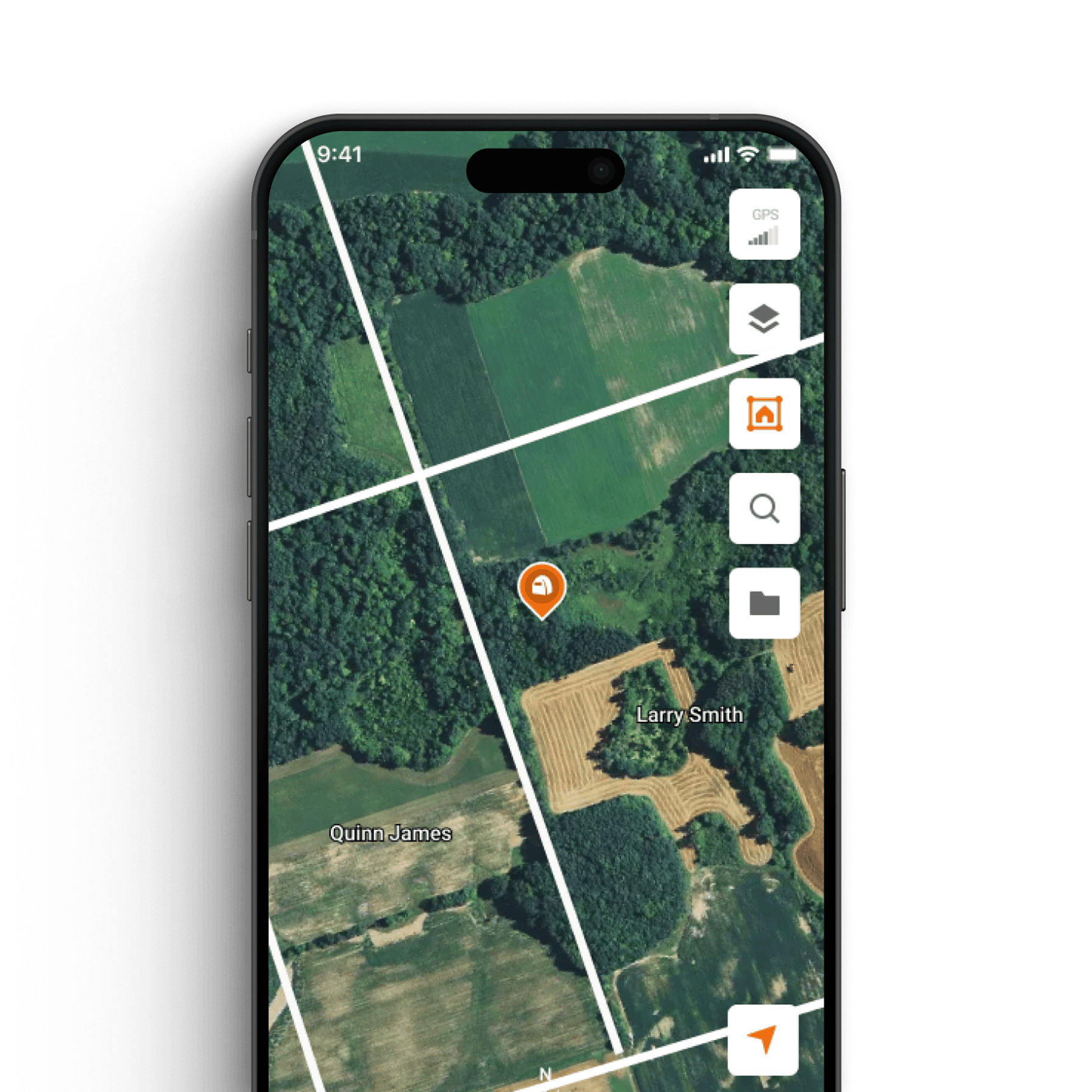
- Open HuntWise and enable the Public Land layer. Turn on this mapping layer to see IDNR public hunting sites and enrolled IRAP tracts on satellite imagery. Download your target county before you leave home so the map works without service.
- Register or apply through IDNR's IRAP system. Some activities, like fishing or photography, only require online registration. Youth turkey hunting and other limited-slot activities require a formal application, and IDNR assigns you a specific site rather than letting you pick one.
- Confirm your assigned site and date window. Once approved, you'll receive a packet with your site, permit, and any activity-specific rules. Access is restricted to that exact property and window, not the broader IRAP acreage statewide.
- Cross-check your assigned tract against other public land options. IDNR-managed sites and Shawnee National Forest operate under different access rules than a leased IRAP property, so confirm which category your assignment falls into.
- Download your assigned tract to HuntWise before you go. IRAP boundaries are typically marked with purple paint, fencing, or a field edge, and cell coverage can be unreliable in rural Illinois. Save the boundary in advance so you can confirm your position in the field.
IDNR's Illinois Recreational Access Program page covers current program details, registration links, and the site listing for the current season.
Why Illinois Hunters Should Use the IRAP Program
With less than 3% of Illinois in public hands, IRAP fills a gap that IDNR's own wildlife areas can't cover on their own. For hunters without a family farm or paid lease, it's often the only legal path onto private ground.
That access is conditional, though. Hunting outside your assigned site or date window on an IRAP property counts as trespassing on private land, even though the same acreage is technically part of the program.
Before you apply, check your target species against IDNR's official Hunting and Trapping Digest, since IRAP's own activity windows don't always match the full statewide season.
Respecting your assigned window matters beyond your own access, too. IRAP depends entirely on landowners willing to keep leasing their property, and enrollment can shrink if hunters treat the program loosely.
What Are the Types of Hunting Land in Illinois?
Illinois hunters work with a mix of a tightly managed private-land program, state-managed sites, and a single large federal forest.
Hunting Land in Illinois | ||||
| Land Type | What It Is | What to Hunt Here | Public vs. Private | Permission Needed |
| IRAP (Illinois Recreational Access Program) Sites | Private land IDNR leases across 52 counties, assigned by application or online reservation rather than open walk-up | Archery deer, youth turkey, upland game, small game, and waterfowl | Private land opened through the program | Free online registration or a site-specific application (no landowner contact) |
| IDNR-Managed Public Hunting Areas | 199 state-owned, leased, or managed hunting sites totaling close to 467,000 acres | Deer, turkey, waterfowl, and upland birds | Public | Illinois hunting license, with some sites requiring a permit or check-in |
| Shawnee National Forest | Illinois's only national forest and largest public landowner, spanning more than 280,000 acres in the southern part of the state | Deer, turkey, squirrel, and other forest game | Public (federal) | Illinois hunting license only |
| U.S. Fish and Wildlife Service Refuges | Federal refuge land open to hunting under refuge-specific rules | Waterfowl, deer, and upland game, depending on the refuge | Public (federal) | Illinois hunting license, plus refuge-specific permits or check-in |
| Private Hunting Leases (Outside IRAP) | Farmland or timberland leased directly from a landowner, not enrolled in the state program | Deer, turkey, and upland birds | Private | Landowner permission or a signed lease agreement |
How Using a Hunting App Helps You Plan a Walk-In Hunt
An IRAP assignment only tells you which property and dates you're cleared for, not necessarily where that boundary sits relative to the neighboring farm. Purple paint and fence lines mark the edge on-site, but that's not much help while you're still planning from home.
HuntWise closes that gap by mapping current IRAP and IDNR public land boundaries on the same satellite imagery you're already using to scout terrain. That lets you confirm your assigned site's shape and access points before you ever drive out.
Because rural cell coverage in Illinois can be spotty, downloading your assigned tract ahead of time keeps you from second-guessing a boundary once you've already arrived. That matters more here than in a true walk-in state, since hunting even a few yards outside your assigned site isn't a gray area.
Find Your Next Walk-In Hunt Before You Head Out in Illinois
Illinois asks more of hunters upfront than a typical walk-in state, since IRAP requires registering or applying before you ever step onto a tract. In exchange, it opens private ground that would otherwise be completely off-limits.
Register or apply through IDNR, confirm your assigned site and dates, and load the boundary into HuntWise before you ever load the truck.
Get started with your HuntWise free trial today and hunt your next Illinois walk-in tract with confidence.
Frequently Asked Questions (FAQs)
Q: What is the Illinois Recreational Access Program (IRAP)?
A: IRAP is an IDNR program that leases private land across 52 counties for public outdoor recreation, including hunting. Since its 2011 launch, it has enrolled more than 27,000 acres statewide.
Q: Do I need to register in advance to hunt IRAP land in Illinois?
A: Yes. IRAP requires either online registration or a formal application, depending on the activity. Hunters are assigned a specific site and date window rather than choosing any enrolled tract on their own.
Q: What species can I hunt on IRAP sites in Illinois?
A: IRAP sites support youth turkey hunting, archery deer, waterfowl, and other small and upland game seasons, depending on the property. Not every site offers every species.
Q: How many acres are enrolled in Illinois's IRAP program?
A: IRAP has enrolled more than 27,000 acres across 52 counties since the program began in 2011. Enrollment can shift as landowners join or leave the program.
Q: Can HuntWise show me enrolled IRAP tracts?
A: Yes, HuntWise maps enrolled IRAP tracts so you can review your assigned site's boundary and terrain. You can download the area for offline use before your hunt.
Q: Is IRAP access first-come or assigned in Illinois?
A: IRAP access is assigned, not first-come. You register or apply first, and IDNR confirms a specific site and date window before you're cleared to hunt.
Q: How many counties have IRAP sites in Illinois?
A: IRAP currently operates in 52 counties across the state. Not every county offers every activity, so check the current site listing for your target area.
Q: How do I download Illinois IRAP boundaries for offline use?
A: Open HuntWise, enable the Public Land layer, and download your assigned site before you leave home. This lets you confirm your position against the property boundary in the field even without cell service.


