

Florida has no purple paint law, and its own wildlife agency says land that isn't posted or fenced may not be open to hunting at all. Close to 70% of Florida's land is privately owned, spread across citrus groves, cattle ranches, and pine plantations that often border public WMAs without an obvious line between them. HuntWise's Land Ownership layer fills that gap by placing exact parcel boundaries over the same satellite view you're using to scout.
The state’s posting law surprises hunters who've hunted paint-marked states before: the color is international orange, not purple, and paint alone is never enough. A painted notice must spell out "No Trespassing" in stenciled letters and be backed up by actual signs, or it doesn't count. That's worth knowing before you check a boundary, since a stray orange mark with no sign nearby carries no legal weight at all.
Keep reading to learn the steps you need to confirm where you can hunt before you hunt.
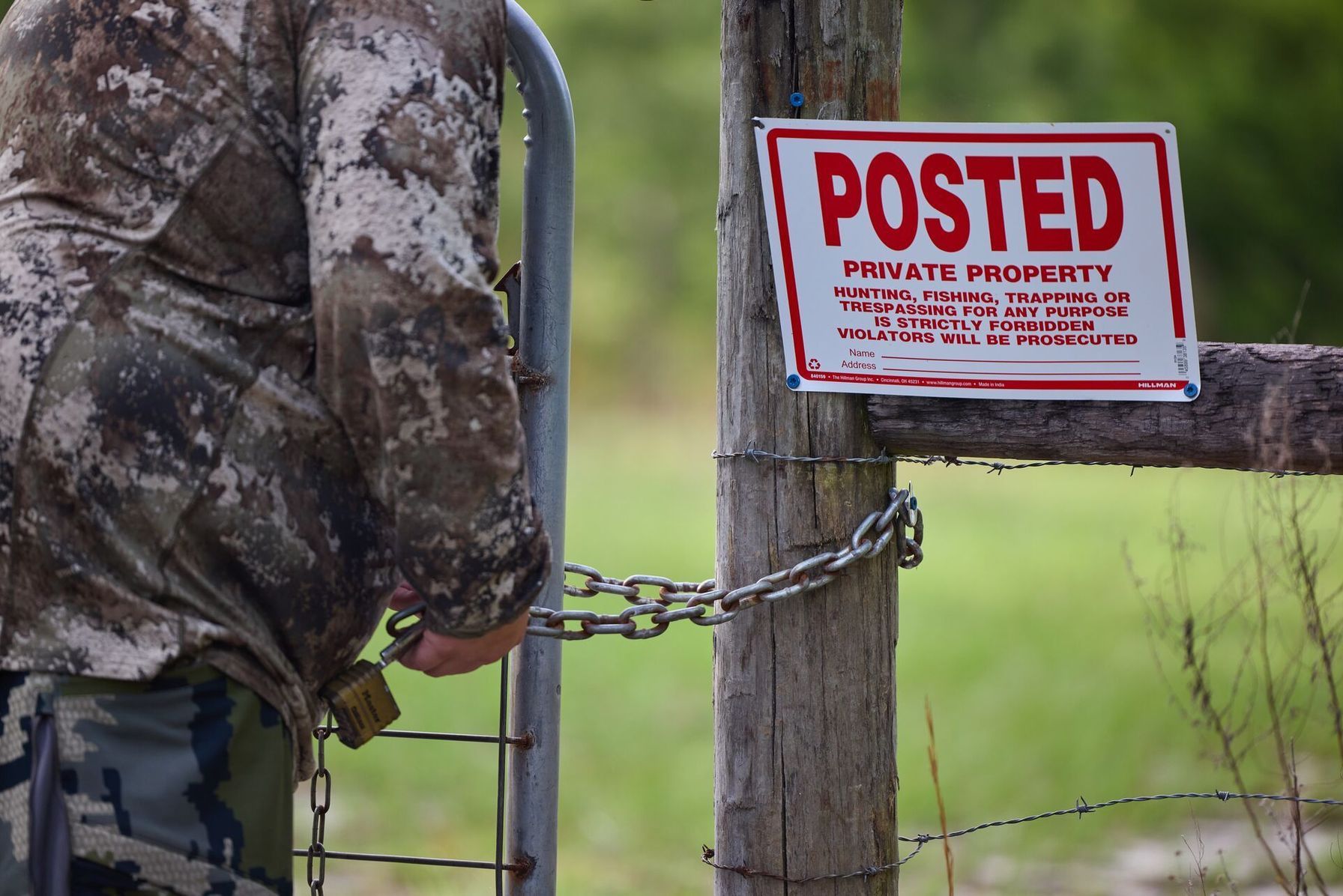
How to Find Property Lines in Florida
Florida's posting rules are stricter than most paint-law states. Getting the color or the signage requirement wrong can leave a hunter unsure who's actually liable.
These five steps clear that up before you're standing in a field.
- Open HuntWise and turn on the Land Ownership and Property Lines Information layers. These place parcel boundaries, landowner names, and contact details on satellite imagery and work offline, useful in the state's more remote ranch and timber country.
- Cross-check against your county property appraiser's GIS parcel viewer. Most Florida counties publish free, searchable tools showing exact parcel shapes, owner names, and legal descriptions.
- Pull up FWC's WMA maps before you commit to a spot. HuntWise's mapping tools let you compare that public land data against your own notes so you know exactly where a WMA ends and private ranchland begins.
- Look for orange paint paired with signs, not paint alone. Florida law only recognizes a posted boundary when international-orange "No Trespassing" paint is backed by actual signs, or when standard signs are placed at each corner and no more than 500 feet apart.
- Treat unposted, unfenced land with caution rather than assuming it's open. FWC itself notes that land without posting or fencing may not be open to hunting, so confirming ownership beats guessing from the absence of a sign.
For the full hunting regulations, season dates, and licensing details behind these rules, see FWC's hunting regulations page.
Why Florida Hunters Must Identify Property Lines
With close to 70% of the state in private hands, a Florida hunt is likely to brush up against a ranch, grove, or timber tract at some point, often without a fence in sight. Because paint alone never satisfies Florida's posting law, a hunter can't treat an orange mark on a tree the way they might treat purple paint in another state.
That distinction matters most in the state's ranch country, where boundaries can run for miles through open pasture with no fence or building nearby.
However, a property-lines app makes that invisible line visible on a screen, which matters when the alternative is guessing where a WMA ends and a private lease begins. Public and private tracts sit close together across much of central Florida, so a current parcel check protects a hunt that would otherwise rely on a hunch.
What Are the Types of Hunting Land in Florida?
Florida's hunting land runs from a vast WMA system in the six-million-acre range down to citrus, cattle, and timber operations that make up most of the state's private acreage. The table below covers what's available and what each requires.
Types of Hunting Land in Florida | |||
| Type | What It Is & What to Hunt Here | Public or Private | Permission Needed |
| Wildlife Management Areas (WMAs) | State-managed tracts for deer, turkey, hog, and small game require a management area permit on most units. | Public | No, but a management area permit is usually required |
| National Wildlife Refuges & Military Bases | Federal land, including national wildlife refuges and select military installations, is open to limited hunting. | Public | No, but refuge or base-specific permits may apply |
| Private Ranch, Grove & Timber Land | Cattle ranches, citrus groves, and pine plantations, much of it unfenced and easy to wander onto without noticing. | Private | Yes, always |
| Leased Hunting Land | Ranch and timber tracts leased to hunting clubs or individuals, a long-standing tradition in Florida's cattle country. Anyone weighing a lease should work through a hunter's checklist first. | Private | Yes, lease agreement required |
How Using a Hunting App Helps You Plan Where You Can Legally Hunt
Ranch and timber land in Florida changes ownership or shifts to a new lease holder often enough that ground open to you last season can carry different terms this year without a single visible change. Confirming ownership before you settle on a spot catches that shift before it turns into a legal problem.
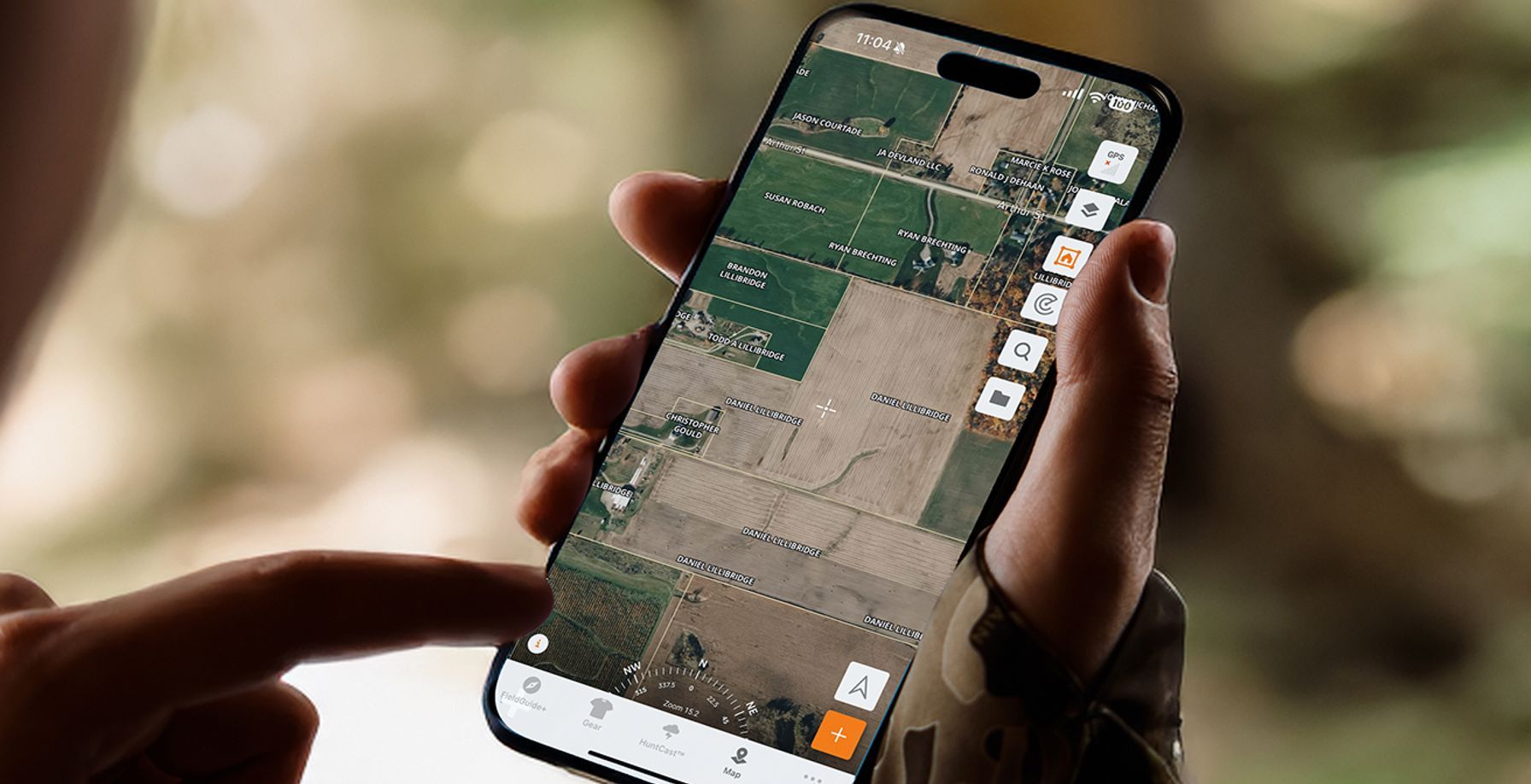
The right app features also let you flag a boundary that looks uncertain well before opening day, rather than sorting it out once you're already standing in the field.
Offline map access matters most in Florida's larger WMAs and remote ranch country, where cell coverage can drop out for long stretches. Downloading your hunt area ahead of time keeps that gap from turning into a boundary guess.
How to Ask Permission to Hunt on Private Land
Florida landowners managing working ranches or groves tend to respond better to a specific, direct request than a vague one. Identify the parcel through HuntWise or your county property appraiser's records first, then ask clearly for what you want: which days, which weapon, and how many people.
Requesting permission early in the season, rather than the week before opening day, gives a landowner time to consider it instead of feeling rushed into an answer.
A quick text or email confirming the agreed dates and terms protects both sides if a question comes up later about who was cleared to be on the property.
Check out how HuntWise property lines work in the video below!
Know Your Boundaries Before You Hunt in Florida
Florida doesn't hand hunters a simple paint shortcut, and its own wildlife agency warns that unposted, unfenced land isn't automatically open. A county parcel record, a current HuntWise layer, or a landowner's own word carries more weight here than a guess based on how a field looked last season.
Confirming ownership before you cross a line takes only a few minutes and protects a season's worth of access. Start with HuntWise's Land Ownership layer, cross-check it against your county's GIS records, and never assume an unposted field is open just because it looks that way.
Download HuntWise and map out your hunt with Pro and Elite features (free) for your first week in the app!
Frequently Asked Questions (FAQs)
Q: What is the best app to find property lines for hunting in Florida?
A: HuntWise places county parcel data, landowner names, and acreage directly on the satellite map you're already scouting with. It also works offline, useful in Florida's larger WMAs and remote ranch country where cell service can drop out.
Q: How accurate are GPS hunting apps for property lines in Florida?
A: GPS mapping is generally accurate to within a few feet, though county parcel data can occasionally lag behind a recent land sale or lease change. In Florida's flat, often unfenced terrain, confirming current ownership matters more than chasing exact precision.
Q: Is there a free way to look up property boundaries in Florida?
A: Most Florida county property appraiser offices post searchable parcel data online at no cost, showing a tract's boundary, acreage, and listed owner. Anything requiring legal weight, like a recorded plat or deed, is held at the county clerk's office instead.
Q: How do I know if land is posted "No Trespassing" in Florida?
A: Florida recognizes standard signs placed at every corner and no more than 500 feet apart, or international-orange painted notices spelling out "No Trespassing" that are also backed by actual signs. Paint by itself, in any color, doesn't satisfy the law here.
Q: What are the penalties for trespassing while hunting in Florida?
A: Trespassing on land other than a structure is a first-degree misdemeanor, carrying up to a year in jail and a $1,000 fine. That charge becomes a third-degree felony, with up to five years and a $5,000 fine, if the trespasser is armed with a firearm or another dangerous weapon.
Q: How do I find public hunting land boundaries in Florida?
A: Because most WMAs require a separate management area permit beyond a standard hunting license, checking FWC's WMA brochures for your unit's specific rules matters as much as knowing the boundary itself. HuntWise still helps by placing that same public-land outline on your map, so you're not toggling between an FWC PDF and your own scouting notes.
Q: Can HuntWise show me landowner information in Florida?
A: Tap any parcel in HuntWise and the Land Ownership layer surfaces the current owner right alongside acreage and boundary lines, nothing extra to search for. Contact details load through the separate Property Lines Information layer, worth turning on before reaching out, since Florida's ranch and grove owners often manage large, multi-parcel holdings.
Q: How do I use county records to verify property lines in Florida?
A: Florida county property appraiser offices maintain online parcel records, usually free to search, showing a tract's boundary, acreage, and current owner. For a certified legal description or recorded plat, that documentation is at the county clerk's office.


