

About 80% of Connecticut's forestland is privately owned. The state ranks among the lowest in the country for public land per capita. HuntWise overlays ownership boundaries, current owner names, and acreage over the same satellite map you're scouting with, which is useful given how little of Connecticut's hunting ground is public to begin with.
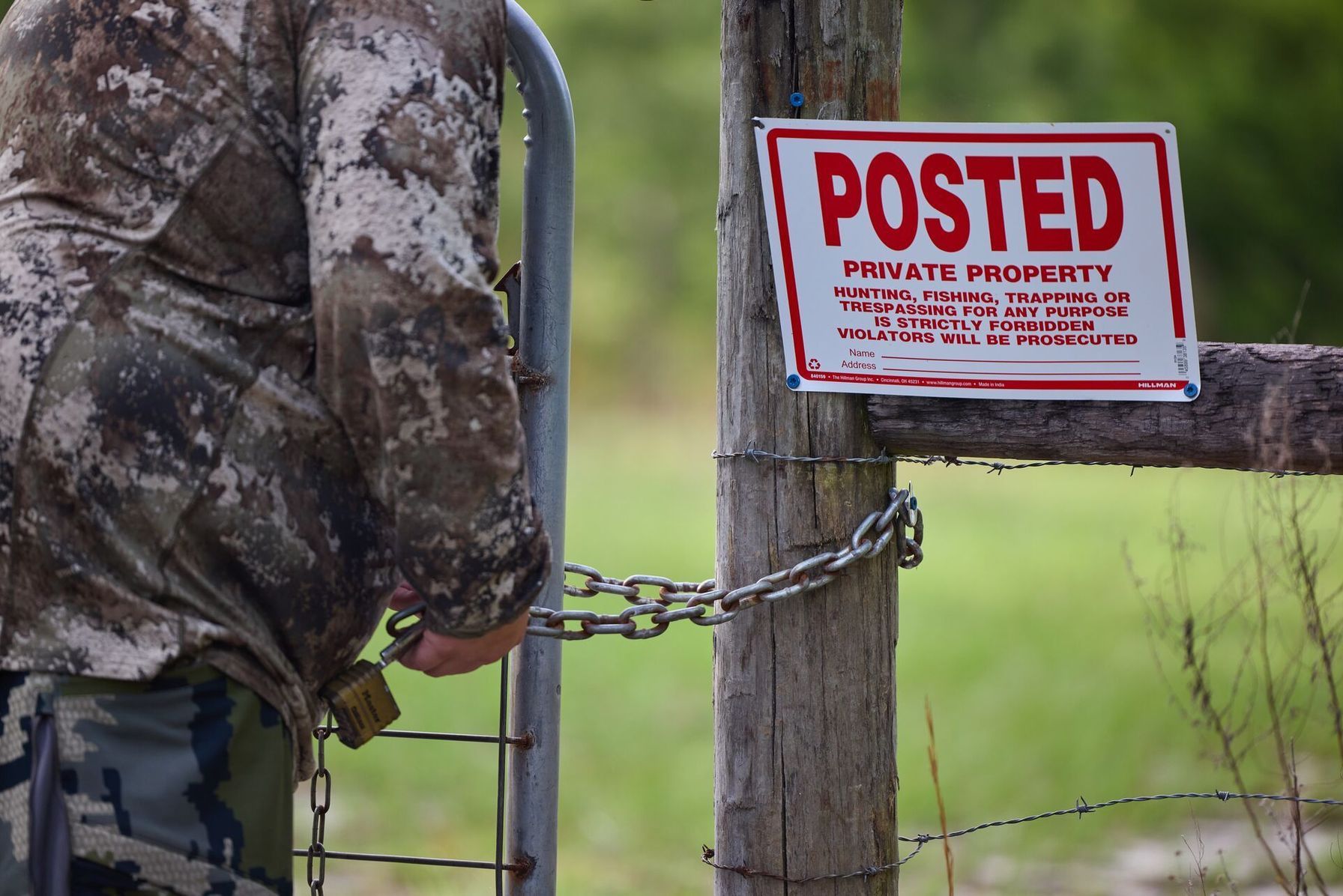
Connecticut's trespass law treats hunters more strictly than anyone else on the property: entering private land to hunt, trap, or fish without permission is criminal trespass, even if nothing is posted.
Find property lines before assuming a quiet, unmarked field is fair game, since the usual "no sign, no problem" logic doesn't apply here. Here's what you should know to find property lines when hunting in CT.
How to Find Property Lines in Connecticut
Since Connecticut requires permission to hunt private land whether or not it's posted, confirming ownership matters more here than checking for a sign. These five steps walk through how to do that.
- Assume you need permission regardless of posting, since Connecticut's hunting-specific trespass law doesn't wait for a sign. Entering land to hunt, trap, or fish without the owner's consent is criminal trespass on its own, a stricter standard than the state's general trespass law.
- Turn on HuntWise's Land Ownership layer to identify who to ask. Mapping tools in the app overlay current ownership, acreage, and contact details on satellite imagery, and keep working offline once downloaded, useful in Connecticut's more wooded northern and eastern corners.
- Search your specific hunt area inside HuntWise to see the exact boundary. Zoom in to confirm parcel edges before assuming a neighboring tract is covered by the same permission you already have.
- Check your town clerk's office for the recorded deed, and the town assessor for current ownership and parcel data. Connecticut has had no county government since 1960, so every land record in the state lives with one of its 169 towns instead.
- Pull up CT DEEP's interactive hunting area map for public and Permit-Required land. Some Permit-Required Areas are private land open to the public only during a set season, so confirming the specific dates matters as much as confirming the boundary.
CT DEEP's Public Hunting Areas page maps every state forest, WMA, and Permit-Required Area in one place. The CT Public Hunting Areas informational page covers the specifics that apply to where you're headed.
Why Connecticut Hunters Must Identify Property Lines
Most states only turn hunting on private land into a crime once a landowner has posted a sign or put up a fence. Connecticut skips that step entirely for hunters: showing up to hunt, trap, or fish on someone's land without asking is criminal trespass by itself, regardless of whether the property shows a single mark.
Property-lines apps really matter here because knowing who owns a tract is the only way to get permission before the fact, since there's no posted-or-not test to fall back on. That hunting-specific violation also carries a harsher penalty than ordinary trespass, a Class B misdemeanor with a mandatory fine between $500 and $1,000, instead of the lighter charge that applies to most other unauthorized entries.
What Are the Types of Hunting Land in Connecticut?
Connecticut's hunting ground splits between DEEP-managed public land, private land under seasonal permit agreements, and ordinary private tracts where permission is required no matter what. Here's how each land type works for hunters.
Types of Hunting Land in Connecticut | |||
|---|---|---|---|
| Type | What It Is & What to Hunt Here | Public or Private | Permission Needed |
| State Forests, Parks & WMAs (CT DEEP) | State-managed land open to hunting in designated areas, listed annually in the CT Hunting and Trapping Guide. | Public | No, beyond your license and any area-specific permit |
| Permit-Required Hunting Areas | Private land under agreement with DEEP, open to the public by special permit from the third Saturday in October through the end of February. | Private, seasonally public | No during the permit season; yes from the landowner outside of it |
| Private Farmland & Woodlots | Ordinary private land, whether or not it's posted. | Private | Yes, always, since Connecticut's hunting trespass law doesn't wait for a sign |
| Federal Refuge Land | A handful of Silvio O. Conte National Wildlife Refuge parcels are open to hunting by permit. | Public | Yes, a refuge-specific permit is required |
| Leased or club-controlled land | Private land leased to a hunting club or managed under a formal landowner arrangement. Review a hunter's checklist before joining or paying a fee. | Private | Yes, arranged through the club or leaseholder |
How Using a Hunting App Helps You Plan Where You Can Legally Hunt
A Permit-Required Area's open season runs on a fixed calendar: the third Saturday in October through the last day of February. Hunting there outside that window without separate landowner permission puts you right back under Connecticut's strict hunting trespass rule. Treating the permit season as year-round access is an easy way to lose that assumption fast.
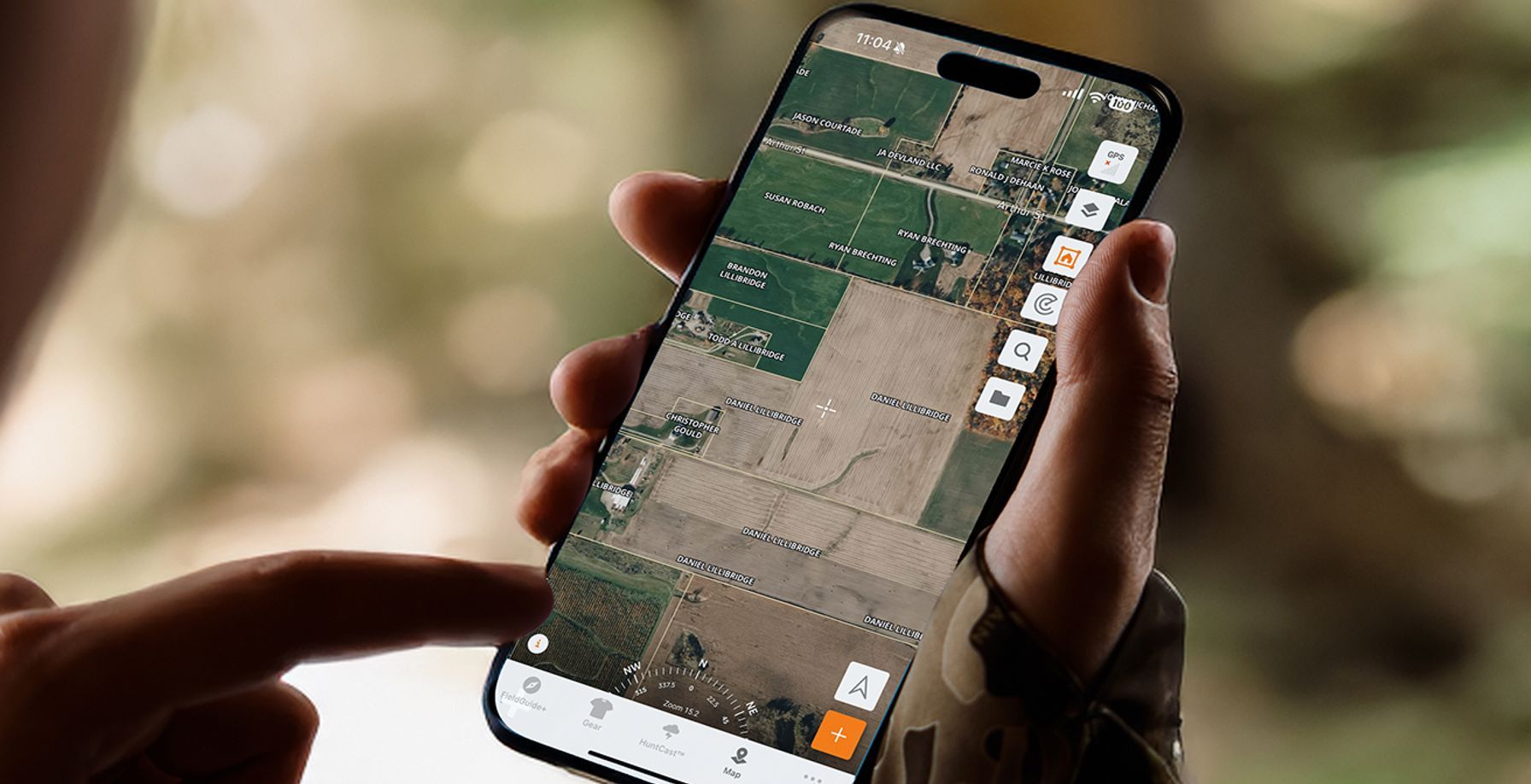
Checking hunting app features against a tract before you head out confirms the current owner and whether you're on DEEP land, a Permit-Required Area, or ordinary private ground, since each carries a different standard for what counts as legal.
Since Connecticut doesn't require a landowner to post anything before a hunting-specific trespass charge applies, guessing wrong here isn't a gray area the way it might be elsewhere. Confirming ownership before you ever raise a gun is the only real safeguard the law gives you.
How to Ask Permission to Hunt on Private Land
Because Connecticut requires permission to hunt private land no matter what it looks like on the ground, this conversation isn't optional the way it might be in a state that leans on posted signs. Identify the landowner through HuntWise or your town's land records first, then ask plainly for permission to hunt, trap, or fish, since Connecticut's law doesn't recognize an implied yes just because nothing was marked.
Ask for permission well before the season. A landowner caught off guard by a request the week of opening day is more likely to say no than one given time to think it over.
Get that permission in a form you can point to later, even something as simple as a text confirming the dates and area covered, since Connecticut's hunting-specific trespass law leaves no room to argue you assumed it was fine.
Learn about property lines in the HuntWise app in the video below!
Know Your Boundaries Before You Hunt in Connecticut
Connecticut doesn't give hunters the benefit of the doubt that most other states do. You need permission to hunt private land, whether or not it's posted, and the penalty for skipping that step is steeper than ordinary trespass. Treating an unmarked field as open is a bigger risk here than it looks.
Confirm ownership with HuntWise's Land Ownership layer before you commit to a spot, and check your town clerk's or assessor's records for anything the app can't settle, since there's no county office standing in to help. In a state built around town-level records, that's where the answer actually lives.
Download HuntWise and map out your hunt with Pro and Elite features (free) during your first week in the app!
Frequently Asked Questions (FAQs)
Q: What is the best app to find property lines for hunting in Connecticut?
A: Since Connecticut requires permission to hunt private land regardless of posting, HuntWise's value here is less about spotting a boundary and more about identifying exactly who to call before you ever step onto a tract. It also works without cell service, useful in Connecticut's more wooded northwestern hills.
Q: How accurate are GPS hunting apps for property lines in Connecticut?
A: Mapping apps generally land within a few feet of the true boundary, which matters in Connecticut's smaller, more fragmented parcels where a boundary error of even a few feet can put you on a different owner's land entirely. Confirm ownership on both sides of a questionable line before you set up.
Q: Is there a free way to look up property boundaries in Connecticut?
A: Connecticut has had no county recording system since 1960, so every deed is filed with the town clerk in one of the state's 169 towns, and most offer free public access to those records. The town assessor holds current ownership and parcel data separately, since deed recording and assessment are two different town offices here.
Q: How do I know if land is posted "No Trespassing" in Connecticut?
A: Connecticut recognizes signs, fencing, or direct communication from the landowner as valid notice, since the state has no purple paint law. But for hunting specifically, none of that matters as much as it would elsewhere: entering land to hunt without permission is criminal trespass in Connecticut even if it's never been posted at all.
Q: What are the penalties for trespassing while hunting in Connecticut?
A: Hunting, trapping, or fishing on private land without permission is a Class B misdemeanor in Connecticut, carrying a mandatory fine between $500 and $1,000. That's a harsher classification than ordinary trespass on posted or fenced land, which is only a Class C misdemeanor under the same statute.
Q: How do I find public hunting land boundaries in Connecticut?
A: Connecticut's public hunting land is scattered across state forests, WMAs, and Permit-Required Areas that sit on private land under a seasonal agreement rather than state ownership, so a single continuous map rarely covers it all. CT DEEP's Interactive Hunting Area Map plots every category together, and HuntWise fills in the surrounding private parcels so you can see exactly where each type of access actually ends.
Q: Can HuntWise show me landowner information in Connecticut?
A: With no county office to fall back on and a hunting law that requires permission no matter how a tract looks, knowing exactly who owns a piece of Connecticut ground matters more here than almost anywhere else. HuntWise's Land Ownership layer names the current owner for a parcel you've tapped, with a contact method listed under Property Lines Information when the record includes one.
Q: How do I use county records to verify property lines in Connecticut?
A: There's no county records office in Connecticut to check, since the state eliminated county government in 1960. Your town clerk holds the recorded deed for a tract, and the town assessor maintains the current ownership and parcel data used for the local Grand List.


