

For most hunters east of the Mississippi, the free tier alone covers real ground.
This review breaks down what HuntWise does well, where the competition pulls ahead, and how the free and Pro tiers actually differ, so you can decide without guessing. We tested the app's property line mapping, HuntCast weather predictions, WindCast wind forecasting, and trail camera workflow across a full season to write this.
Whether you hunt whitetail in the Midwest, work public land in the East, or split time between both, this guide gives you a straightforward read on whether HuntWise fits your hunting style and your budget.
The Honest HuntWise Review: What Works Well
HuntWise has plenty of standouts, making it a go-to hunting app for many hunters of all skill levels.
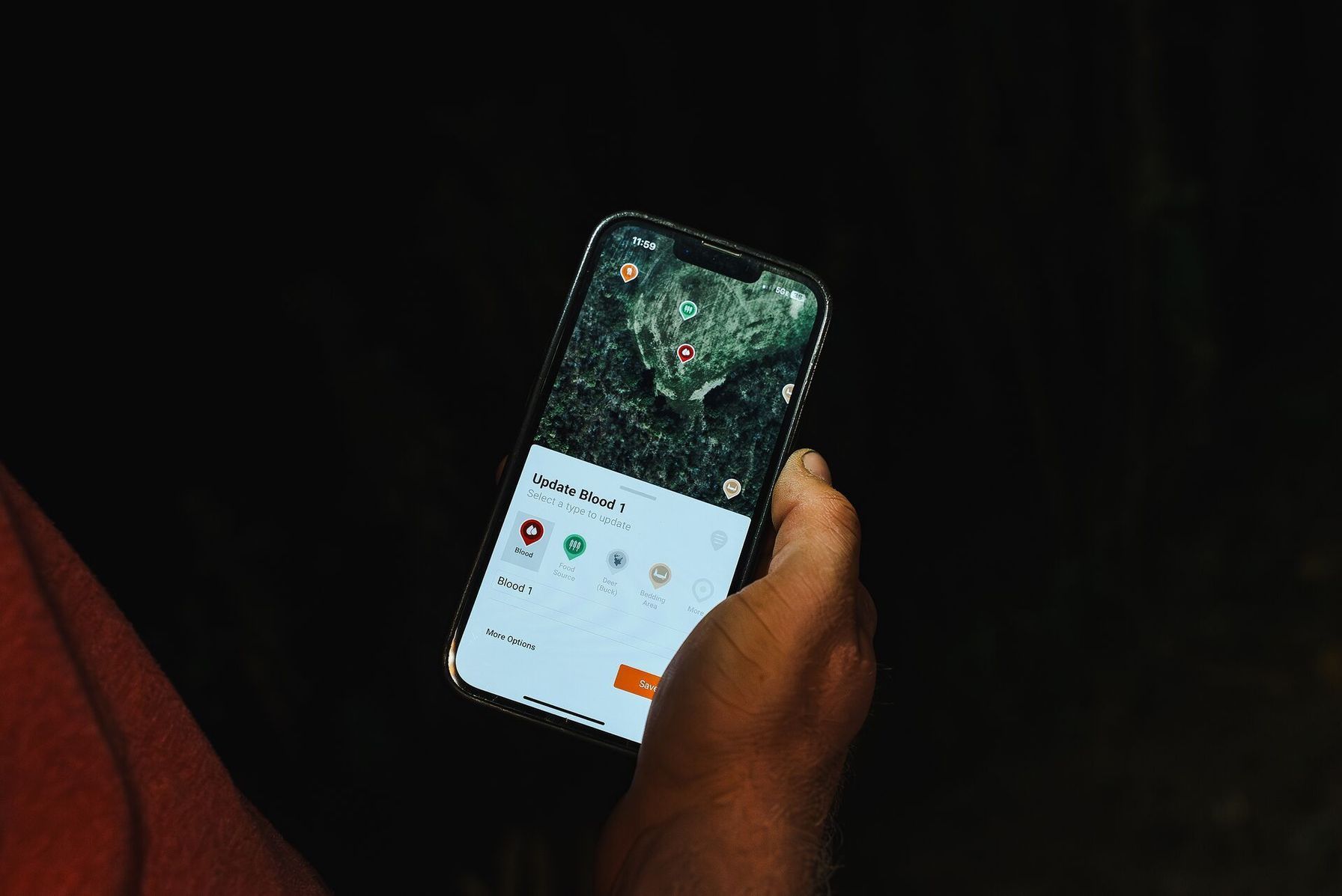
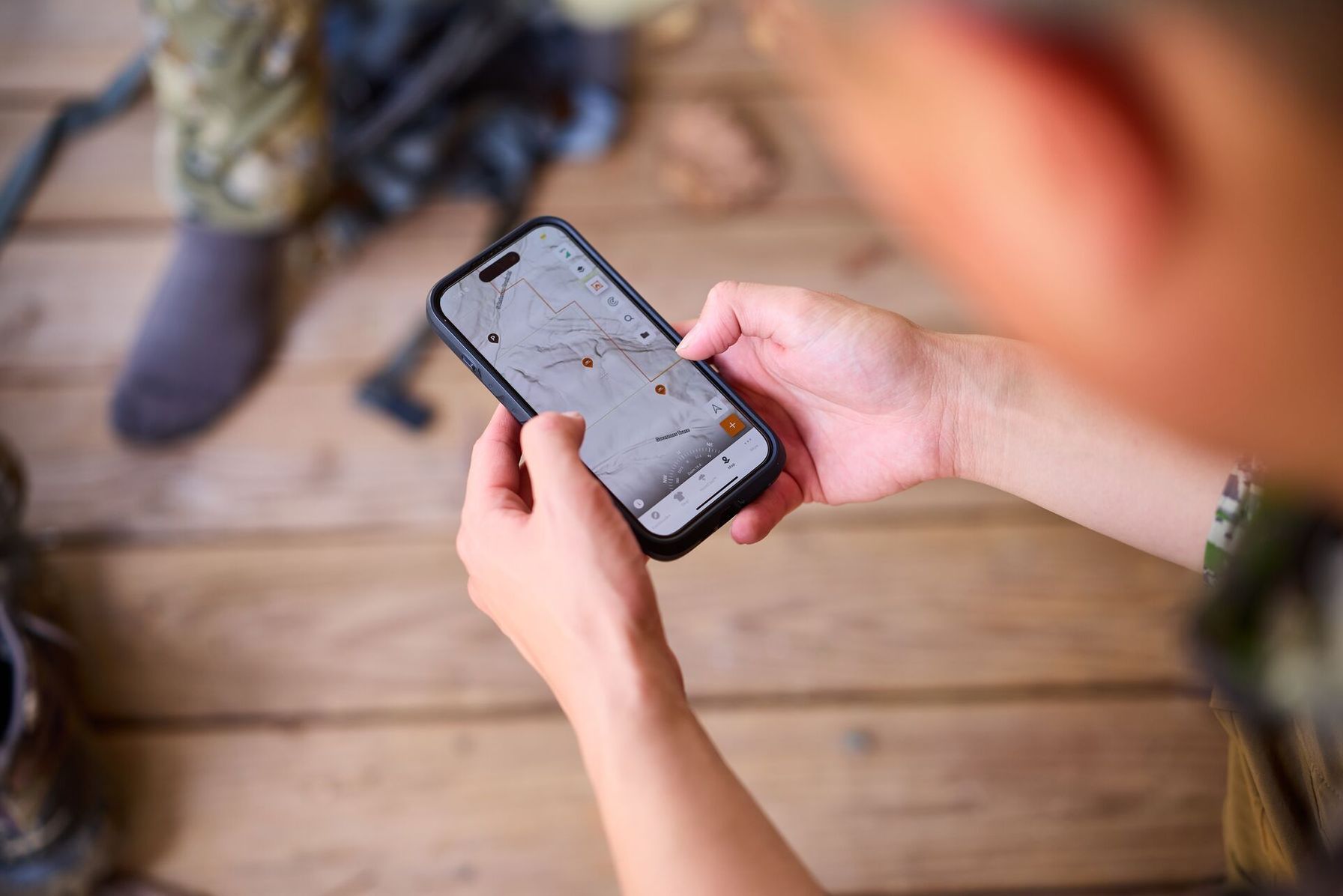
- HuntWise's biggest strength is what it packs into the free tier. Full mapping for all 50 states, more than 65 map markers, and the ability to draw and share hunt areas cost nothing. Add nationwide property line data with Pro, and you get a clear picture of where you can legally hunt before you ever leave the truck.
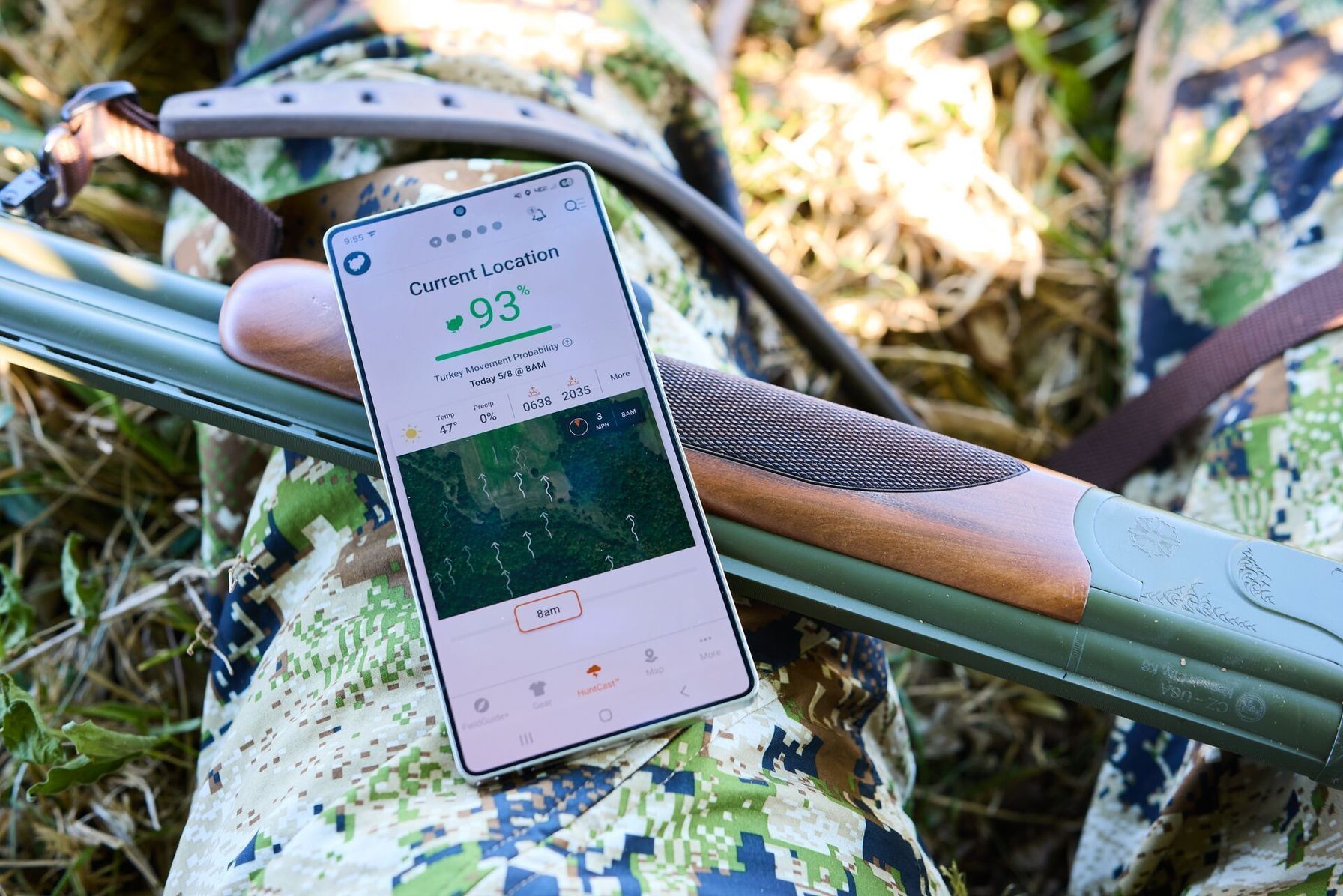
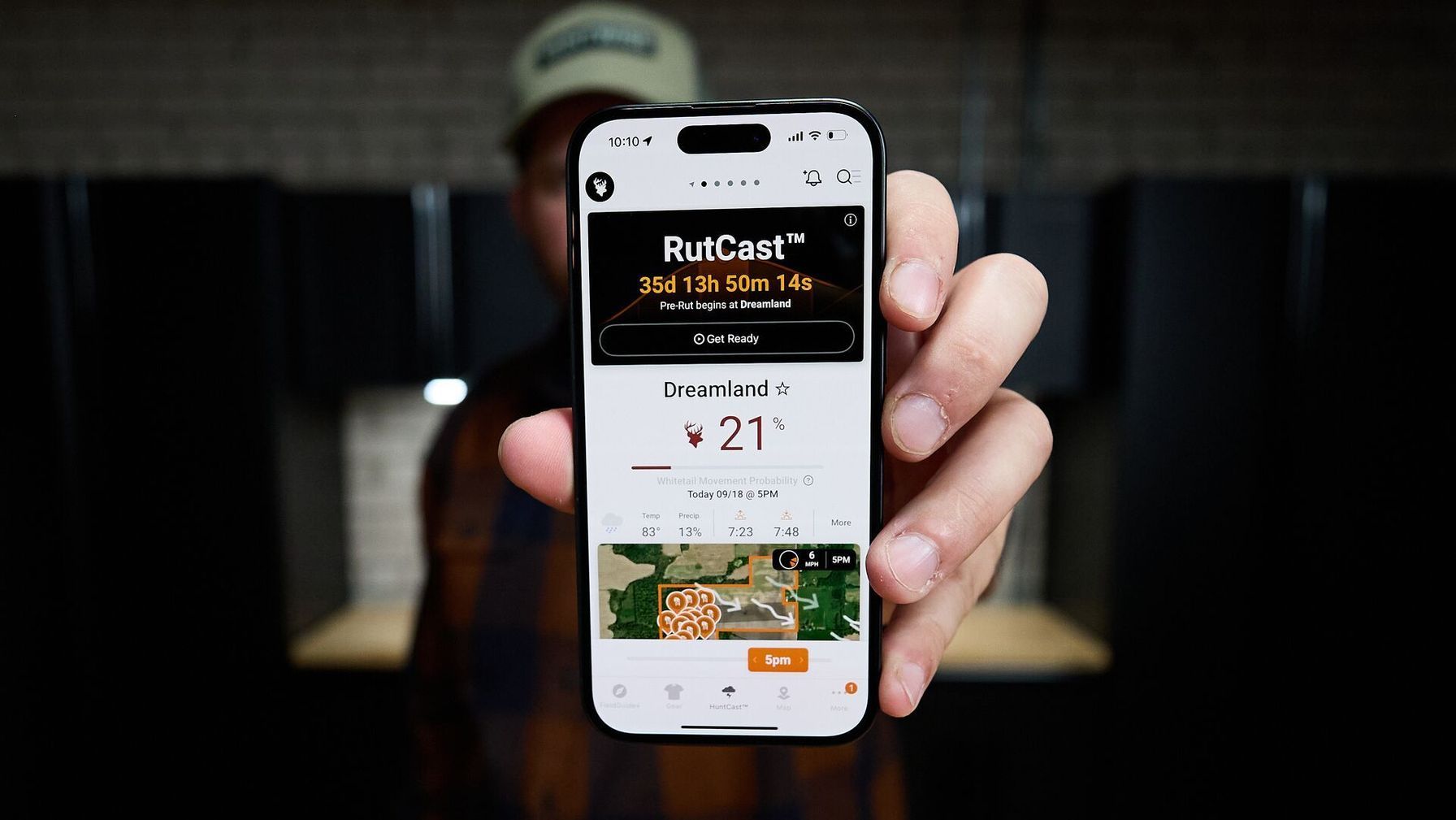
- The HuntCast prediction engine is the other standout. It scores deer movement using temperature, wind, moon phase, and barometric pressure, then pairs that with WindCast for real-time wind direction and RutCast for county-by-county rut phase tracking. Run all three tools together during the rut, and you get a genuinely useful picture of when and where deer are moving, not just a generic forecast.
- While trail camera support is more modest than some hunters might expect, you can still optimize your camera locations and keep track of them with HuntWise. The app doesn't pull photos directly from your cameras the way a dedicated trail cam app does; instead, it lets you drop pins for camera locations on your map and ties those pins into your broader scouting picture, alongside gear discounts through partner brands. If you rely on photo-forwarding cellular cameras like Reconyx, you'll still manage those images through the camera's own app or email, not through HuntWise directly.
- Cross-platform support rounds things out. HuntWise runs on iOS, Android, and web, so you can plan from a desktop and check WindCast from a tree stand without losing your data.
HuntWise has a lot going for it, and plenty of hunters use it successfully every season for better hunts. However, depending on what you're looking for, it may not be the full solution you need.
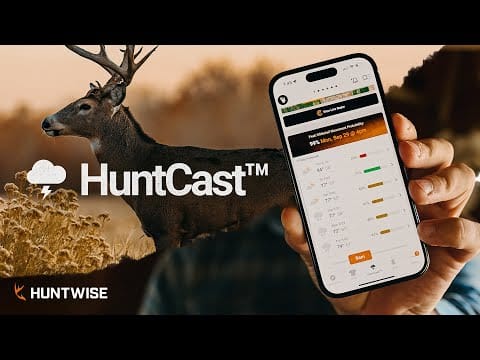
Here's a quick video from Quinn Badder to show you a little more about how hunters use HuntCast.
Where Competitors Still Win
No app does everything best, and an honest comparison has to say so plainly (so we just did).
onX Hunt has a real edge in Western terrain detail. Its proprietary land ownership data and high-resolution terrain layers, including 3D and LiDAR-based maps, are built specifically for hunters navigating public land in mountainous, less-charted country. HuntWise's mapping is competitive for most use cases, but if you're scouting remote Western terrain down to individual drainages and old logging roads, onX still has the advantage.
GoHunt leads on Western big-game draw research, and it isn't close. GoHunt Insider gives hunters draw odds, point-creep tracking, and unit-level application data across the Western states, plus predictive draw odds added for several states. HuntWise has no comparable draw-odds tool. If you're building a point strategy for elk or mule deer tags, GoHunt (or a research-focused tool like it) belongs in your toolkit alongside HuntWise.
| The practical takeaway: |
| HuntWise covers everyday scouting, weather, and property line needs well. Western tag strategy and hyper-detailed backcountry terrain mapping are narrower use cases where other tools currently do more. |
Multi-year breeding-date studies back up why RutCast tracks phases county by county rather than relying on a single peak date. Rut timing varies enough by region that a national average tells you little about your specific hunting grounds.
HuntWise Strengths vs. Limitations
Let's take a look at some of the HuntWise app's strengths and limitations (we told you this was honest).
HuntWise Strengths and Limitations | |
|---|---|
| Strengths | Limitations |
| Property lines on the free tier | Some rural counties show data drift |
| HuntCast prediction engine | Accuracy improves over a season, not on day one |
| WindCast and RutCast included with Pro | No micro-thermal modeling yet |
| Trail camera location planning and gear partner discounts | No direct photo pull from cellular cameras like Reconyx |
| Cross-platform (iOS, Android, and web) | Web version has reduced offline features |
| Pro tier under $60 a year | No built-in Western draw odds research |
HuntWise Free vs. Pro: What You Actually Get
The free Basic tier is functionally complete for most Eastern and Midwestern hunters. It includes full US mapping, more than 65 markers, hunt area drawing and sharing, six base map layers, HuntCast forecasts Monday through Thursday, two-hour historical radar, one offline hunt area download, and state license and regulation lookup.
Pro runs $59.99 a year and adds the features most hunters actually upgrade for: five additional base map layers, 600-plus national map layers, nationwide property lines and land ownership lookup, HuntCast seven days a week with a full 7-day forecast, WindCast wind forecasting, 12-hour radar with eight layer types, unlimited offline hunt area downloads, 3D maps, parcel-based hunt areas, and landowner contact information. Pro subscribers also get a deeper brand discount on gear purchases.
HuntWise also offers an Elite tier for hunters who want LiDAR terrain data, an upgraded wind report, and early access to new field guide content, though most hunters will find Pro covers their core needs.
HuntWise Pro vs. Elite: Is the Upgrade Worth It?
Pro covers what most hunters need for a full season of scouting and weather planning. Elite, at $119.99 a year, is built for hunters who want to push HuntCast and mapping further and are willing to pay for the difference.
The core additions are a longer forecasting window and sharper wind data.
- Elite extends HuntCast out to a full 15-day forecast with peak alerts, instead of Pro's 7-day window, which matters most if you plan hunts weeks in advance rather than day to day.
- It also adds an upgraded wind report with more precise, localized wind modeling than Pro's standard WindCast, along with LiDAR-based terrain data for a closer look at ground features like ditches and creek bottoms.
- Elite subscribers also get a deeper brand discount, up from Pro's 20 percent to 50 percent on partner gear, plus early access to exclusive video series content through FieldGuide+.
- Elite also opens up the RutCast feature to help you plan your whitetail hunts around the rut.
For most Eastern and Midwestern hunters, Pro's 7-day forecast and standard WindCast are enough to plan a hunt with confidence. Elite makes more sense if you're scouting unfamiliar terrain that benefits from LiDAR detail, planning hunts far enough out that a 15-day forecast changes your decisions, or you simply hunt often enough that the deeper gear discount pays for the upgrade on its own.
How to Evaluate HuntWise for Your Hunting Style
The best way to judge HuntWise isn't a feature checklist; it's putting the app to work during an actual season and comparing what it tells you against what you see in the field, whether that's property lines, HuntCast's calls, or rut phase tracking.
Here's a straightforward way to run that test:
- Download HuntWise for free and use it for one full hunting season before deciding whether to upgrade.
- Test the property line data against your county GIS records to confirm accuracy in your specific area.
- Run HuntCast daily for 30 days and track its score against the deer movement you actually observe.
- Try WindCast on three to five sits and confirm the predicted wind direction matched conditions on stand.
- If you're a Western big-game hunter, supplement HuntWise with GoHunt for draw odds research.
- Decide on the Pro upgrade after a full season. Offline maps and unlimited HuntCast access are the features that drive most upgrades.
By the end of that process, you'll have real data instead of guesswork, backed by peer-reviewed rut research rather than folklore: whether the property lines hold up in your area, whether HuntCast's calls matched your own observations, and whether the free tier already covers what you need or Pro's added features are worth paying for.
Side-by-Side HuntWise Feature Comparison (by Subscription Levels)
The chart below doesn't include all features available for every subscription level in the HuntWise app, but it's a good snapshot of some of the key features to help you determine which tier is best suited for your hunting needs. You might even see some features you didn't know HuntWise offered!
HuntWise Subscription Features | |||
|---|---|---|---|
| Feature | Free | Pro | Elite |
| Record a Walking Path | X | X | X |
| Mapping for all 50 United States | X | X | X |
| Add 65+ unique markers to the map | X | X | X |
| Add Shapes or Food Plots with Images and Notes | X | X | X |
| Create Drawn / Fit-to-Screen Hunt Areas | X | X | X |
| Add Notes and Photos to Hunt Areas | X | X | X |
| Access 6 Basic Base Map layer types | X | X | X |
| Access 5 additional Base Map layer types | X | X | |
| 600+ National map layers | X | X | |
| Nationwide Landowner Information and Look-up | X | X | |
| Nationwide Property Lines | X | X | |
| HuntCast forecast and scores available Mon-Thurs | X | X | X |
| HuntCast forecast and scores available Fri-Sun | X | X | |
| 7-day consecutive HuntCast and Weather Predictions | X | X | |
| 15-day consecutive HuntCast and Weather Predictions | X | ||
| WindCast | X | X | |
| RutCast (County by county rut phase detection) | X | ||
| FieldGuide+ | X | ||
| LiDAR | X | ||
The Bottom Line on This HuntWise Review: Try HuntWise For Free
HuntWise earns its place for hunters who want property lines, weather-based prediction, and season-long scouting in one app, and it does it without charging for the basics. It isn't the right primary tool for Western big-game draw research or the most detailed backcountry terrain mapping, and it doesn't pretend to be.
How can you know if HuntWise is the right hunting app for your next hunt? Try it out!
Download HuntWise for free, run it through a full season using the checklist above, and decide for yourself whether Pro's added features earn a spot in your hunting kit. You can do all of this for free during your first week in the app.
Frequently Asked Questions (FAQs)
Q: How does HuntWise compare to onX?
A: HuntWise and onX both offer property line mapping and public land data, but onX holds an edge in high-detail terrain layers and proprietary land ownership accuracy, especially for Western hunters. HuntWise counters with a stronger built-in weather prediction suite, including HuntCast, WindCast, and RutCast, all in the same subscription. Most Eastern and Midwestern hunters find HuntWise's free tier covers their needs, while dedicated Western scouters often keep both apps.
Q: What's the difference between HuntWise Free and Pro?
A: The free Basic tier includes full US mapping, up to one offline hunt area, and HuntCast forecasts Monday through Thursday. Pro, at $59.99 a year, adds seven-day HuntCast, WindCast, RutCast, unlimited offline maps, nationwide property lines, and landowner contact information. Most hunters can test the free tier through an entire season before deciding if Pro's added features are worth the upgrade.
Q: Is HuntCast actually accurate?
A: HuntCast blends temperature, wind, moon phase, and barometric pressure into a single movement score, and its accuracy improves the longer you track it against what you see in the field. Early on, the score sometimes doesn't match local patterns until the model calibrates to your specific area. Running HuntCast daily for 30 days and comparing it to real observed movement gives the clearest read on how well it performs where you hunt.
Q: Should I cancel my current hunting app to switch to HuntWise?
A: Not right away. HuntWise's free tier is worth testing for a full season, since it covers property lines, weather prediction, and trail camera planning without a subscription. If you hunt public land out West and rely on detailed draw odds research, keep your current app for that specific use until you've confirmed HuntWise meets the rest of your needs.
Q: Is the HuntWise Elite tier worth the extra cost?
A: Elite is worth it if you plan hunts far enough in advance that a 15-day HuntCast forecast changes your decisions, or if you scout unfamiliar terrain where LiDAR detail helps you spot ditches and creek bottoms you'd otherwise miss. For most hunters working familiar Eastern or Midwestern ground, Pro's 7-day forecast and standard WindCast cover what you need. Hunters recommend trying Pro for a season first and only upgrading to Elite if you want a longer forecast window or sharper terrain data.
Q: Does HuntWise work offline?
A: Yes, but access depends on your tier. The free Basic tier lets you download one offline hunt area, while Pro and Elite subscribers get unlimited offline hunt area downloads for use without cell service. Keep in mind the web version has reduced offline features compared to the iOS and Android apps, so download your maps on your phone before heading into areas without signal.
Q: What trail camera brands does HuntWise support?
A: HuntWise doesn't sync photos directly from any trail camera brand; instead, it lets you mark camera locations as pins on your map and offers gear discounts through partner brands. If you use a cellular camera like Reconyx, you'll still check photos through that camera's own app or by email rather than inside HuntWise. This makes HuntWise better suited to camera location planning than as a photo management hub.


