

This distance grows drastically as bucks chase doe groups farther than they would typically go. After the rut, bucks return to seeking food sources to regain weight.
When hunting, these time frames will affect where you place your stand. Bucks you may not have picked up on trail cams can appear from miles away due to doe concentrations on your property. During this time, switch from spot-and-stalk to a stand hunt, focusing on travel corridors between doe family groups and using landmarks such as saddles, pinch points, and terrain funnels to intercept incoming bucks.
In this guide, we’re taking a closer look at the question of how far will a buck travel during rut, preparation tips for hunting the rut, stand placement, and travel patterns to help you hunt this unique phase in buck movement.
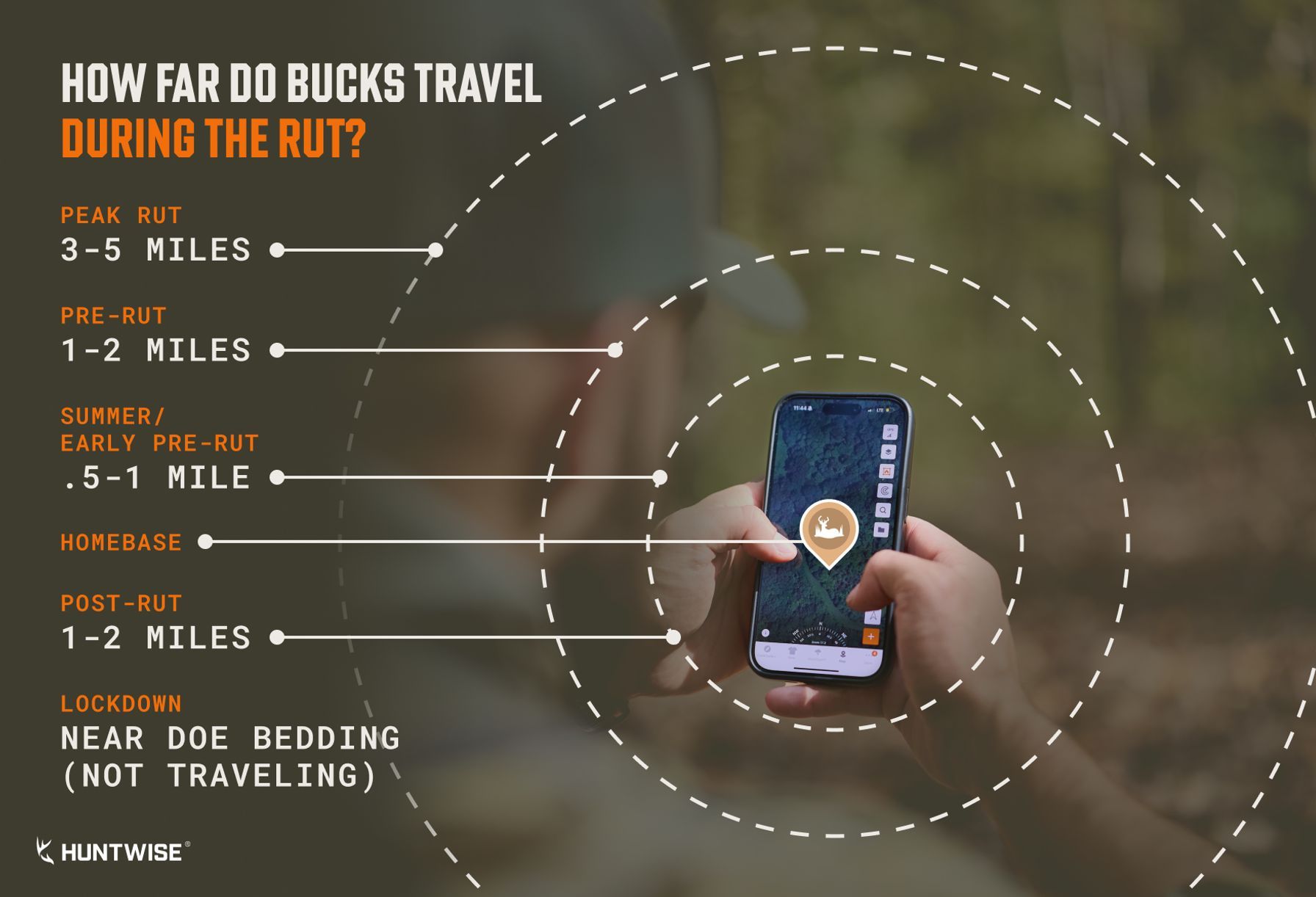
How Far Will a Buck Travel During Rut
Buck movement and travel distance change across five behavioral phases: summer, pre-rut, seeking, peak chasing, lockdown, and post-rut. This means how far does a buck travel during the rut will depend on when you hunt.
Optimal stand placement depends on your intended hunting zone, the terrain, and which rut phase is active, since dates vary by location.
How Far Do Bucks Travel During the Rut? | |||
|---|---|---|---|
| Season | Daily travel | Home range radius | Behavior |
| Summer | 0.25–0.5 mi/day | Under 1 mi | Feeding, bachelor groups |
| Early pre-rut (Oct) | 0.5–1 mi/day | 1 mi | Scraping, increased activity |
| Late pre-rut / seeking | 1–2 mi/day | 1–2 mi | Cruising for does |
| Peak chasing | 2–5+ mi/day | 3–5+ mi | Abandons home range |
| Lockdown | Minimal | Near doe bedding | Paired, not traveling |
| Post-rut | 0.5–1 mi/day | 1–2 mi | Feeding recovery |
The peak rut is the window when deer push their ranges out the furthest. During this peak-rut movement, they’re also far less cautious and more active during daylight hours, meaning you’ll have the highest chance of a daytime sighting.
Because of this, your stand placement and strategy must be flexible, since how far deer travel during the rut depends entirely on which phase you're hunting.
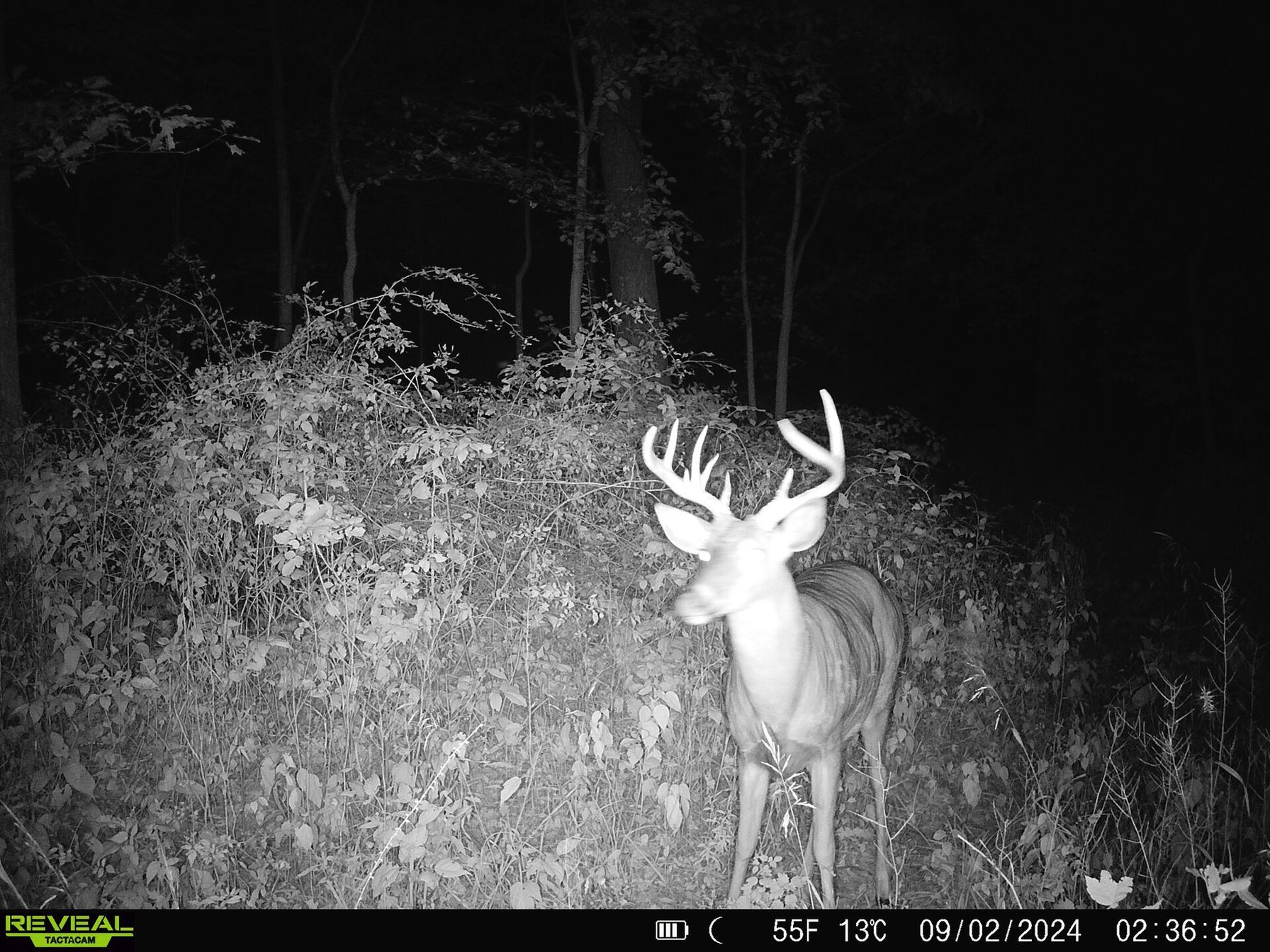
Why an Unfamiliar Buck Can Show Up on Your Property
As the rut approaches, bucks expand their range and increase their movement, boosting the chances an unfamiliar buck shows up on your property. You may have decent trail camera photos over feed or in a high-traffic area, but doe concentration triggers this movement and draws bucks from 2 to 3 miles away, or sometimes farther.
This movement is backed by science, documented in GPS-collar studies showing that in post-rut and early fall, bucks stick to a core range. But during the rut, they branch out in much wider linear patterns.
Just because a buck hasn't shown up on a trail cam doesn't mean you're in a dead zone. If you stick to travel corridors, you can still be right in the middle of the action.
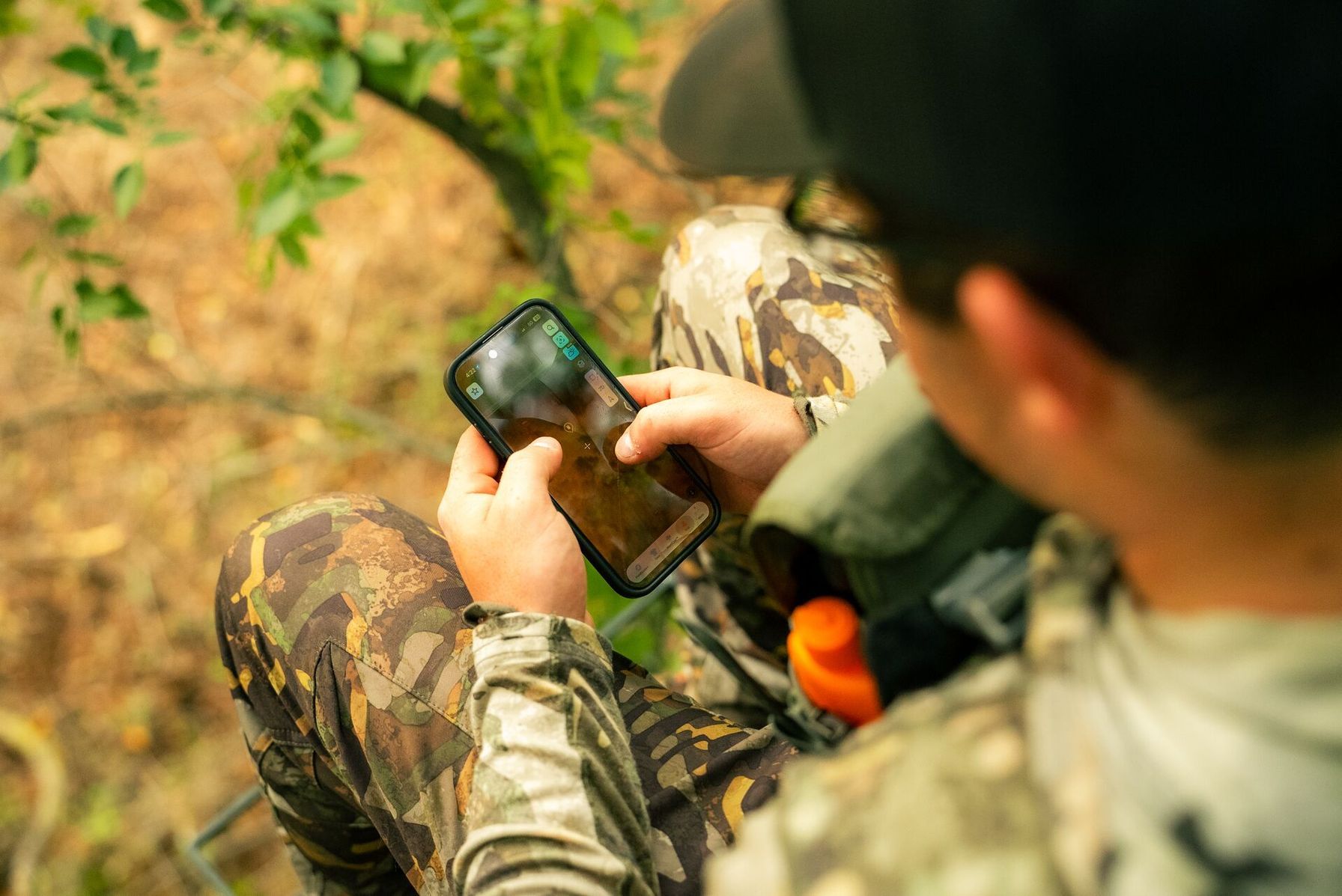
How to Set Up Stands for Rut Buck Travel Patterns
Once you’ve established your hunting region and identified the different rut phases, you can build an adaptable hunting plan that lets you make the most of unique buck movement during the rut.
- Use the HuntWise mapping features to explore the property and mark doe bedding and feeding zones within a 3-mile radius of your intended hunting area using satellite and topo layers.
- Place markers on terrain features such as saddles, pinch points, and property edge corridors between your hunting location and the previously marked doe areas.
- If hunting pre-rut (late October), target the habitual bedding and food sources, as bucks will still be in their home range.
- During the peak rut (verify your local ranges), change your hunting approach to the natural funnels to target traveling bucks coming in from outside the property.
- When hunting small properties (under 100 acres), focus on edged habitat such as woods and fields, and terrain transitions such as natural elevations, as these are high-probability crossing points.
- Use the HuntWise RutCast feature to verify peak chasing time frames in your local area for optimal stand placement.
The goal throughout the six steps above is to match your stand location to the travel behavior of each rut phase. Stay dynamic and adjust your position as conditions change. Deer movement will dictate your positioning, and understanding how far do deer travel during rut can help you determine where to position your stand for the best opportunity.
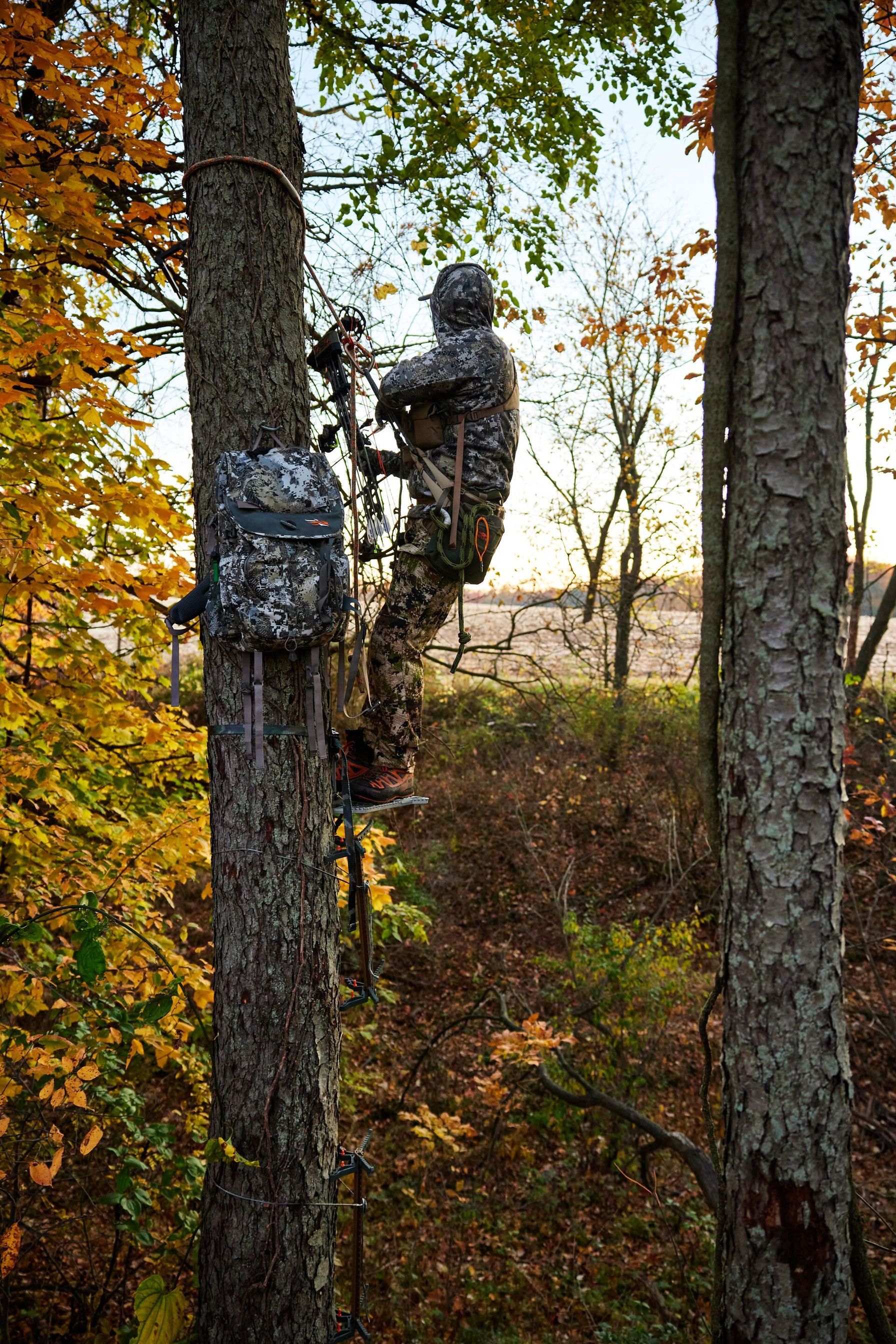
Stand Adjustments Based on Buck Travel Patterns
After following the steps above based on daily travel data and funnel mapping, you’ll have a general idea of where to set up and a closer idea of how far will deer travel during the rut. Use the steps below for immediate, phase-specific adaptations you can use in the field.
- Pre-rut: Keep your hunting range tight before the rut, focusing on doe bedding and food sources while resident bucks are still in range. When hunting whitetail before the rut, focus on scrapes and rub lines, particularly near travel corridors.
- Peak chasing: Transition into terrain funnels between property and doe concentrations, focusing on terrain features we covered above.
- Small property hunters: During the peak chase, focus on edged habitats and terrain transitions.
- All-day sits: Once you’ve located a promising spot, don’t be afraid to sit for six or more hours. Long sits can pay off, as bucks are more active during the day and may be less cautious.
- Unknown buck encounters: These encounters are most likely during the peak chase phase, so keep your most productive stand locations ready to take advantage of this key hunting window.
Use these tips as a checklist rather than a standalone strategy, since each point ties back to the travel data outlined in the seasonal table. Keep an open mind to question how far will a buck travel during rut. You’ll be surprised by how far these animals travel. In one extreme case, a buck traveled 186 miles. The next longest recorded movements reached around 25 miles, which are still exceptionally rare.

Turn Rut Travel Data Into Your Best Stand Sites Yet
As a general rule, mature bucks travel anywhere from 2 to 5 miles per day during peak chasing. During this time, they will go beyond their home range. For your hunting strategy, focus more on stand hunting, especially around terrain funnels, rather than familiar buck signs.
With HuntWise's mapping tools and RutCast, you can hone in on optimal hunting windows and know exactly where you need to be. Build a property-specific stand plan to make the most of this exciting hunting window.
Start planning your rut hunt today with a 7-Day Free Trial of HuntWise.
Frequently Asked Questions (FAQs)
Q: How far will a mature buck travel during peak rut?
A: Mature whitetail bucks may travel 2 to 5 miles per day during peak rut as they search for receptive does. Travel distances vary by individual deer, habitat, and local conditions.
Q: Can a buck appear on my property during the rut even if I've never seen him on camera?
A: Yes. During the rut, bucks expand their movements beyond their usual home ranges to search for does. A buck that hasn't appeared on your trail cameras may travel through your property if nearby doe concentrations attract him. Focus on travel corridors and terrain funnels where deer are likely to cross.
Q: Do all bucks travel the same distance during the rut?
A: No. Travel distance varies by age, individual behavior, habitat, doe distribution, and rut phase. Some bucks travel farther while searching for does, while others stay closer to their established home ranges.
Q: Should I hunt property edges or interior funnels during peak rut?
A: Prioritize funnels and pinch points that connect doe bedding areas, feeding areas, and travel corridors. On small properties, edges between fields and woods can be productive crossing points. Choose your stand based on terrain, nearby doe activity, and likely buck travel routes rather than automatically favoring the property boundary.
Q: Does barometric pressure affect how far bucks travel during the rut?
A: Research has not established barometric pressure as a reliable predictor of how far bucks will travel during the rut. A GPS-collar study of whitetail deer found that short-term weather effects on movement were inconsistent. Breeding behavior and the availability of receptive does are more useful factors to consider when planning a hunt.
Q: How do I know which rut phase is active on my property right now?
A: Use HuntWise's RutCast feature to check the predicted rut phase for your county and hunting area. RutCast uses local rut data and other environmental factors to help identify likely timing for pre-rut, peak chasing, lockdown, and post-rut. Confirm the forecast with field observations, such as fresh scrapes, increased buck sightings, and chasing activity.
Q: Do bucks return to their original home range after the rut ends?
A: Many bucks return to their familiar home ranges and resume focusing on food and bedding areas after the rut. However, movement patterns vary by individual, and some bucks shift between distinct home ranges seasonally. Look for renewed activity around food sources and established travel routes, but don't assume every buck will return to the same location.


