

- During the pre-rut (late October), bucks begin establishing and marking breeding territories, with increased scraping and rubbing. Scout for rub lines and target food sources, as bucks focus on building body condition.
- The seeking phase (early November) shows the first signs of rutting as bucks seek out estrus does. Target funnels, especially from bedding zones, and travel corridors, especially near scraping activity.
- In peak chasing (typically November 7-15 in the Midwest), bucks are chasing does aggressively and may leave their home range.
- The lockdown or tending phase (mid-November) is when bucks pair up with breeding does and are unlikely to move. Follow doe movement, particularly bedding during this time.
- Post-rut (late November) is still an OK time to target bucks chasing late-cycle does. Patterning may center on food sources as bucks regain body weight.
Knowing exactly where you should be at any stage during the rut can be challenging. The HuntWise RutCast feature tracks deer movement and shows which phase you’re in for your county, so you can hunt more accurately and place yourself optimally.
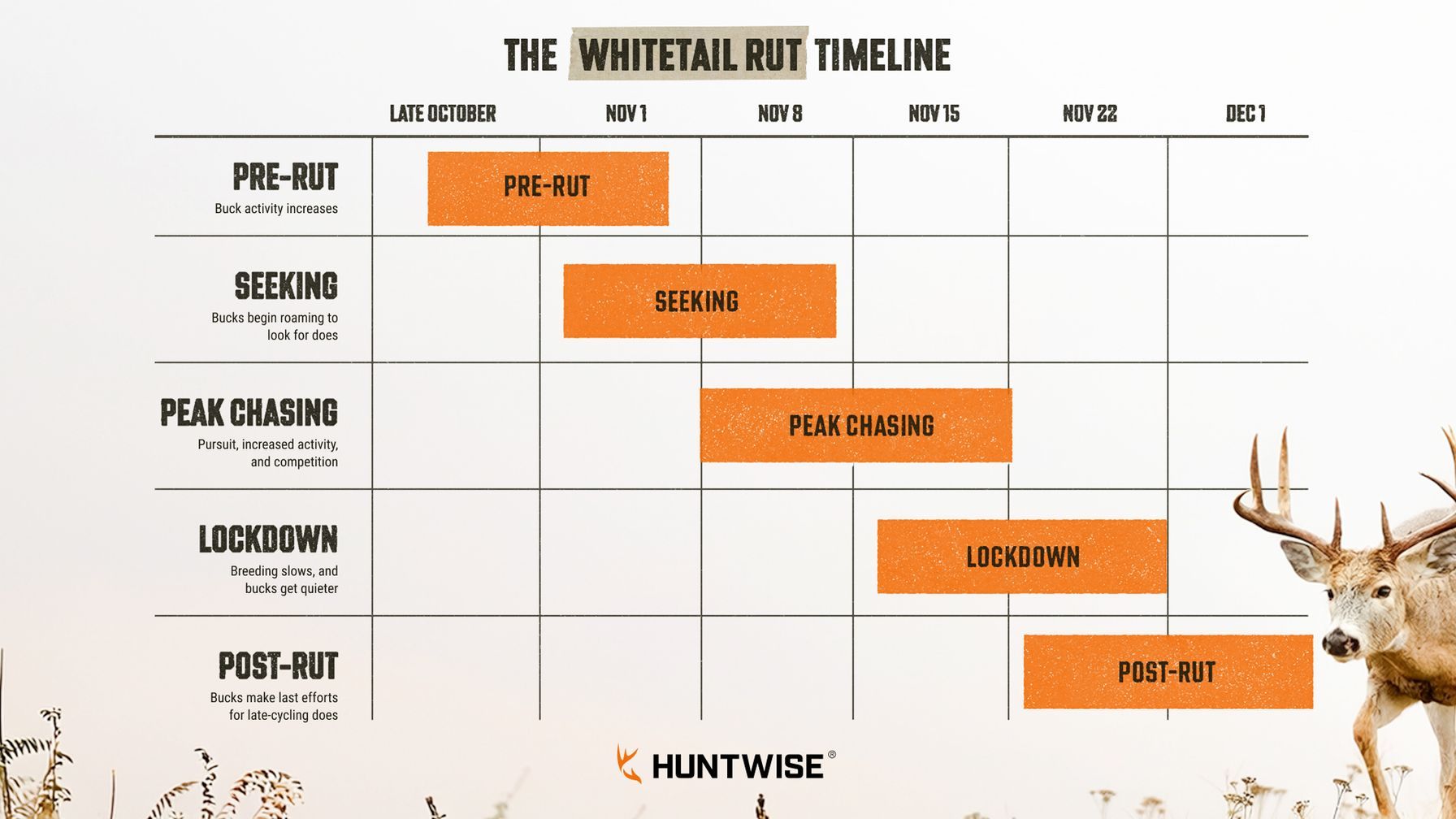
The Five Rut Phases of the Whitetail Rut
The rut is the period when deer breed. So, to answer the question of how long does the rut last: It generally occurs over a six- to eight-week window spanning October through December. While timing varies by region, the rut generally breaks down into five distinct behavioral phases. These phases are defined by changes in buck activity and movement.
For this guide, we’re using the Midwest as a reference point. Rut dates are generally biologically based and shift by latitude, driven by photoperiod (changes in daylight hours) that trigger rut phases. If you’re hunting in the southern or far northern regions, adjust the dates accordingly, and check your relevant wildlife agency, historic data, and the RutCast tool for accurate, phase-specific insights for your county.
5 Phases of the Whitetail Rut | |||
|---|---|---|---|
| Phase | Timing (Midwest) | Buck Behavior | Best Stand Strategy |
| Pre-rut | Oct 15–30 | Scraping, rubbing, increasing range | Food sources at dusk; mock scrape lines |
| Seeking | Nov 1–6 | Cruising alone, checking doe areas | Funnels and pinch points mid-morning |
| Peak chasing | Nov 7–15 | Actively pursuing does | All-day sits on travel corridors |
| Lockdown | Nov 16–20 | Paired with estrus doe, near invisible | Within 100–200 yds of doe bedding |
| Post-rut | Nov 21–30 | Cruising for late-cycle does | Food sources and secondary scrape lines |
Pre-Rut (Late October)
During the pre-rut phase, bucks move in territory-based patterns to establish breeding zones and lay down more signs, such as scrapes and rubs, while expanding their range. Hunting the pre-rut means focusing on food, as bucks are still feeding, especially to condition for the upcoming rut.
Food sources and bedding zones can create elite hunting corridors. Stands near food sources, particularly highly nutritious mast, rub lines, and late-day hunting should all form part of your hunting plan. During this time, trail cameras can help confirm active scrapes and capture daytime movement.
Seeking (Early November)
During this stage, rutting bucks are far more active, covering a wider range as they search for early does entering estrus. Their bed-to-feeding pattern may become a little out of routine, and you'll likely encounter a higher number of bucks out on their feet during daylight hours. Scout doe concentrations then mark funnels, pinch points, and travel corridors to pattern active bucks during this stage.
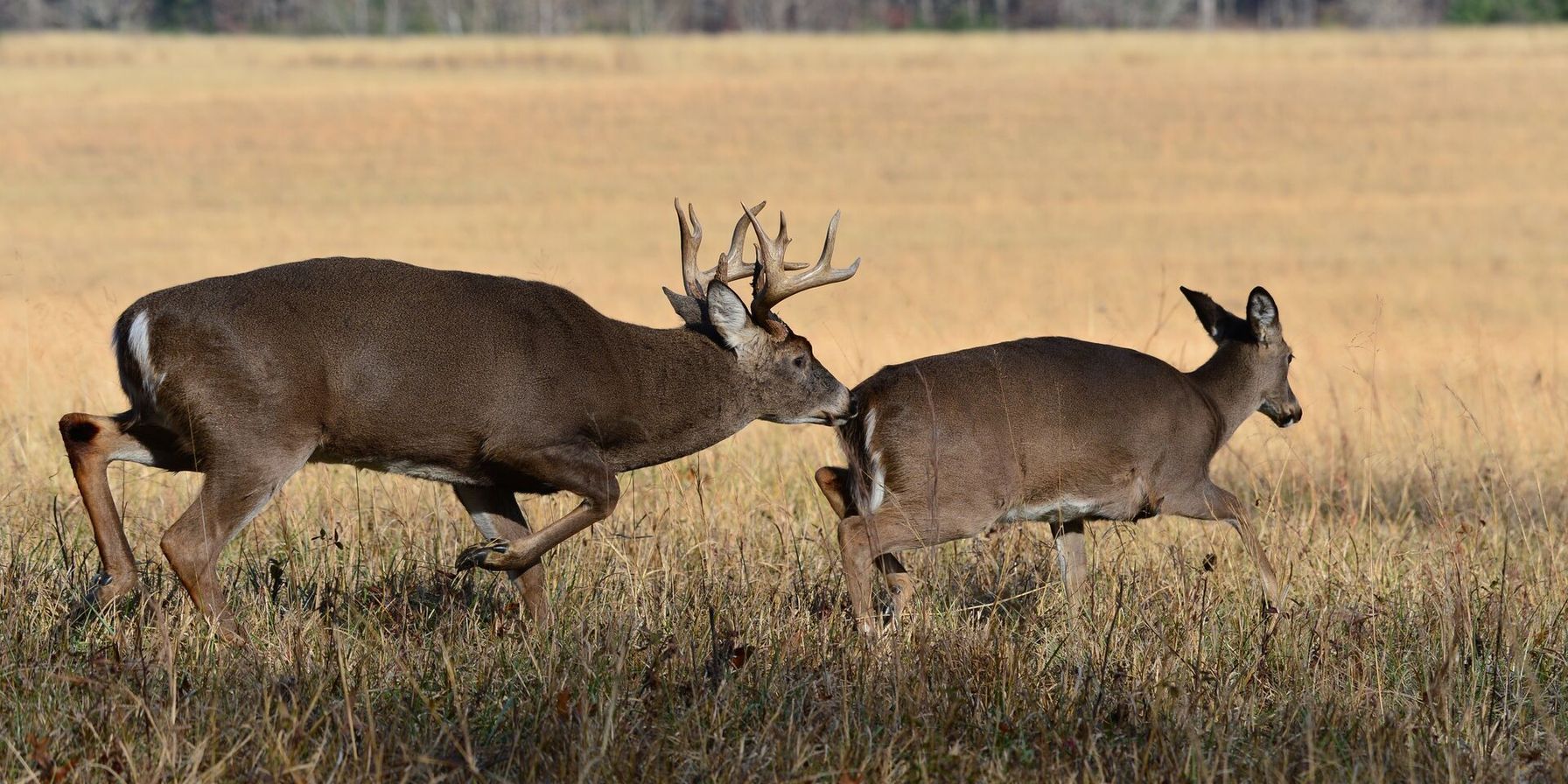
Peak Chasing (Typically November 7–15, Midwest)
Peak chasing, also known as the peak rut, is what hunters mean when they talk about the rut. Bucks are up on their feet chasing does beyond their typical ranges. Hunters love this phase because bucks are far less cautious. They’re up all day (not just at dawn and dusk) and respond strongly to calls, especially tending grunts and doe bleats.
This is when you’ll have the highest odds of harvesting a buck at any hour of the day. Sits across high-traffic corridors are highly effective. Bucks act quickly, chase does, and go in a flash, so have your setup ready.
Lockdown (Mid-November)
Sometimes called the tending phase, bucks pair up with an estrus doe for breeding, typically in deep cover. This period is marked by a decline in buck movement, leading some hunters to assume the rut has finished. To hunt this window, move stand location to within 100–200 yards of scouted doe bedding areas rather than targeting travel corridors.
Post-Rut (Late November Onward)
Some does will enter estrus in late November, so some bucks will still be cruising during this stage. Generally, bucks focus on food, targeting calorie- and carbohydrate-dense sources such as acorns, corn, soybeans, and turnips.
During this stage, focus on stands near food sources and secondary scrape lines.

How to Hunt Each Phase of the Whitetail Rut
Rut hunting is about being flexible. For a quick, targeted approach to each rut phase, use the guide below to plan a deer hunt near you, no matter which rut stage you’re targeting.
- Open HuntWise: The RutCast feature can help you determine which phase your county is in.
- Pre-rut (late October): Set up your stand near scrape lines and food sources. Target dusk hunting windows, as bucks will follow predictable feeding patterns.
- Seeking (early November): Target funnels and pinch points as bucks head out in search of does.
- Peak chasing (generally Nov 7-15 in the Midwest): Target all-day hunting, particularly near high-traffic corridors.
- Lockdown (mid-November): Relocate stands to within 100-200 yards of doe bedding areas. Buck movement follows doe movement, typically into dense vegetation.
- Post-rut (late November onward): Target food sources, as bucks are replenishing energy with calorie-dense food to prepare for winter.
Because buck movement varies across these six to eight weeks, stand placement matters more than hunting harder in the same spot. With the RutCast's county-level phase ID, you’ll pinpoint exactly where you should be at any stage during the rut.
Stand Adjustments by Rut Phase
Now that we’ve covered the phase-by-stage insights and strategy, here’s a reference cheat sheet for stand placement to help you hit the right zones at the right time.
- Pre-rut: Target food plots and agricultural fields, especially near edged habitats and mock scrape lines near bedding areas.
- Seeking: Position between doe groups, particularly transition lines such as saddles, ridge funnels, and pinch points.
- Peak chasing: Set up for all-day corridor sits where terrain conceals travel, such as routes behind ridges and tree-line movement.
- Lockdown: Zone in on doe bedding, especially in heavily vegetated areas, where you can find bucks.
- Post rut: Target calorically dense food sources (corn, soybeans, brassicas) and secondary scrapes.
Once you’ve established your hunting window with RutCast, use this list as a mobile setup and tailor your hunting approach. Rut movements aren't strictly defined, and periods overlap, so adjust your approach as conditions shift to maximize daylight encounters instead of sitting in the same spot from October through December.
Five Rut Phases, One Strategy: Let the Data Lead with HuntWise
The rut is not one event. Rather, it's a period of five different phases that flow into one another. Timing, preparation, and stand location are essential to making the most of this exciting hunt period.
For location-specific timing insights, use RutCast to know exactly which phase is active in your county.
To see how RutCast can level up your rut hunting, start a free trial to access Elite features and test it out for your rut hunt.
Frequently Asked Questions (FAQs)
Q: How long does the whitetail rut last?
A: The whitetail rut typically spans six to eight weeks, from October through December, although timing varies by region. The most intense breeding activity occurs over a shorter period, usually peaking in November in much of the Midwest.
Q: What is the best phase of the rut to hunt?
A: Peak chasing is a popular phase to hunt because bucks actively search for does and may travel during daylight hours. The seeking phase can also offer frequent buck sightings as deer move beyond their usual patterns. The right timing depends on local breeding activity and where deer are moving.
Q: How do I know which rut phase I'm in?
A: Look for changes in deer behavior and activity. Fresh rubs and scrapes suggest pre-rut activity, while bucks cruising and pursuing does indicate seeking or chasing. When bucks spend more time with individual does and sightings decline, lockdown may be underway. HuntWise's RutCast feature can help identify the predicted phase for your county.
Q: Does warm weather delay the rut?
A: No. Photoperiod, or the changing length of daylight, primarily controls whitetail breeding timing, not temperature. Warm weather can affect when and where deer move, so you may see less daytime activity even when breeding season is underway.
Q: How do you hunt during lockdown when bucks aren't moving?
A: Focus on doe bedding areas and nearby thick cover, where bucks may stay with receptive does. Set up near likely bedding locations while considering wind direction and avoiding unnecessary disturbance. Not every buck will be locked down at the same time, so hunting all day may still offer opportunities.
Q: What is the difference between the seeking phase and peak chasing?
A: During the seeking phase, bucks search for does that are approaching estrus and may begin traveling farther from their usual areas. During peak chasing, bucks actively pursue receptive does and often travel more visibly through corridors during daylight.
Q: Is there a second rut, and when does it happen?
A: Yes. A secondary rut can occur in late November or December, often about a month after peak breeding. It happens when does that were not bred during their first estrous cycle become receptive again, and when some doe fawns reach breeding maturity. Activity is generally less intense than during the primary rut.


