

A landowner can now close that access with a purple paint mark alone, a method that only gained full legal weight this year.
About 80% of New Hampshire's forestland is privately owned. Most of it, including huge tracts held by paper and timber companies, stays open to hunters who ask first. HuntWise overlays ownership boundaries, current owner names, and acreage over the same satellite map you're scouting with, useful for confirming who actually holds a tract before you decide whether it's worth a phone call.
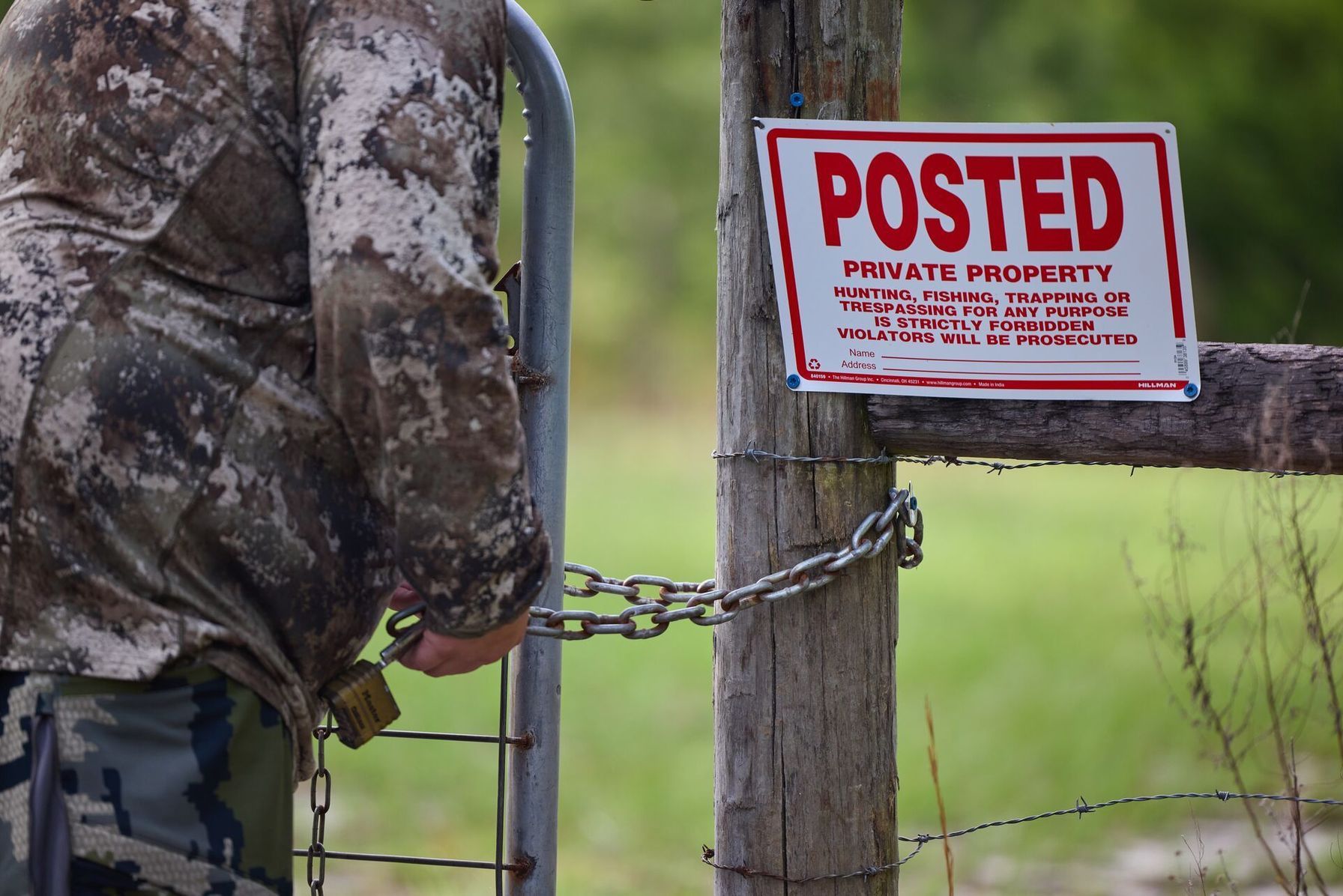
New Hampshire only just finished phasing in its purple paint law: landowners could start using paint marks in place of signs back in 2025, but a full trespass charge for ignoring one didn't take effect until January 1, 2026.
Find property lines before you rely on last season's assumption that a tract was open, since a fresh coat of paint might have changed that. Keep reading to learn how.
How to Find Property Lines in New Hampshire
Since most New Hampshire land defaults to open, the real work is confirming whether a specific tract has actually been posted, and who to call if it has. These five steps walk through it.
- Look for a posted sign or a purple paint mark before you assume a tract is open. New Hampshire's paint-posting option is only a year into carrying full legal weight, so plenty of tracts you remember as open might now be marked a different way.
- Turn on HuntWise's Land Ownership layer to confirm the current owner. The app’s mapping tools overlay ownership, acreage, and contact details on satellite imagery, and keep working offline once downloaded, useful in the North Country where cell service is thin.
- Search your specific hunt area inside HuntWise to see the exact boundary. Zoom in to confirm parcel edges before you cross from a public tract onto adjoining paper-company or private land.
- Check your county Registry of Deeds for the recorded deed, and your town assessor for parcel and tax data. New Hampshire's ten counties handle deed recording, but property assessment happens at the town level, so the two records live in different places.
- Pull up NHFG's Wildlife Management Area maps for public hunting ground. Knowing exactly where a WMA ends keeps you from assuming a neighboring paper-company tract carries the same open-access rules.
NHFG's where-to-hunt page explains the state's open-unless-posted rule, the new paint law, and how to find public tracts. NHFG's where-to-hunt page covers the specifics that apply to where you're headed.
Why New Hampshire Hunters Must Identify Property Lines
New Hampshire's default-open rule protects you only as long as a tract stays unposted. The new purple paint option would let a landowner close a tract fast, without printing a single sign. A paper-company tract that's been open for fifty years can still get marked shut by the time you get there this season.
Property-lines apps matter here because they show current ownership at a glance, which helps you know who to call if a tract you expected to be open turns out to be posted. Entering land that isn't posted or fenced is only a violation in New Hampshire, a fine with no jail time, but crossing onto secured land bumps that up to a misdemeanor.
What Are the Types of Hunting Land in New Hampshire?
New Hampshire's hunting ground breaks down into federal, state, and private categories, with a good share of that private land opened voluntarily by paper and timber companies rather than closed off. Here's how each land type works.
Types of Hunting Land in New Hampshire | |||
| Type | What It Is & What to Hunt Here | Public or Private | Permission Needed |
| White Mountain National Forest & Federal Land | Close to 10% of the state, over 751,000 acres, is mostly open to hunting except in developed areas. | Public | No, beyond your license |
| State Forests, Parks & WMAs | State-managed tracts, including about 100 Wildlife Management Areas, mostly open to general-law hunting | Public | No, beyond your license and any area-specific rules |
| Paper/Timber Company Land | Large private tracts across northern New Hampshire kept open to the public by long-standing company policy. | Private, open by tradition | Technically no, though checking current status with the company is smart |
| Unposted Private Land | Any other private land that hasn't been marked with a sign or purple paint. | Private, open by default | No, though asking first is expected and protects future access |
| Posted/Secured Private Land | Private land closed off with a sign, a fence, or the state's new purple paint marking. | Private | Yes, from the landowner or their agent |
| Leased or club-controlled land | Private land leased to a hunting club, camp, or outfitter rather than left open to the public. Review a hunter's checklist before joining or paying an access fee. | Private | Yes, arranged through the club or leaseholder |
How Using a Hunting App Helps You Plan Where You Can Legally Hunt
A paper-company tract or a quiet unposted lot can switch to closed the moment a landowner picks up a can of purple paint, and that change won't show up on a map from even a few months ago. Treating an old scouting trip as proof a tract is still open is exactly how New Hampshire's new law catches hunters off guard.
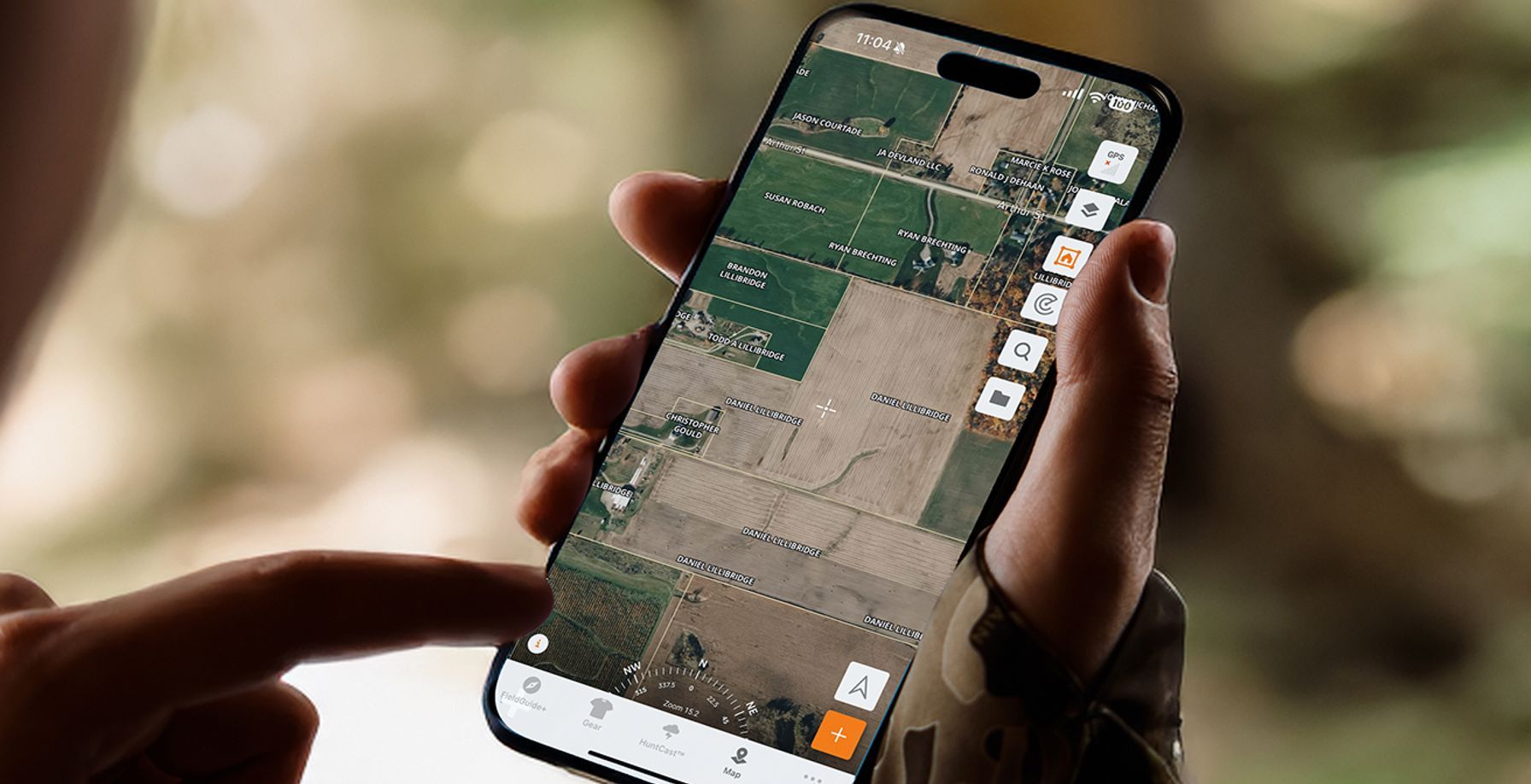
Using HuntWise app features to check against a tract before you head out confirms the current owner and gives you a name to call if you're not sure whether that tract's still open, rather than guessing based on last year's hunt.
A hunter who shows up on a newly posted tract without checking first doesn't just risk a citation. It's the kind of mistake that convinces a paper company to close a tract that's stayed open to the public for fifty years, punishing every other hunter who follows the rules.
How to Ask Permission to Hunt on Private Land
New Hampshire's biggest private landholders aren't individual families so much as paper and timber companies managing tens of thousands of acres at once, so permission here often means calling a company's local land office rather than knocking on a farmhouse door. Identify who holds the tract through HuntWise or the county Registry of Deeds first, then ask about road use, gates, and whether ATV access is allowed, since company rules on that vary widely.
Ask for permission even on land you know is unposted, since New Hampshire's tradition of open private land survives only because hunters keep proving they're worth trusting with it. A quick call before the season costs nothing and builds exactly the kind of relationship that keeps a tract off the posted list.
Staying off wet or soft logging roads and giving way to trucks matters as much as the initial ask, since a company's decision to keep a tract open gets revisited every time hunters cause a problem.
See how HuntWise property lines work in the video below!
Know Your Boundaries Before You Hunt in New Hampshire
New Hampshire still runs on an open-unless-posted tradition, but the tools landowners use to close that access just expanded, and a tract that's been open for decades can change status with nothing more than a can of purple paint. Treating any tract as permanently open is the fastest way to end up on the wrong side of a fresh posting.
Before you head out, confirm a tract's current status with HuntWise's Land Ownership layer, and don't assume a paper-company tract or an old favorite spot is still open just because it was last season. That habit matters more in New Hampshire than most places, now that a landowner can flip a tract's status with paint alone.
Download HuntWise and map out your hunt with Pro and Elite features (free) during your first week in the app!
Frequently Asked Questions (FAQs)
Q: What is the best app to find property lines for hunting in New Hampshire?
A: For New Hampshire specifically, HuntWise is a strong option since it layers current ownership and acreage over satellite imagery you're already using to scout, which matters when a single paper company might hold a tract spanning three towns. Offline access matters just as much here, since cell coverage disappears fast once you're off the main roads in the North Country.
Q: How accurate are GPS hunting apps for property lines in New Hampshire?
A: Mapping apps generally land within a few feet of the true boundary, but posting status can change faster than the underlying parcel data does, especially now that a landowner can post with paint alone. Treat the boundary line as accurate and check current posting status separately, since that's the part more likely to have shifted recently.
Q: Is there a free way to look up property boundaries in New Hampshire?
A: New Hampshire's ten county Registries of Deeds keep recorded deeds free to search, either online or in person, covering every tract in that county. Ownership and tax-map data live elsewhere: check your town assessor's office, since New Hampshire handles that at the town level instead of the county level.
Q: How do I know if land is posted "No Trespassing" in New Hampshire?
A: Look for signs at least two inches tall, spaced no more than 100 yards apart and posted at every gate and commonly used entrance, or a purple paint mark at least eight inches long and an inch wide, placed chest-high on trees, rocks, or posts. New Hampshire only started recognizing the paint option with full legal weight in January 2026, so it's worth checking for both methods on any tract you haven't hunted recently.
Q: What are the penalties for trespassing while hunting in New Hampshire?
A: Entering land that isn't posted or fenced is only a violation in New Hampshire, punishable by a fine with no jail time. Crossing onto land that's actually posted, fenced, or where you've been personally told to leave bumps the charge up to a misdemeanor, which can carry a larger fine.
Q: How do I find public hunting land boundaries in New Hampshire?
A: Close to 10% of New Hampshire sits inside the White Mountain National Forest alone, and NHFG adds about 100 more Wildlife Management Areas on top of that, so no single map tells the whole story. Check NHFG's where-to-hunt page for links to each type, then layer HuntWise's private-parcel data on top to see exactly where a public tract's edge meets the paper company or private land next to it.
Q: Can HuntWise show me landowner information in New Hampshire?
A: A paper company's tract in New Hampshire might span three towns and follow entirely different access rules from the family-owned lot next door, so confirming exactly who's in charge matters before you ask anyone anything. In HuntWise, tapping that parcel surfaces the current owner right away, with a contact listed under Property Lines Information where that record exists.
Q: How do I use county records to verify property lines in New Hampshire?
A: Your county Registry of Deeds is the place to confirm a tract's recorded deed, acreage, and legal description, and every one of New Hampshire's ten counties keeps that record searchable. Current ownership and parcel-tax information come from the town assessor instead, since New Hampshire assesses at the town level rather than the county level.


