

Wyoming is considered a top state for hunting elk, as these stunning creatures inhabit a truly diverse range of terrain and habitats, stretching from low-lying river bottoms to high-alpine mountains to valleys and grasslands. Spending time e-scouting your intended terrain and developing an understanding of seasonal movements are fundamental to successful elk hunting tactics.
Today, we're breaking down everything you need to know about e-scouting for elk, from movement patterns to hunting pressure considerations.
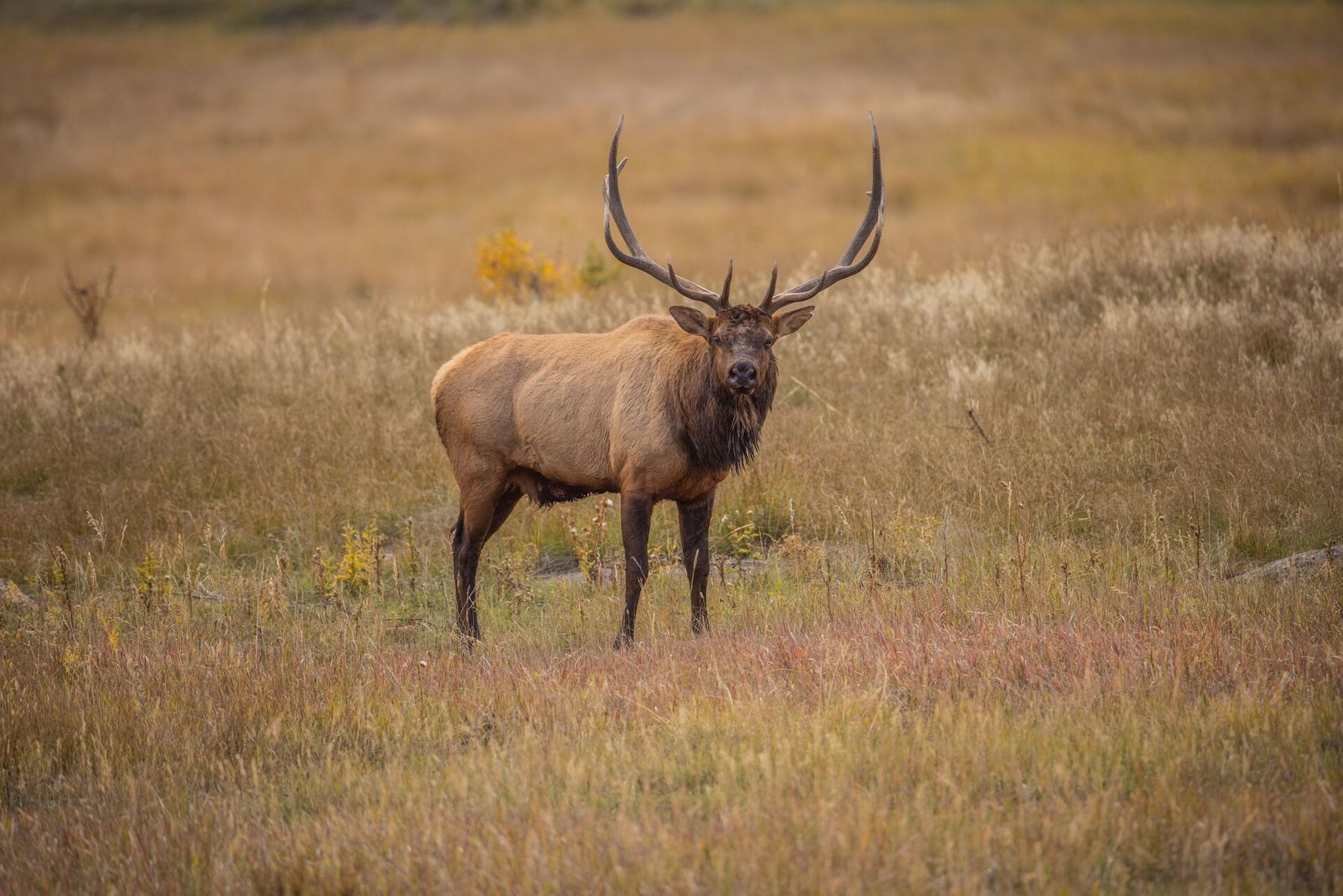
Understanding Elk Habitat in Wyoming
Elk are highly adaptable to Wyoming's natural habitats and can be found across the entirety of the state, from Yellowstone to the agricultural fields in southeast Wyoming. Understanding how they use the environment is critical to determining how to find elk.
Seasonal changes, such as snow, food availability, and temperature, will trigger elk movement and changes in habitat (more on this below).
What is an Elk Habitat Like?
Elk favor high elevation terrain during the early season to escape the heat and to feed on young grasses and forbs. During this time, they're commonly found on north-facing slopes for cooler bedding and anywhere near heavy timber for security that allows them to cover. In the cooler months, their habitat will shift to lower-elevation sagebrush steppes for foraging.
Any zone with proximity to water, whether it be streams, springs, or wallows, and accessibility to feed such as grassy meadows and open slopes, is a top location to mark on your HuntWise app for further in-person scouting.
The Bedding-to-Feed Pattern
Elk prefer bedding close to food and water. In your HuntWise app, target north-facing slopes that lead to benches on the topography feature. You can uncover meadows and burns using satellite or LiDAR map layers in the HuntWise app, as with water sources, and remember these don't have to be major river systems.
To bring it all together, look for transition features such as saddles and drainages, and you should be able to link all three.
Key Regions to Focus On When Elk Hunting in Wyoming
Understanding where you plan to hunt and the type of terrain you will encounter will help you choose the right hunting region. Some units are flatter and more easily accessible; others may require a high level of physical conditioning and the ability to pack out for several days.
Top Regions for Elk Hunting in Wyoming | |
|---|---|
| Bighorn Mountains | In north-central Wyoming, you've got the Bighorn Mountains. Dominated by heavily timbered terrain, the Bighorn Mountains are an easy-access option, suitable for both DIY and guided hunts, offering a true backcountry experience. The terrain favors a more active hunt with a focus on calling and spot-and-stalk tactics. |
| Cody Region (Units 51, 53–56, 58–61, 66) | With numbers near population objectives and strong bull counts, the Cody region is proving itself as a strong region. The terrain diversity within these units is extensive, ranging from mountain foothills to deep river canyons. |
| Greater Yellowstone Units (51, 54, 55, 56, 58, 59, 61, 62, 64) | Greater Yellowstone consistently produces big bulls thanks to its rugged, remote environment, which supports more dynamic, long-range migration and greater food accessibility across a range of elevations. The proximity of Yellowstone National Park, the remoteness of certain regions, and the inaccessibility mean bulls have the time and space to grow big. |
Use your HuntWise maps to identify wilderness and protected areas, as there are a few throughout these units. These units make for great rifle hunts, particularly in October, when weather patterns shift and trigger bull movement.
Understanding Seasonal Elk Movement
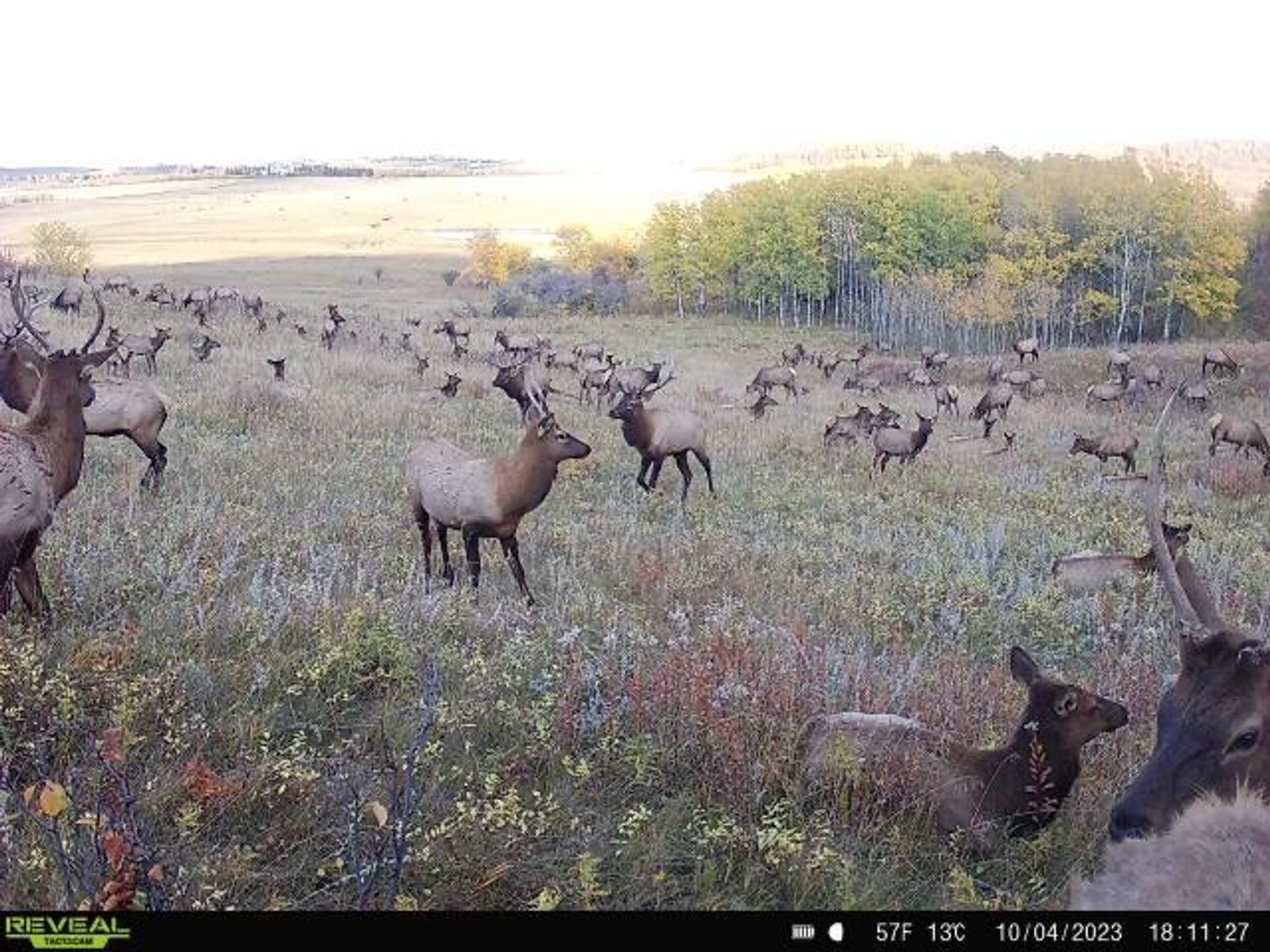
Movement and elk dispersion follow the seasons, depending on winter ranges, food availability, and migration routes.
Migration data and movement patterns are tracked by the Wyoming Game and Fish Department (WGFD) and other agencies. This data is often open source and available, allowing you to track herd movements, track elk elevation during the green-up, and even herd density in particular valleys.
Early Season (September)
Early season is a great time to be out in the field, as elk are starting to rut, making them more vocal and responsive to calls. This season typically aligns with the general archery season, so there are usually fewer hunters out, and elk are also less pressured.
The weather is warmer during this time, and elk will stay at these higher-elevation patterns near or above the timberline and favor bedding areas near food- and water-rich basins.
Mid to Late Season (October–December)
The general rifle season kicks off early October, at a time when elk are moving to lower elevations to escape cool weather, such as towards ranges like the National Elk Refuge. Increased grouping and migration patterns mean elk can be patterned; however, they may also group up in private land.
Jump on the HuntWise map and choose the "private/public" overlay to identify transit points and sections of national forest or BLM land that intersect with private zones.
What is Daily Elk Behavior?
Patterning daily elk behavior and choosing the right time to head out will also help boost your chances of success.
Typical Daily Pattern
During the day, elk tend to follow a predictable routine of feeding and bedding. At dawn, elk will usually move from timber where they've been bedded down to open meadows to feed. However, once light appears, they will typically move into north-facing timber to bed up again. Around dusk, it's common to see them out feeding again in these open areas.
When the weather heats up, elk will travel for water, usually around midday, and may wallow before bedding. They might even go straight for water, wallow, and then start grazing. This pattern is common during the archery season when the temperatures are higher.
What This Means for E-Scouting Elk
Understanding elk behavior provides you with a couple of different options for e-scouting and highlighting glassing zones.
- To target bedding areas, look for dark timber target flat areas, like benches, where the contours spread right out on otherwise inclined areas at north-and east-facing aspects.
- When e-scouting feeding zones, look for meadows or burns and smooth patches or drainage contours that resemble V-shaped valleys.
Pay careful attention to and mark travel corridors between these two critical points.
What Are the High-Value Terrain Features to Target?
Whether you're planning your first hunt or are an experienced elk hunter, knowing how to read the maps and target critical terrain features will help you dial in your scouting and maximize your chances of harvesting a bull.
High-Value Terrain Features for Scouting Elk | |
|---|---|
| Burn Areas | For high-trafficked feeding zones, target burn areas younger than 15, where elk love to munch on the regrowth, providing high-quality forage. You can check historical burn data via the National Interagency Fire Data and use the Huntwise satellite imagery to identify burn scars, timber cuts, and any vegetation changes. |
| Benches and Hidden Terrain | Elk love benches because, even though they might be at an elevation, they provide a stable, flat area for them to bed up. On your map, it will appear as a flat, shelf-like form.
To uncover topographical features that the tree line or dense forest may hide, use the HuntWise LiDAR (Hillshade) layer to uncover these hidden features. |
| North-Facing Slopes | North-facing slopes are typically cooler, have greater moisture retention, and have denser timber, making them the preferred location for daytime bedding. Once you've uncovered a slope, explore a little further down the slope (about a third of the way) with a focus on cover, water access, and food. If you hit all three, you're onto a winner. |
How to Find Elk with E-Scouting Tools
Pre-season is the ultimate time to start e-scouting, allowing you to mark several high-potential hunting zones based on high-value terrain and unit allocation.
1. Use Digital Scouting Strategy
Public land elk hunting is as challenging as it gets. With growing popularity and hunting pressure, e-scouting is now an essential step in planning your public land hunt.
With HuntWise, you can start by exploring the hunting zone, marking areas of interest, including benches and terrain breaks, burn scars, and mapping water sources.
Another great strategy is to measure distance from roads. Physical fitness and pushing beyond the more popular hunting areas, such as those near main roads, can make a big difference in your hunt, especially if you plan to hunt a sought-after unit.
2. Analyze Key Map Layers
Once you open your HuntWise app, you can start exploring by different layers and piece together your hunt. It's always great to start with a general topographical overview to get a feel for the terrain and elevation.
Next, review the satellite overview, focusing on dense timber cover, these north slopes, and any roadblocks that could dissuade other hunters, such as river systems or steeper terrain.
Check the private vs. public overlay to ensure you're hunting within public land boundaries. Don't forget to mark any small transition points between public and private land, as elk will commonly group up on private land and can stay there all season.
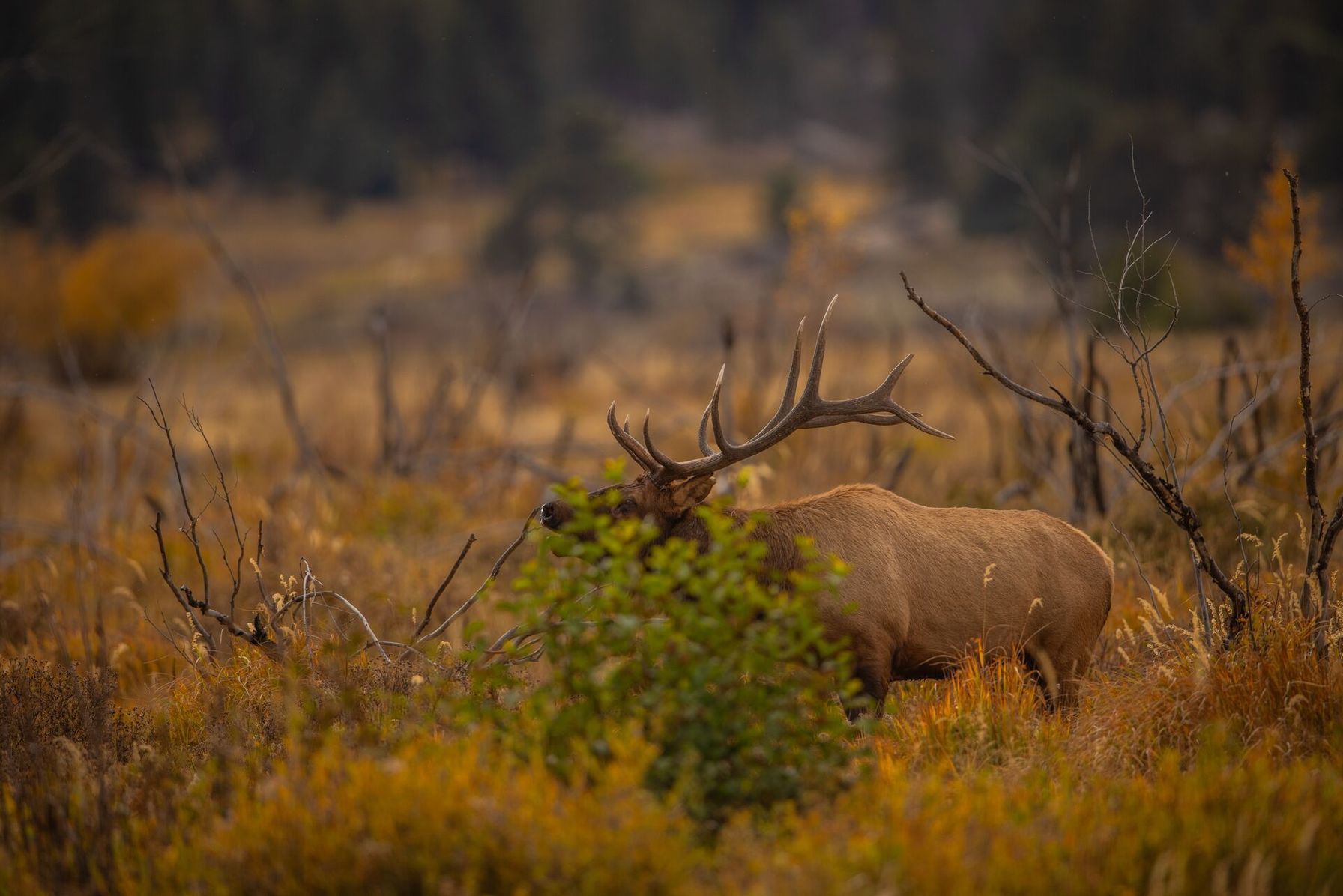
Pressure Management: Where Mature Bulls Hide
Apart from hunting early season and during the week rather than on weekends, some additional strategies can help maximize your chances out in the field.
Avoiding Hunting Pressure
When e-scouting, target areas 1 to 2 miles from trails and far from roads, and avoid any difficult terrain, such as steep inclines. Public-land elk hunting requires a high level of fitness, and for many hunters, it can be a shock just how taxing it is.
If you can work on your fitness during the off-season with some pack outs and cardiovascular training, you'll be in a great position to uncover less-pressured hunting zones where big bulls may be hiding.
Roadless and Remote Areas
Elk move away from hunting pressure very quickly. Even after the first week of the general rifle season, elk may begin to change their behavior and patterns, moving to ever stronger nocturnal patterns or 'safer' areas.
Older bulls will prioritize security over convenience, and you may want to consider packing out on remote trailheads and then pushing deep into the backcountry.
Water: The Overlooked Key
Elk will travel a surprising distance for water, especially during the early season when hunting pressure is low. Focus attention on streams, springs, and wallows, especially during the rut, and consider transition routes to and from water sources.
Regulations You Need to Know for Hunting Elk in Wyoming
Along with e-scouting, pre-season prep also involves exploring and familiarizing yourself with the relevant regulations and hunting requirements.
- Wilderness Rules: Non-residents may hunt only in federally designated wilderness areas with a licensed guide or a Wyoming resident companion. This is designed to improve safety, especially when hunting in remote conditions.
- Licensing and Tags: Always check regulations with the WGFD, as they can change. Focus on unit-specific rules, season dates, and even insights such as draw odds.
Note that these are just a couple of the important regulations you should know as you plan your elk hunt in Wyoming. Be sure to check the latest season information from the Wyoming Game and Fish Department.

Start E-scouting for Elk in Wyoming with HuntWise
A successful Wyoming elk expedition starts with e-scouting. By focusing on habitat, pressure points, and access points, and confirming elk presence through real-world scouting, you'll be in a prime position for a successful backcountry elk hunt.
With HuntWise, you can start exploring potential hunting zones today, taking advantage of topo, 3D, and even LiDAR overlay to paint a perfect picture of your intended hunting zone and uncover less-pressured zones that might just be holding that big bull.
Download HuntWise today and start e-scouting for your Wyoming elk hunt! Explore premium features free during your first week in the app.
Frequently Asked Questions (FAQs)
Q: What is the best area to hunt elk in Wyoming?
A: Wyoming doesn't have one single best area. It depends on your goals, fitness level, and how many preference points you've built. The units surrounding Yellowstone National Park in the northwest, including Bridger-Teton and Shoshone National Forests, consistently produce the state's largest bulls, but draw odds are tough for non-residents. The Bighorn Mountains and central Wyoming units offer a more accessible mix of public land, good elk numbers, and manageable terrain for hunters who want a quality hunt without a decade-long points wait.
Q: How much does an elk hunt in Wyoming cost?
A: The total cost varies widely depending on whether you hunt DIY or hire an outfitter. For a self-guided hunt, plan on at least $730-$750 for the regular non-resident tag, conservation stamp, and application fees alone. Guided hunts add significantly to that budget, with outfitter fees typically running $6,000-$15,000 or more, depending on the style of hunt, accommodations, and whether you're hunting wilderness areas.
Q: How to get a non-resident elk tag in Wyoming?
A: Non-resident elk tags in Wyoming are issued through a draw system managed by the Wyoming Game and Fish Department (WGFD). Applications open January 2 each year, with the non-resident deadline falling in early February. You'll apply for either a regular or special license in one of three general regions (Eastern, Southern, or Western) or for a limited quota unit, and your draw odds improve with each preference point you accumulate over the years.
Q: How much does a Wyoming elk tag cost?
A: For 2026, a regular non-resident elk tag costs $692, and a special non-resident tag costs $1,965. On top of that, you'll pay a $21.50 conservation stamp and a $15 non-refundable application fee, bringing the minimum total to around $728.50 for the regular draw. The special license costs more but is drawn from a separate pool with potentially better odds, making it worth considering if you have the preference points to back it up.
Q: How many elk tags does Wyoming give out?
A: Wyoming has maintained a cap of 7,250 non-resident full-price elk tags for decades, with 84% of total elk tags reserved for residents and 16% allocated to non-residents. Of the non-resident pool, 60% go into the regular draw and 40% into the special draw. Elk numbers in Wyoming are currently at historic highs, and WGFD increased non-resident license allocations in 2025, so conditions are as favorable as they've been in recent years.


