

Elk hunting in the fall exposes every weakness you didn’t admit you had: your gear, your mentality, your physical ability. I recently learned the hard way in New Mexico, and I want you to have success. I was fortunate enough to draw a tag for New Mexico in 2025.
So, today I want to focus on some of the lessons I learned while gearing up. Learn from my experience as I cover the crucial elk hunting gear you need for a successful hunt!
| In this Guide: |
Clothing and Footwear: Your First Line of Defense
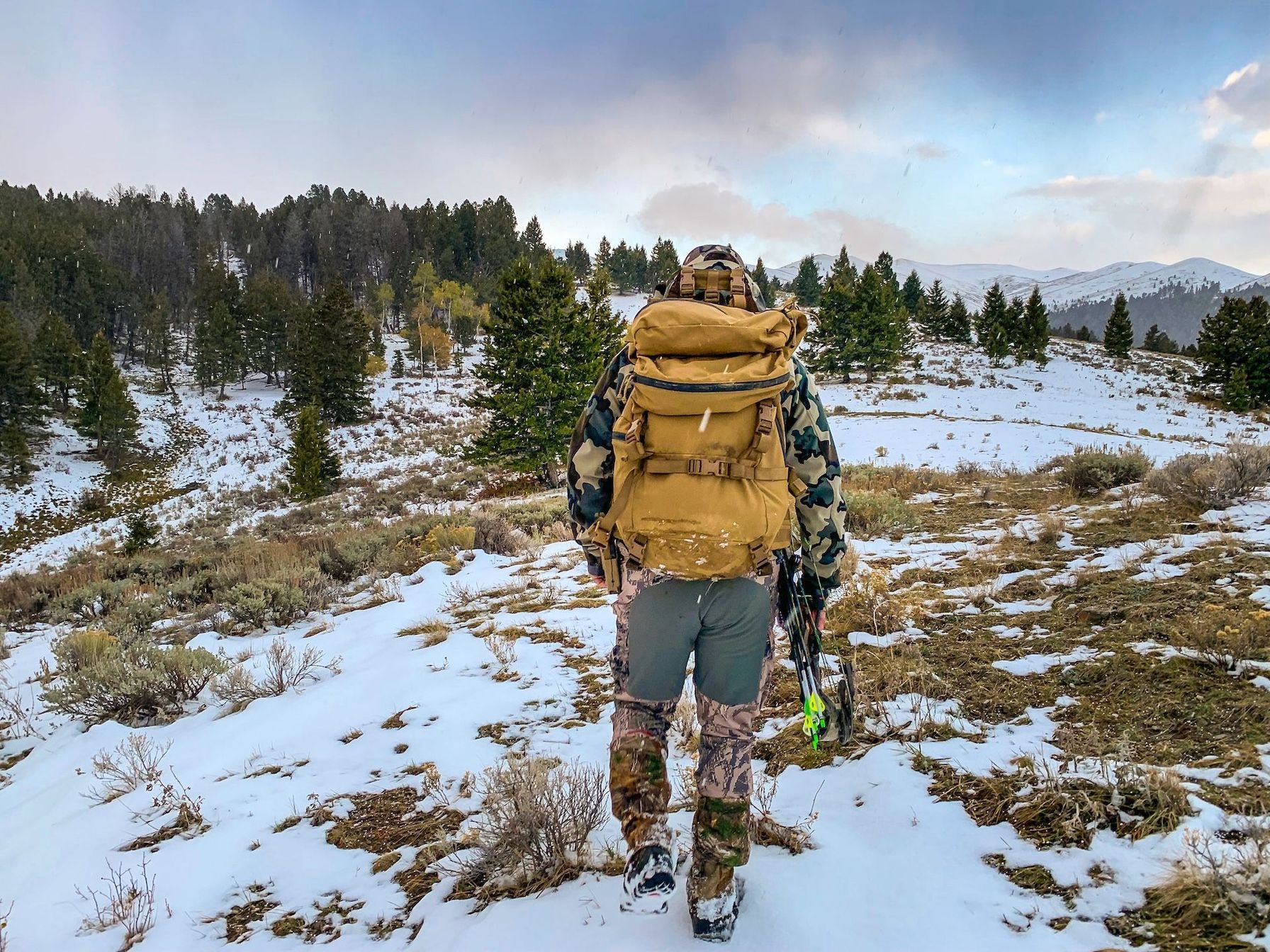
No matter which state you choose for your elk hunt, you'll need to plan for the weather — and it can change throughout your multi-day hunt or even throughout the day.
Why Layering Matters
| Elk Hunting Clothing — Quick Checklist |
|
I first learned about layering in Scouts while growing up, and it’s stuck with me while hunting. Most modern hunting apparel companies have some kind of layering system, and I highly recommend you lean into them because the weather changes very quickly throughout the day. It could be in the 30s in the morning and high 70s in the afternoon, and then it starts raining.
I’ll break down the general layering systems and make a couple of recommendations that I used on my hunt.
Base Layers (Next to Your Skin)
The first layer (your base layer) goes next to your skin and must provide comfort and breathability. Your base layer is one of the most critical components of staying on the move throughout the day and being comfortable. You want something that can help your body regulate the changing conditions and help with moisture control.
You’ll find a mix of synthetic and merino products in this category. I prefer merino layers because they don’t smell as bad as synthetics and dry faster, though they're slightly more expensive.
Different brands have different merino wool blends, but I found the Sitka Merino 120 SS Crew and Mtn Opps Merino Wool SS to be excellent. I have two of each, and both held up well and are part of every hunting trip.
My only warning is to avoid cotton, as it retains moisture and can get heavy. This makes it more likely to lead to blisters, rashes, and bacterial buildup.
Mid Layers (A Little Insulation Goes a Long Way)
This is where you add thickness to stay warm. You want materials and products that will retain heat while being breathable. This is important because we want to transfer moisture away from the body to stay dry while still regulating core temperature.
Most mid-layer options will use a fleece, down, or synthetic insulation. Just choose the option that fits the conditions for your hunt. There are tradeoffs with weight and what happens if they get wet, so consider that. I pack a mid-layer quarter zip or hoody, an insulated mid-layer, and a vest. This covers most of my needs.
The features that make sense here are long sleeves to protect from the sun and a quarter- or full-zip. Hoods can be nice, but you want to avoid wearing a bunch of hoodies that build bulk between your back and your pack when not in use, so keep your outfit to one or two hoodies at a time.
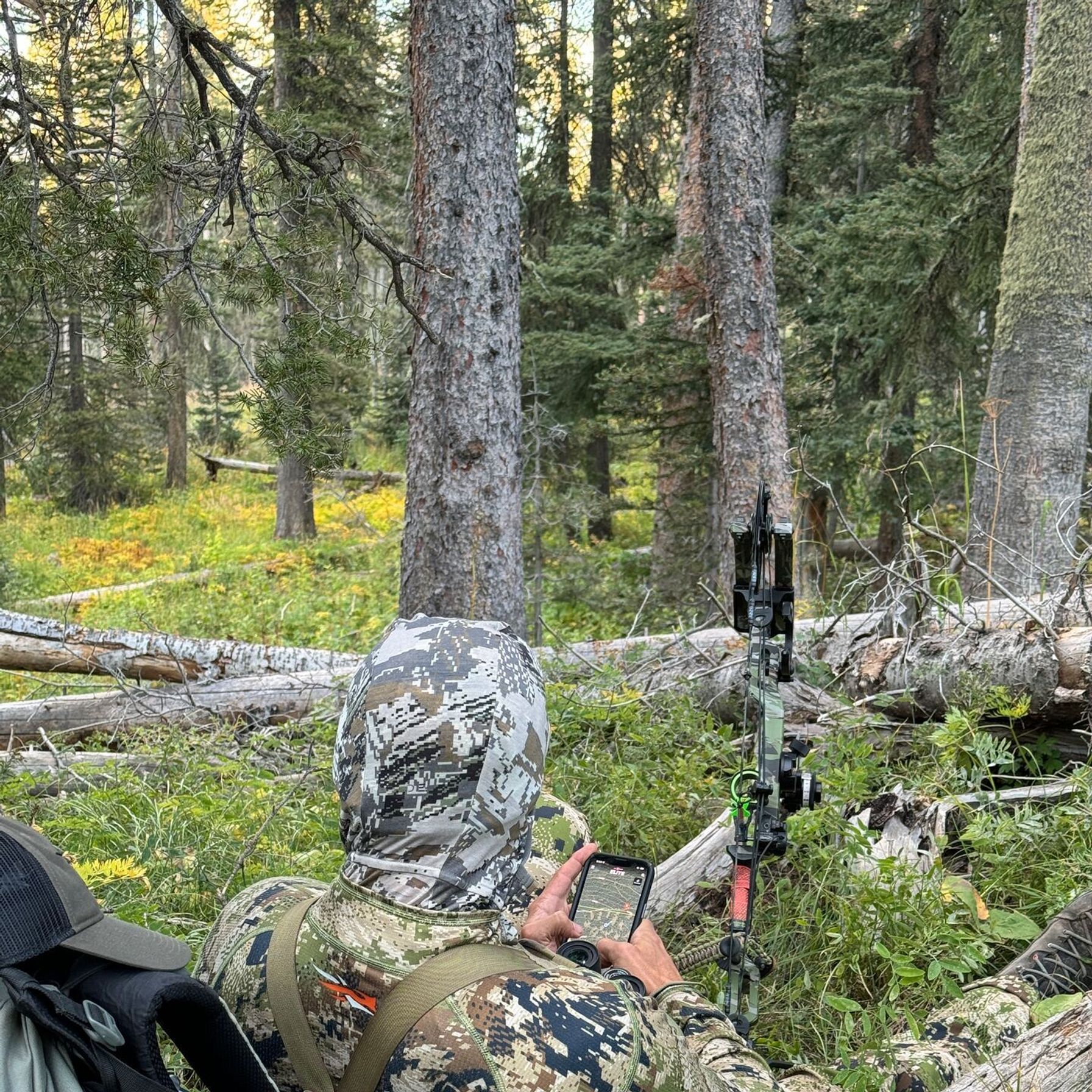
On warmer days, I choose to wear an additional 120-merino hoodie or a quarter-zip. Sitka makes another great product with the Core Merino 120 Hoodie. I’ve used this hoodie to bust through brush while pulling out deer, and I am pleased with how tough it is, with only a few pulled threads.
Some thicker mid layers I have used are the Kelvin Aerolite products from Sitka. They breathe well, pack up super small, and have a great range of movement for archery. Something about the insulation they use is just awesome, and I keep coming back to my jacket every year.
Outer Layers (Your Mobile Shelter)
The outer layer is what you should plan to take the brunt of: rain, wind, snow, and anything else. This is the layer that needs to be waterproof, windproof, and breathable to protect you no matter what time you plan your elk hunt.
You have a couple of options here that cross utility with softshell jackets made with windproof material and a DWR (Durable Water Repellent) treatment that does a good job for short periods of time.
A soft shell will work on most hunts where you need a little extra warmth or protection from wind. The Stratus and Jetstream lines from Sitka are great. I recommend the Jetstream for elk hunting because I think it has a good balance between waterproofing and wind.
I prefer having a dedicated rain kit like the Sitka Dew Point Jacket and Pants. If you go with a dedicated rain kit, make sure the pants have full-length zippers, because this makes it much easier to put them on quickly over your boots. I have an older pair of rain pants (that will remain unnamed), but they don’t breathe or have zippers, so I sweat so much that I may as well just be in the rain.
Some companies have changed their waterproofing in the past year due to concerns about PFAS chemical regulations, so there are many new products I haven’t been able to try. Some that I am excited about are the Dew Point Pro Jacket and Chugach TR Rain Jacket.
Boots (Your Most Critical Investment)
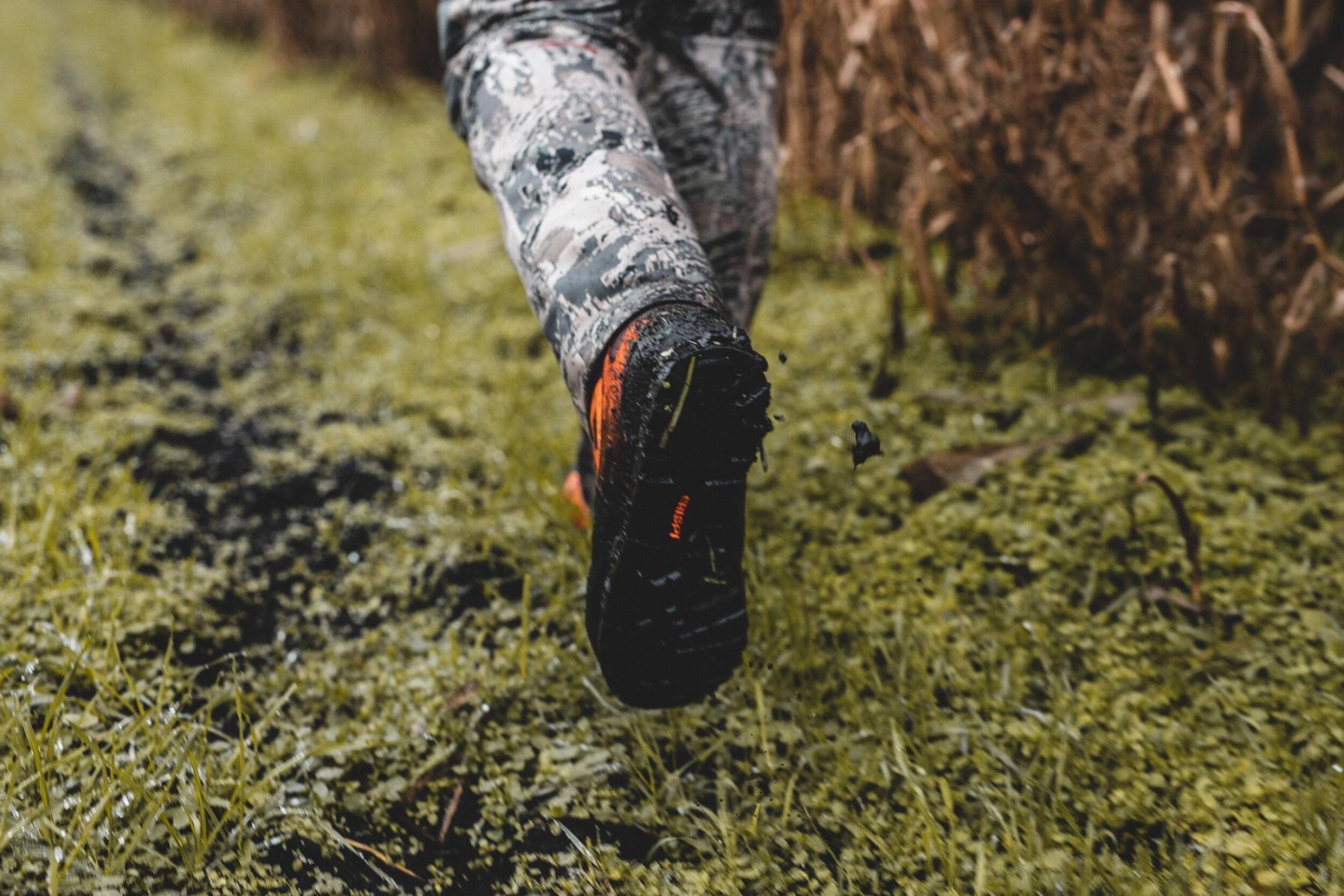
Happy feet will keep you moving longer and keep you more still when it counts. Boots are a critical item you should not cut corners on, and you need to try them on to ensure they fit your foot properly (rather than just order them online).
All of us have different feet and proportions. We’re all different, and you need to consider the boot that is the best fit for you because there isn’t a magical brand or answer that is best for everyone.
I have used a couple of brands, including the original Usra MS GTX from Lacrosse for TAC, Whitetail, and Turkey, and the Lapponia III from Crispi for Elk, TAC, and Turkey. They are both great options, and the benefits of a good boot will include ankle support, and they will be durable.
Once you find your magic slippers, break them in and put some miles on them before you get into the hunt. I put about 50 miles on the new boots before my elk hunt in New Mexico, and I was pretty happy. But they continued to break in once the hunt started.
Stiff soles will be preferred for heavier pack-outs and harder terrain, with the tradeoff being a bit heavier.
| Pro tip: |
| If your boots get wet, do not drop a hairdryer into your boots on full blast. It will melt the glue and destroy them. Use a boot dryer or a newspaper and a fan. Damp boots are better than melted boots. |
Insulated vs Non-Insulated Boots
Another decision you will make is between insulated and non-insulated boots. Since you will be on your feet all day, I highly recommend going on the uninsulated route so your feet can breathe, but take the weather conditions for your hunt into consideration.
Socks
Underneath your boots, you will want quality socks, generally made of Merino wool. I carried a backup pair in my pack each day in the event they were needed. This can be a low-weight, high-morale boost.
I wore the T4021 Boot Midweight Tactical Socks with Cushion from Darntough and was very pleased with their performance. I also wore pairs from Kifaru and Lacrosse, which both performed well. Liners are helpful to prevent blisters and can be considered.
At the end of the day, your feet are only as tough as you train them to be, so pack mole skin and put some miles on your feet in preparation. Our hunt had us hiking 7-11 miles each day, if that’s helpful.

Weapon and Optics: Precision and Performance
Once you have your clothing options set, it's time to determine the best weapon for your hunt. Your elk hunting gear isn't complete without something to help you take down a bull!
Rifle Hunting
Common calibers for elk hunting are .308, .30-06 Springfield, 7mm Rem Mag, and .300 Win Mag. These are all sufficient and have helped harvest many elk.
The time you take practicing and getting familiar with the performance at range is where you should focus your effort. Choose a caliber you enjoy and practice. Plan to adjust your scope for elevation change once you arrive on site for your hunt.
Bowhunting
Make sure your bow meets all state regulations. This includes minimum draw weight, and some states will not allow artificial lights or electronics in archery season.
Think through your arrow and build a heavier arrow that delivers high levels of kinetic energy on impact. Choosing a broadhead is another decision you’ll have to make, and while I was making my decision, I asked for lots of advice.
I found that many modern mechanical and fixed broadheads will work given the appropriate conditions. My bow is set to pull 75 pounds with 65% let off at a 30 in draw. I am shooting a 485gr arrow and had confidence that a mechanical arrow you deploy. The elk we harvested during our New Mexico trip was shot with a 65-pound bow with a 32-inch draw, and the elk didn’t walk 50 yards after the shot.
Optics (Seeing Before Shooting)
Your elk hunting gear list isn't nearly complete without the right optics to help you glass!\
Binoculars
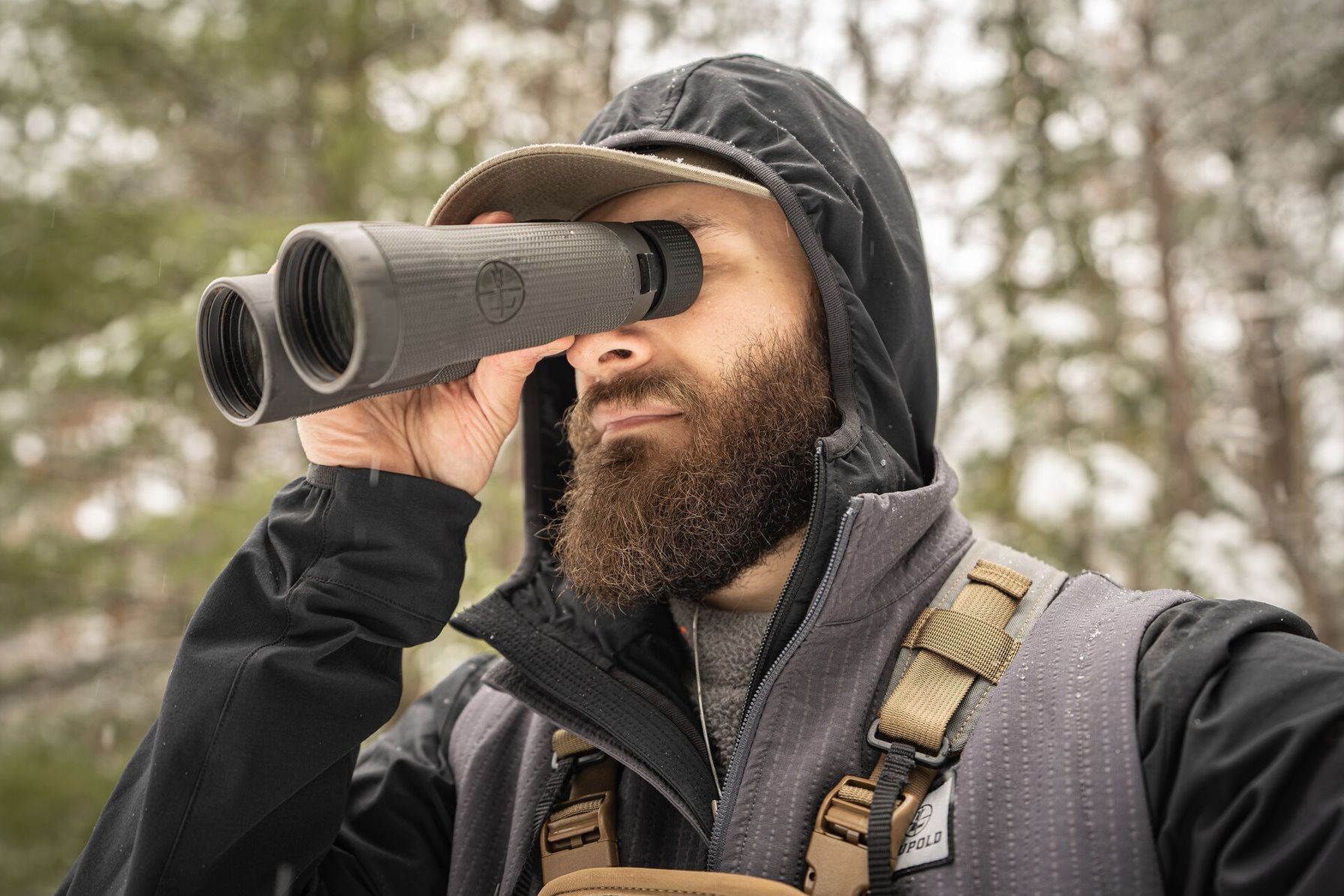
You will want to carry a good set of binoculars. I also recommend you invest in a chest harness that will keep them easy to access with your range finder and wind detector.
Ideal specifications are 8x42 or 10x42 for general use and 12x50 or 15x for long-range glassing. Find a good pair and get an adaptor that lets you mount them on a tripod for longer sits.
Spotting Scope
It also makes sense to carry a spotting scope for longer sits and covering larger areas.
Spotting scopes are where you will invest a good bit of capital for quality glass. The more premium versions will make a noticeable impact when glassing in low light and with shadows. For example, it can be easy to mistake a bedded bull for a brush if you are unfamiliar with the terrain.
Consider getting a digiscope adaptor so you can take some photos while glassing.
Rangefinder
Regardless of your hunting conditions, you will want a range finder with you in the field. As a bow hunter, I prefer models that compensate for slope versus just line of sight. I could write a whole article about why that matters, but that’s not the focus today.
I recommend spending the money on a version that can range through fog and precipitation. Some models will have a first and last mode that gives you more control in ranging through obstacles. This was important for our hunt when the fog was low, and it was raining.
Choose a Backpack That Can Haul a Significant Load
There is a wide variety of packs to choose from in all different sizes and shapes. Select a model that fits the needs of your hunt, but plan for success.
Decide if this is a one-time use or something you will continue to use down the road. Essentially, packs are either external or internal frame packs with different organization methods.
I used the Kirafu Absaroka because I viewed the expense as a lifetime pack that I can use for a long time and hopefully pass on to someone else.
Shelter and Sleep System
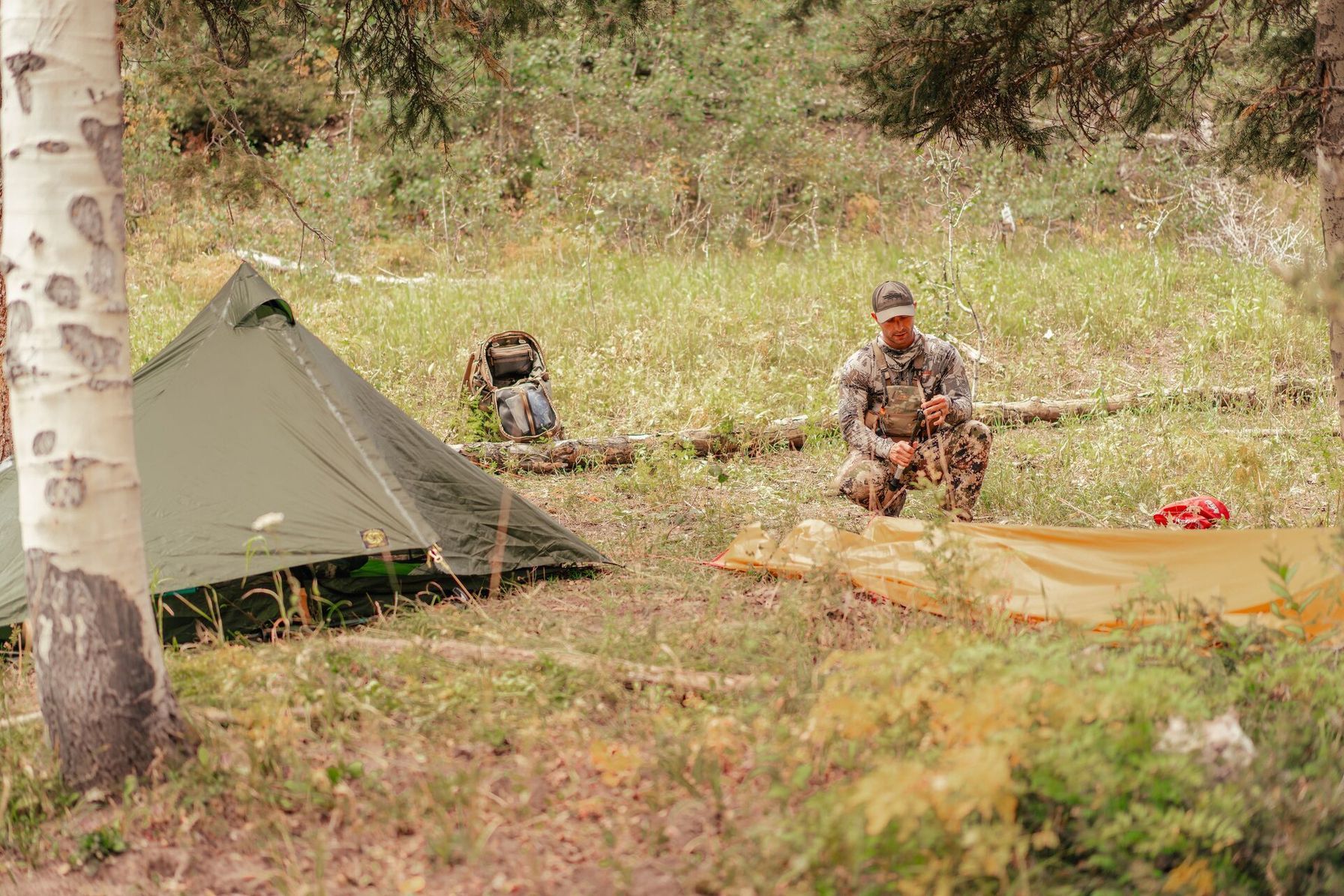
It is important that you have a plan to get out of the elements when needed. It’s a balance between efficiency and weight while selecting a tent for elk hunting.
Aim for a lightweight tent of about 5 lbs. It’s easier to achieve this if you select a model without a floor and carry a ground sheet or Tyvek with you and a sleeping pad.
As for your sleeping bag, select a model that fits the needs of your hunt. You will need to recover between hunts.
Survival and Field Dressing Essentials
No matter the odds of a successful hunt, you need to be prepared for success with the field dressing essentials. You must also be prepared for something to go wrong and know how to survive if conditions change unexpectedly, or if someone gets hurt.
Navigation and Communication
Always know where you are and drop pins for your campsite and pack if you drop it.
| Pro tip: |
|
Finally, have a backup plan with satellite communication. This could be a newer cell phone with satellite capabilities or a Garmin inReach. Don’t ignore these safety tools.
Safety Gear
The safety gear bare essentials are a first-aid kit, firestarter, and a headlamp with spare batteries.
I think a solar charging battery bank that has an integrated light is also a great tool and worth its weight. This allows you to have an additional light source and keep your electronics charged each day. I got one off Amazon for about $25, and it worked great.
Kill Kit
Build out a kill kit in a quick pouch and put some emergency items in it.
I use a blaze orange pouch and keep my first-aid, knives, backup release, lighter, iodine tablets, electrical tape, paracord, spare headlamp, gloves, dude wipes, sharpie, and hunting license with tag. This is something I can grab quickly that will have many emergency essentials when needed. It’s also easy to find, and I can throw it on the ground if I need to mark my pack.
Food and Water
Good food and water are essential for high performance.
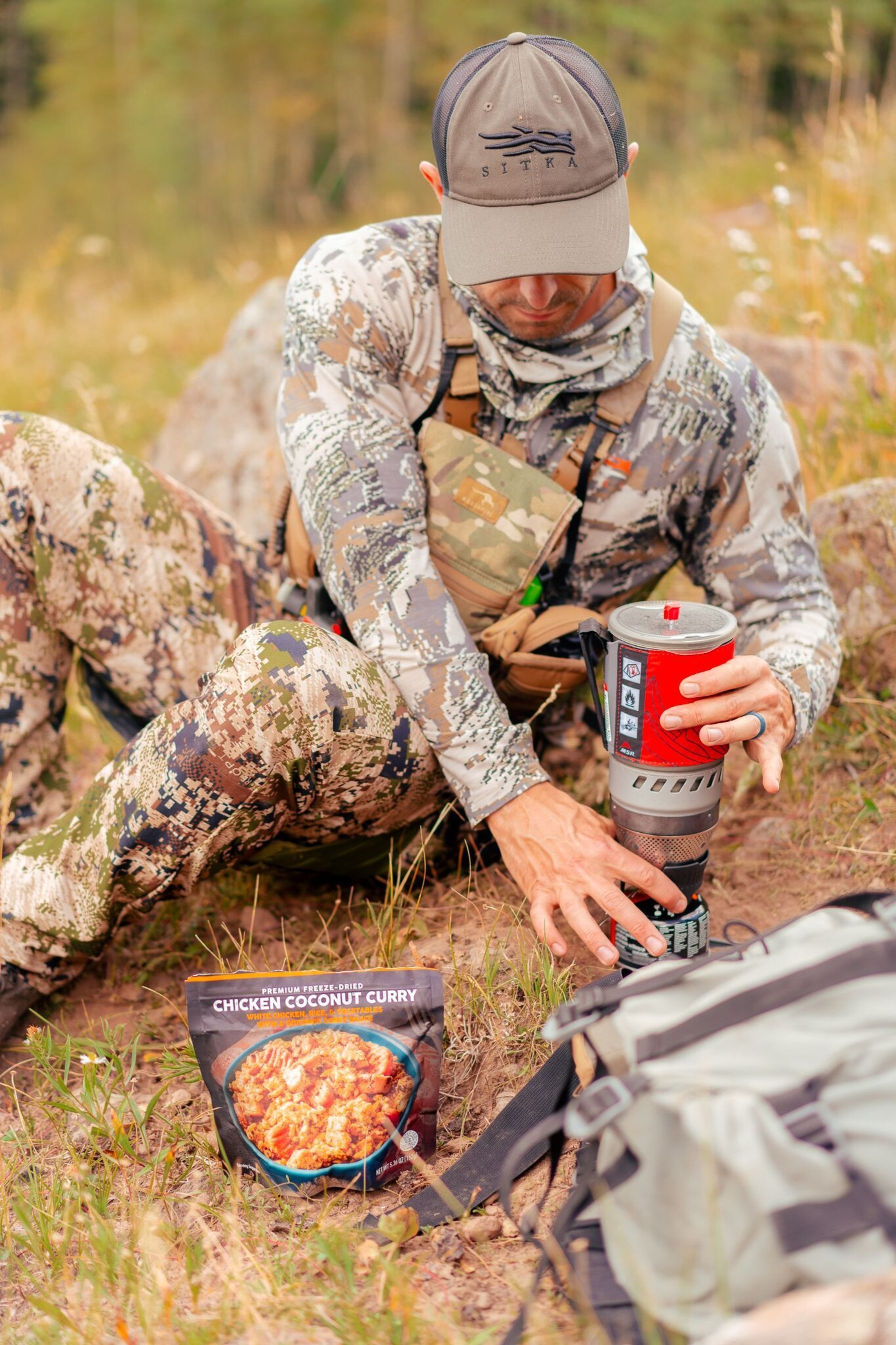
Take high-calorie meals and light-weight options that have minimal trash. I love the trail mix packs from Costco and keep a tube in the cargo pocket of my pants at all times. I call these my "pocket snacks," and if I drop my pack, I know that I have something to keep me going no matter what.
I also enjoy MREs and other prepared meals from various camping companies. Jerky is a nice snack, and protein bars from Mtn. Ops are a favorite of mine, as is their Ignite pre-workout for waking up in the morning.
Water storage is important. You can use a bladder or something lightweight like a Nalgene. I prefer the Nalgene bottles for drinking and a bladder for purification and filtration.
I carried two 48-oz Nalgene bottles of clean water, one 32-oz Nalgene, which was usually mixed with electrolytes, and a 3L bladder with water for refills. Plan to consume 4-6 liters of water daily and have a plan to replenish. Do not sacrifice your water.
One item that people will swear by is the Jetboil cooking stove. If you have the space, carry one because it will allow you to boil water and quickly prepare meals.
Additional Accessories and Creature Comforts
Some additional items you need to pack are a hat, gloves, gaiters, and trekking poles. Nice to have accessories include a solar charging bank for your phone, and some emergency communication if you don’t have cell service.
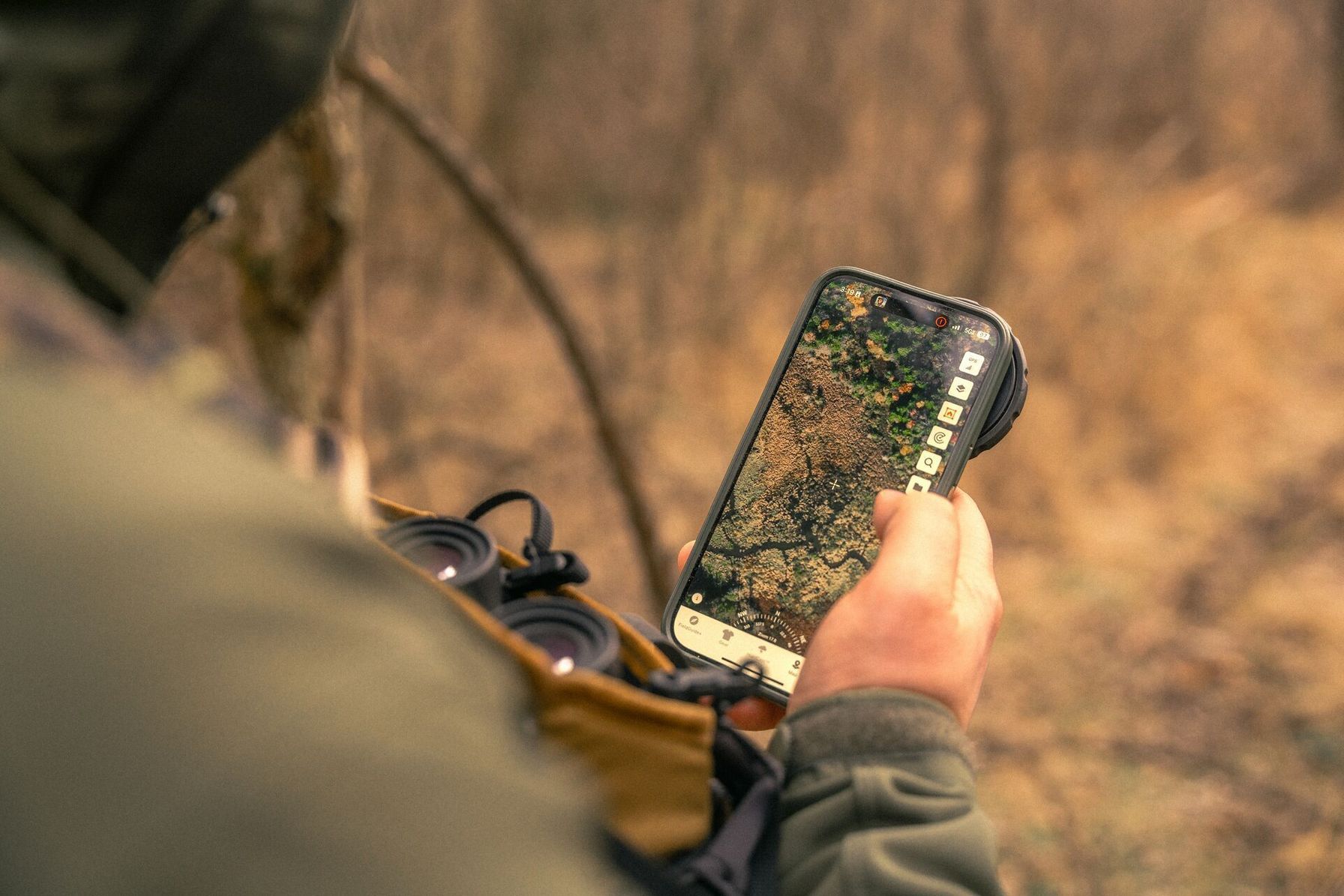
I also carried a blaze-orange flag to mark my pack if I needed to drop it, but I never needed to because I just marked the pack with a pin on HuntWise.
| Pro tip: |
| Plan your gear around your elk hunting budget. I've highlighted a lot of great gear today, but ultimately, the best gear for your elk hunt is the gear that works best for you and fits your budget. You can also take advantage of HuntWise Pro and Elite subscription discounts with our gear partners! |
Use HuntWise and the Right Elk Hunting Gear for a Successful Hunt
These elk hunting gear insights should help get your head around some of the basics and tools you need to consider while planning your hunt.
Make sure you do some e-scouting with HuntWise before going into the backcountry. Have a plan and use offline maps to your advantage.
Elk hunting success depends heavily on preparation and gear. The gear can be a one-time investment if you buy quality gear that can last a lifetime. And remember, HuntWise was invaluable on the hunt! It should be part of your kit as you prepare.
Download HuntWise and explore the Pro and Elite features free for your first week in the app. Then, get out and have the hunt of a lifetime and share your memories!
Frequently Asked Questions about Elk Hunting Gear (FAQs)
Q: What gear do you need for elk hunting?
A: Elk hunting requires solid foundational gear: a reliable rifle or bow, quality optics, and layered clothing suited for cold, unpredictable mountain weather. You'll also want a sturdy pack, game bags, and a good pair of boots built for rough terrain. Navigation tools, scent-control products, and a first-aid kit round out the essentials before you head into the field.
Q: Is a .308 or .270 better for elk?
A: Both calibers are capable elk rounds, and experienced hunters use each one successfully. The .270 offers a flatter trajectory and is a strong choice for longer shots in open country, while the .308 is known for its versatility and is widely available. Your shot placement, familiarity with your rifle, and hunting conditions matter more than which caliber you choose.
Q: What is the best setup for elk hunting?
A: A solid elk hunting setup includes a well-zeroed rifle or properly tuned bow, quality binoculars, and clothing layers that manage moisture and warmth. Pair that with a pack built to haul meat and gear over long distances, and you're covering the core bases. From there, tailor your setup to your terrain, method, and the distances you expect to shoot.
Q: Is 70-pound draw weight enough for elk?
A: Yes, 70 pounds of draw weight is plenty for elk when paired with the right arrow and broadhead setup. Most states that allow archery elk hunting set the minimum draw weight at 35-50 pounds, so 70 pounds exceeds those requirements with room to spare. Focus on shooting a heavy, well-tuned arrow and practicing consistent form for ethical shots at hunting distances.
Q: What are the common mistakes in elk hunting?
A: Underestimating the physical demands of elk country is one of the most frequent mistakes hunters make, especially those who haven't hunted in steep, high-elevation terrain before. Improper scent control and making too much noise are also common missteps that can end a hunt before it starts. Going in without a solid pack-out plan is another mistake — elk are large animals, and getting the meat out efficiently takes preparation and the right gear.


