

During duck season, permit holders draw for walk-in hunting units each morning, and everyone else waits for a standby spot.
Access here is rationed, not first-come. IDNR runs three online lottery rounds for public duck and goose permits between mid-August and late September, then releases leftover permits on a first-come basis. Missing those windows can leave you with few dates to choose from.
HuntWise helps you size up a site before you apply. Our public land layer outlines each SFWA on satellite imagery, so you can see how a unit sits against the river and pin your route from the parking area. If you're sorting through the types of public hunting land, this guide covers the Illinois steps, the main areas, and the draw rules behind them.
How to Find Public Waterfowl Hunting Land in Illinois: Five Steps
Illinois public marsh runs on a calendar, so work through these steps in order.
- Turn on the public land layer in HuntWise. Open HuntWise app’s mapping tools, enable the public land layer, and zoom to Fulton County along the Illinois River. The SFWA outlines appear over satellite imagery, which shows how lakes, levees, and fields line up.
- Choose a site and read its rules. Each IDNR site has its own page with hunt days, check-in times, and unit maps, and the Rice Lake site rules are a good model. Compare two or three sites before you build an application.
- Apply for a public duck permit. Hunters enter the public duck and goose permits lottery online, and each lottery round opens to a different group of applicants. After the lotteries, first-come permits open on October 1 and stay available until 72 hours before the hunt date.
- Match your dates to your zone. Illinois uses three waterfowl zones for 2026-2030, and duck seasons are split across them. The Hunt Illinois waterfowl season dates list every zone, and Rice Lake follows the Central Zone season.
- Plan your draw-day arrival. Rice Lake permit holders check in between 4:30 and 5:00 a.m., and permits go void after that. A drawing then assigns stakes, and hunting ends at 1 p.m.
Each hunter can receive up to five duck permits per season, so spread them across sites and dates rather than stacking them on one weekend.
What to Bring and Confirm Before Drawing Day
Because you pick hunt dates weeks ahead, it helps to understand when ducks move before you choose them. Most Illinois permit hunters bring the same core items for their hunt:
- An Illinois hunting license, a Federal Duck Stamp for hunters 16 and older, an Illinois migratory waterfowl stamp for hunters 18 and older, and HIP registration
- Your printed IDNR permit, since permits are emailed or printed online instead of mailed
- At least 12 standard-size decoys, which Rice Lake requires
- Waders and a boat without a motor, since Rice Lake allows only walk-in hunting or motorless boats
- A downloaded HuntWise map with pins on your parking spot and route to the unit
Lay everything out the night before, because a 4:30 a.m. check-in leaves no time for a second trip to the truck. Double-check your permit date and site name as well, since permits can't be transferred
Waterfowl Hunting Areas in Illinois
Five IDNR sites give you a starting list, from the Illinois River valley to the far southern tip. Rules and permit rotations differ from site to site, so learn how WMA permits work helps before you apply.
Illinois Waterfowl Hunting Areas | |
|---|---|
| Area Name | Rules |
| Rice Lake SFWA (Fulton County) | Permit hunters rotate daily through the Rice Lake, Copperas Creek, and Big Lake walk-in areas. Check-in runs from 4:30 to 5:00 a.m. Hunting is walk-in or motorless boat only, and hunting ends at 1 p.m. |
| Double T SFWA (Fulton County) | Open Wednesdays, Saturdays, and Sundays during the Central Zone duck season, with 460 huntable acres. Hunters draw for a numbered stake or pit and walk in to it |
| Anderson Lake SFWA (Fulton County) | Permits are available on set days, and a daily drawing assigns hunt locations about an hour before legal shooting time. IDNR recommends a boat. |
| Horseshoe Lake SFWA (Alexander County) | Blinds and pits are assigned by daily drawing during the South Zone duck season. The area is closed on Mondays and Tuesdays. |
| Mermet Lake SFWA (Massac County) | The Controlled Hunting Area runs Tuesday through Saturday by daily drawing. Separate walk-in areas stay open every day with no draw. |
How a Hunting App Helps You Plan Around a Draw
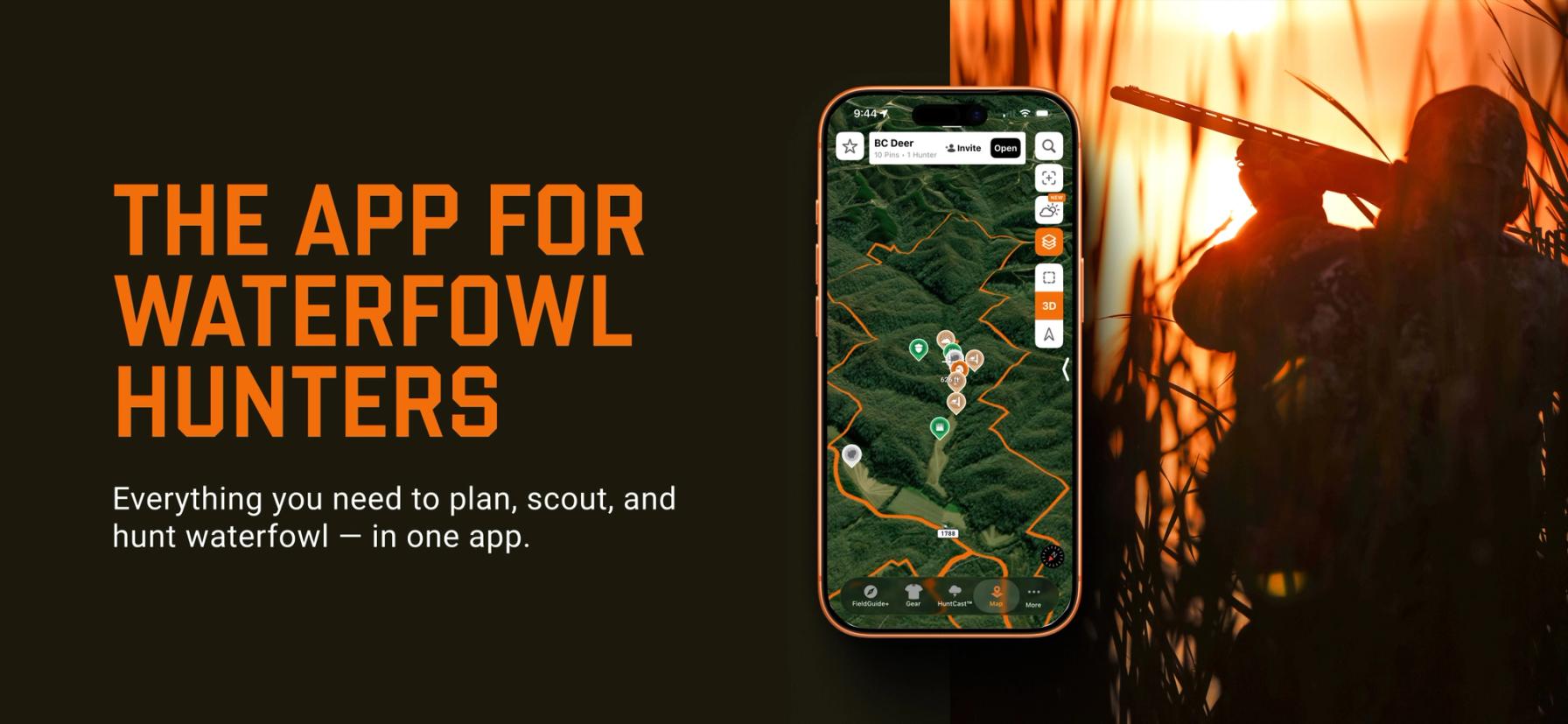
A lottery win only helps if you know where you're walking. IDNR warns that carrying gear from the parking lot to a hunting location can mean a long hike. Use HuntWise to pin the lot, trace your route across the SFWA, and gauge the distance before you apply.
Illinois is mostly farmland, and tracing property lines before you cross a levee keeps you on public ground. Download your hunt area at home so the map still loads when you're on the dike before sunrise.
Finding Public Waterfowl Hunting Land in Illinois Is Easier with HuntWise
Public waterfowl hunting in Illinois rewards hunters who plan around the lottery instead of showing up and hoping. Choose a site, enter the drawings on time, confirm your zone's season, and know exactly when your check-in window opens.
HuntWise puts each SFWA layout on your phone, so you can arrive at the check station already knowing your route.
Frequently Asked Questions (FAQs)
Q: What is the best public waterfowl hunting land in Illinois?
A: Public waterfowl hunting land in Illinois centers on IDNR's State Fish and Wildlife Areas, and Rice Lake along the Illinois River is a well-known option. The right choice depends on your draw dates, how far you're willing to walk, and whether you prefer a stake, a pit, or a blind.
Q: How big is Rice Lake State Fish and Wildlife Area?
A: Rice Lake State Fish and Wildlife Area covers 5,660 acres in Fulton County, and much of that acreage is water. IDNR lists about 2,500 acres as huntable.
Q: Do I need a permit to hunt a blind at Rice Lake?
A: You need an IDNR permit to hunt the daily walk-in units at Rice Lake, and you apply for it through the public duck lottery. Blinds work differently, because IDNR allocates them to blind builders through an annual draw each July.
Q: Are there boating restrictions at Rice Lake during waterfowl season?
A: Yes, Rice Lake has boating restrictions during waterfowl season. Permit hunters may walk in or use unpowered boats, and the lake closes to boat fishing for the season.
Q: How are blinds assigned at Rice Lake?
A: Blinds at Rice Lake are assigned in two ways. Blind builders hold annual allocations that they claim each morning, and unclaimed blinds go to a drawing at the check station, while walk-in permit holders draw for stakes after check-in.
Q: Can HuntWise show me Rice Lake's unit boundaries?
A: HuntWise can show Rice Lake's boundaries through its public land layer, which outlines the area on satellite imagery. For unit lines and refuge areas, check IDNR's site map, since the department sets those details.
Q: What units make up Rice Lake State Fish and Wildlife Area?
A: Rice Lake State Fish and Wildlife Area includes three walk-in hunting areas that rotate daily: Rice Lake, Copperas Creek, and Big Lake. The site also has posted waterfowl refuge areas, and trespassing in them is unlawful from two weeks before duck season opens through the close of the regular duck and Canada goose seasons.
Q: How do I download Illinois waterfowl area boundaries for offline use?
A: To download Illinois waterfowl area boundaries for offline use, build a hunt area in HuntWise around your SFWA and save it while you have Wi-Fi. The saved map keeps your boundaries and pins on screen even when the river bottoms drop your signal.