

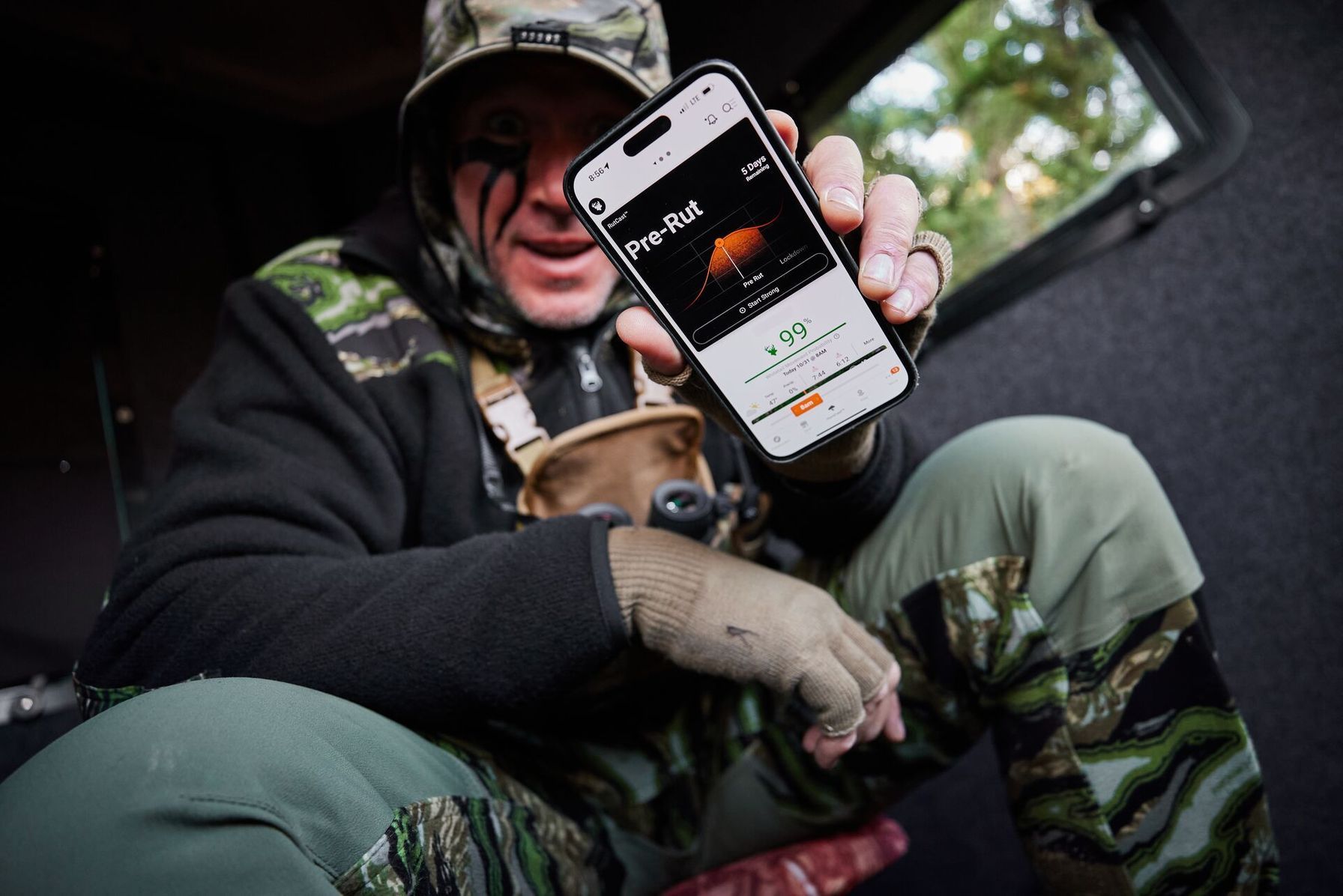
Midwest rut hunting typically falls between November 5 and 15. The RutCast feature adjusts prediction windows by latitude and historical local activity, giving users a seven-day peak window for their hunting area.
The peak rut is over in a flash, with about 10 days of cruising buck movement and only a few good hunting days. Narrowing in on high-potential hunting periods is essential to tagging out. In this guide, we break down how RutCast hunting can help you track deer during the rut.
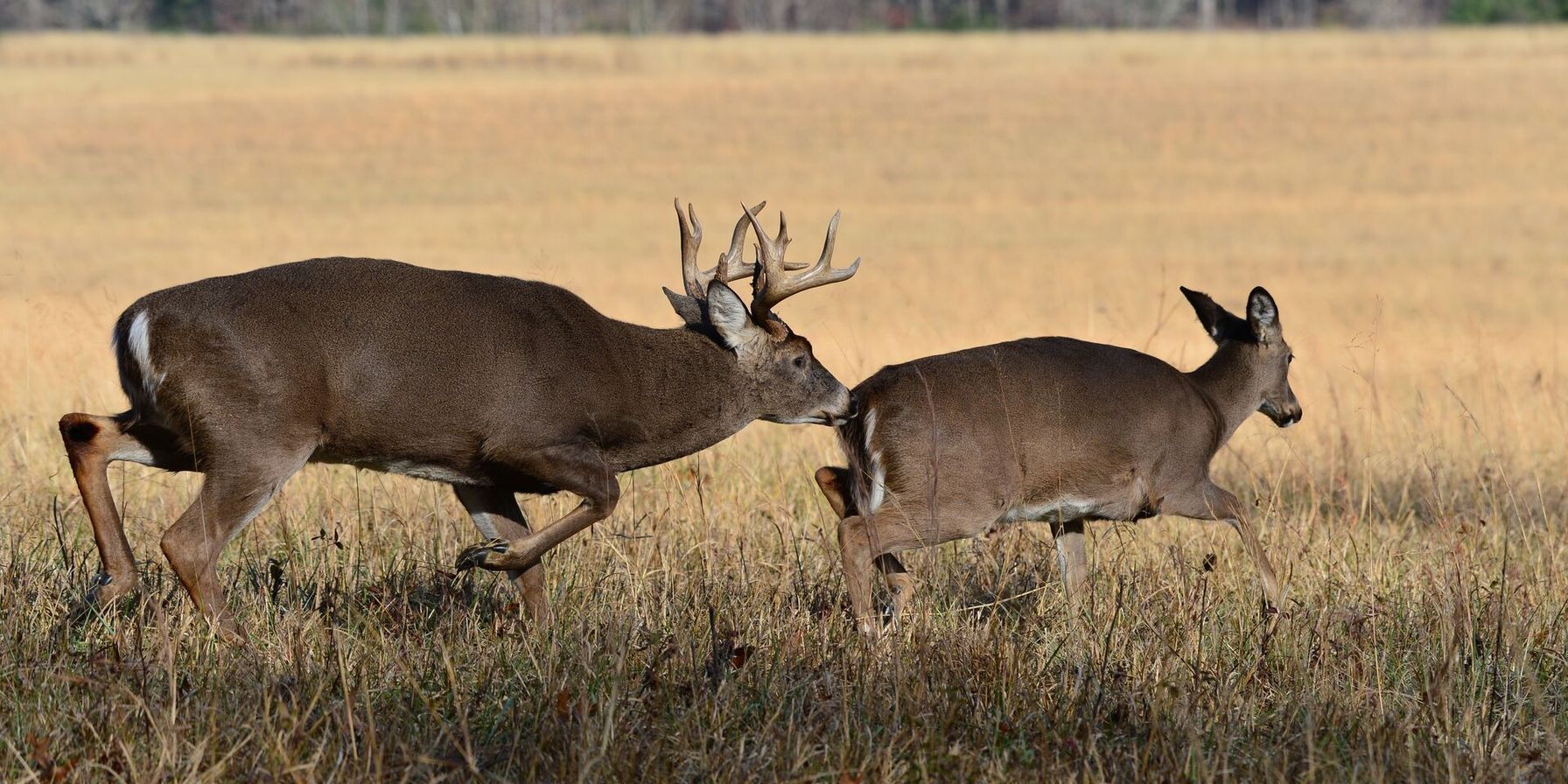
What Is the Whitetail Rut, and Why It Matters for Hunters
The rut is one of the most electric stretches of the whitetail season, and it’s never identical from one region to the next. At its core, it’s the breeding season, the multi-week window when bucks swell up, lose their caution, and start chasing does with purpose. During this period, deer often break out of their normal movement patterns, and that unpredictability is exactly what makes the rut so special.
As a whitetail hunter, you’ll notice daylight movement increase, sometimes dramatically. This is when full-day sits stop feeling extreme and start feeling logical. If you’re using the HuntWise app, you’ll see how the pre-rut and post-rut phases bookend the peak. But duration varies by region, too. Some states experience rut activity across nearly the entire season.
A good example is Alabama. When deer populations were being rebuilt and relocated, many herds kept the rut timing from their original home ranges. The result was micro-ruts scattered across the state, each with its own calendar.
If your time in the woods is limited, knowing when the rut is at its peak matters. This is when you take PTO, turn on the out-of-office, and commit to being in the stand when the woods are at their loudest. Yes, the woods are loud because deer are running everywhere.
For me, the first indicator is simple: Deer that are normally ghosts start showing up in daylight. Fresh scrapes pick up. Rub lines appear overnight. These signs will tell you where you NEED to hunt. They tell you where to hang a saddle or lock on and where a buck is likely to make a mistake. Don’t forget to consider the wind and cover.
What Hunting the Rut Is Actually Like
Newer hunters especially need to understand how deer behave during the rut. Bucks are moving at all hours, and they aren’t casually browsing. When they’re locked onto a doe, they’re mission-driven, so you need to be locked in, too. Leave the phone in your pack. Keep your eyes and ears open. Rut opportunities happen fast, sometimes faster than you can process.
Last season, I had a stand that was dead for months. No sign, no movement, nothing. Late in the year, a fresh scrape appeared. First sit, a young buck cruised through chasing a mature doe with a couple of younger does. The does came out a few minutes before he appeared.
They stepped into the field, looked back at the woods, and ran into the adjacent woods. A 3-year-old 8-point was chasing them. He was small-bodied and young. This year, I’ll be checking that area again, hoping he made it through and comes back even bigger. Make note of these sightings and record the hunt afterward.
The rut is the best part of deer season. It’s the stretch where legends are made, stories are told for decades, and mature bucks slip up in broad daylight. If you understand the signs and stay disciplined, it’s the time of year when everything can change in a single moment.
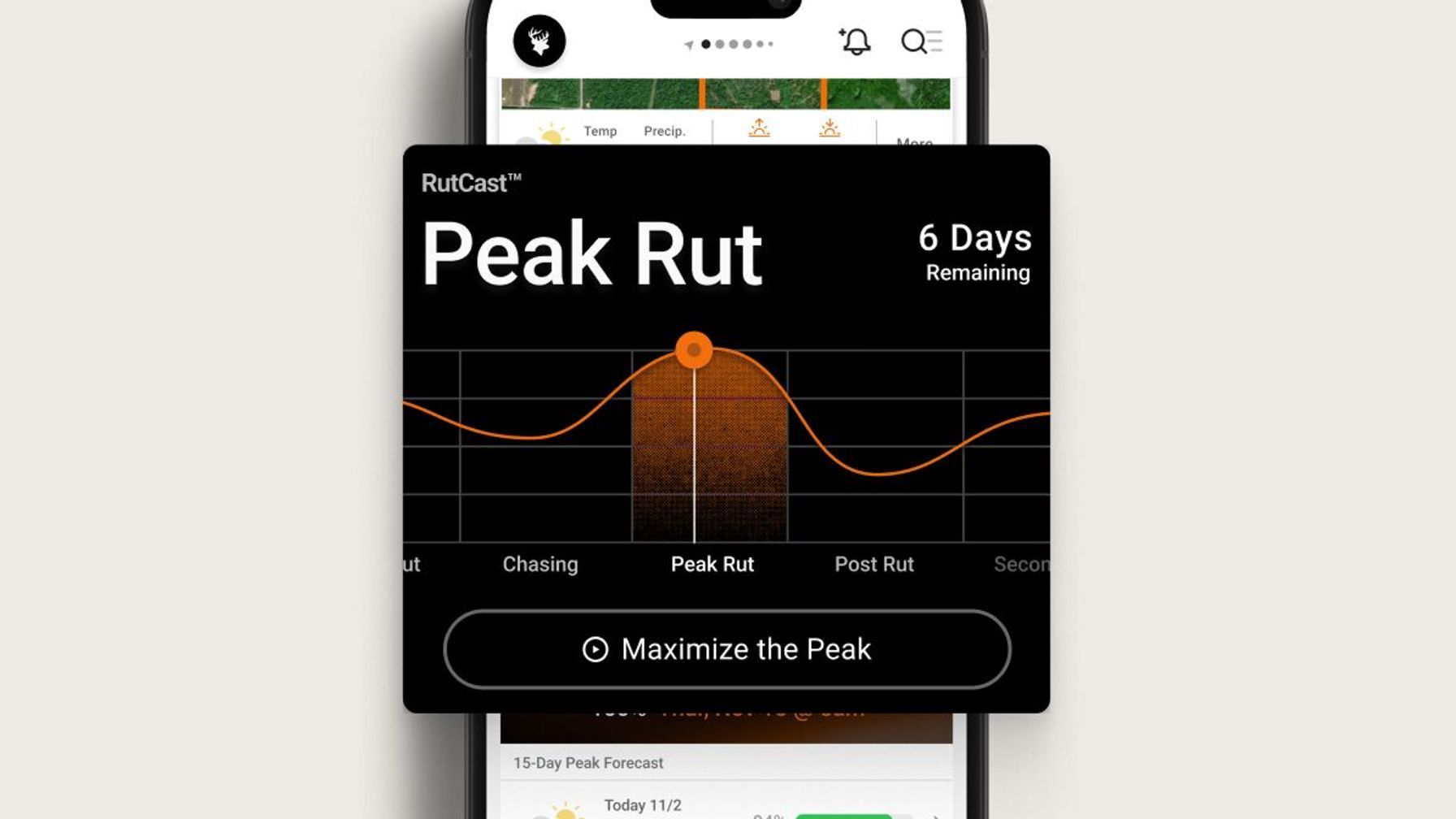
How RutCast Hunting Predicts Peak Rut Timing
RutCast breaks down the rut phase based on three inputs to build a localized forecast using real data and time-tested behavior patterning.
Photoperiod (Day Length)
There's a lot of science behind the whitetail rut, and one of the primary triggers is changes in daily photoperiod. Decreasing daylight is a primary biological trigger for doe estrus and rut timing.
The photoperiod is related to animal growth, development, and seasonal behavior. The shorter day length during late summer leads to a range of hormonal changes, which are also responsible for velvet shedding.
This is why the rut generally occurs at the same time every year in the same zone regardless of weather patterns at that time. HuntWise uses photoperiod data as a baseline biological time map and incorporates additional real-time variables to boost accuracy.
Historical Local Rut Data
RutCast uses multi-year breeding data on a county-by-county basis rather than relying on the nationwide average. Whitetail breeding timing varies across North America, and localized data provides a more accurate baseline for when different rut strategies are likely to occur.
In one state, a hunter may be in the middle of peak rut chasing behavior, while in another state, deer may be in pre-rut or breeding patterns. States vary because regional differences in breeding timing and photoperiod windows (particularly between Northern and Southern states) affect the hunting experience.
Regional and Latitude Adjustments
Rut timing changes in different zones due to latitudinal shifts as you move from north to south. RutCast adjusts to this predicted window based on hunting location, not a one-size-fits-all calendar.
Because of this, rather than assigning an estimated peak rut day, RutCast provides a county-specific seven-day peak window for the best times to hunt, offering a more realistic, geographically specific timeframe to plan the hunt.
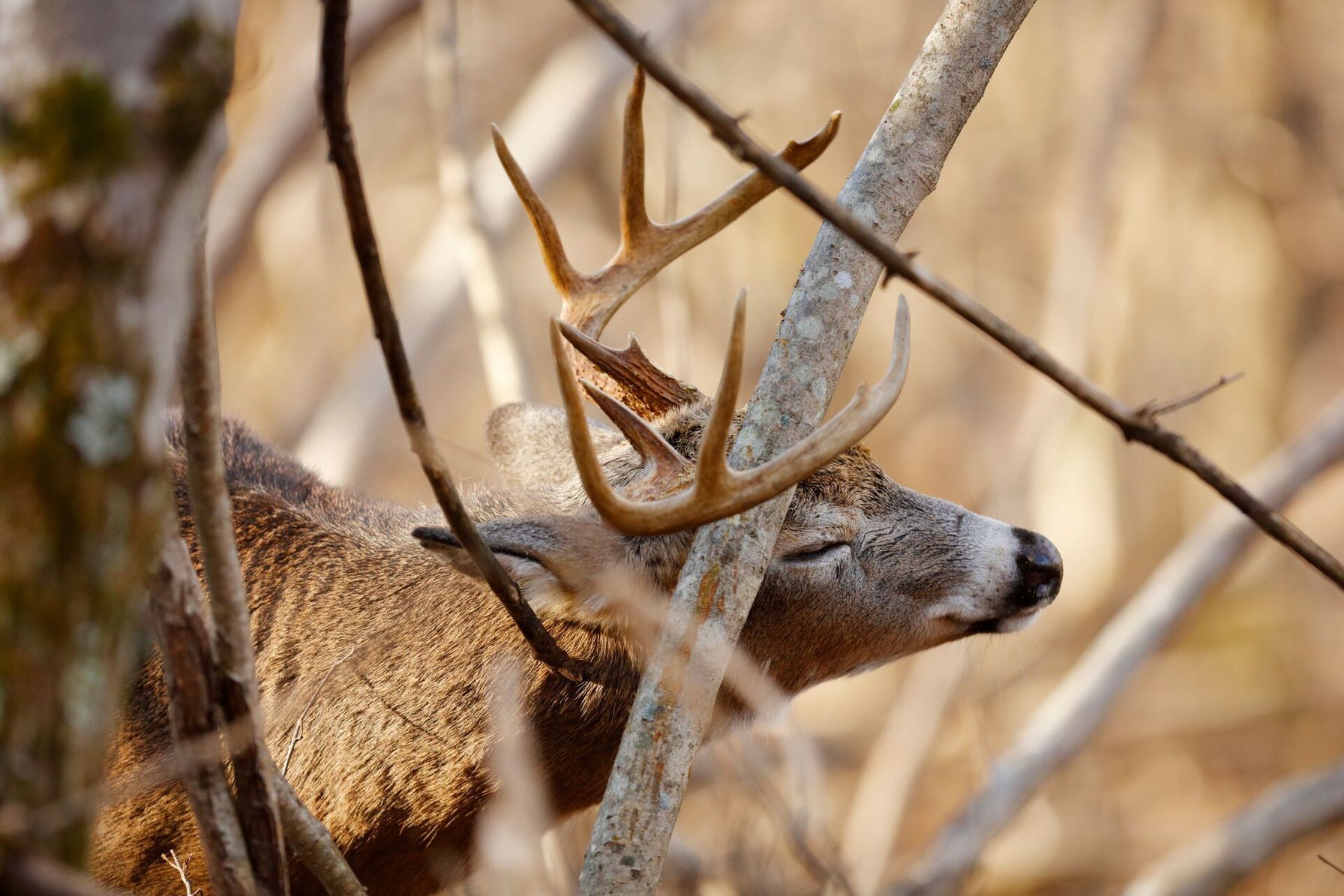
Rut Phases Explained: Pre-Rut, Peak Chasing, Lockdown, and Post-Rut
It's best not to think of the rut as a single event, but rather as a cycle of progressing phases. These phases generally overlap and transition rather than aligning to any set calendar dates. Whether it's attracting bucks pre-rut or transitioning back to feeding- and bedding-focused hunting in the post-rut, mastering each phase is essential to punching a tag.
- Pre-Rut: The first phase of the rut cycle is known as the pre-rut. During this period, bucks become more active in establishing dominance and hierarchy. You'll notice a higher rate of scrape and rub activity. Does are not yet receptive during this time, and bucks are still cautious.
- Peak Chasing: During this phase, both mature and younger bucks start actively cruising and chasing does. This is the highest daylight movement of the year. During this window, dedicating a large portion of your whitetail rut hunting time, including all-day hunts, can yield high results. Map out where does are bedded up, natural corridors, and how they use the environment to find bucks.
- Lockdown: This phase, also known as the peak rut, is characterized by bucks pairing with individual does. While it may seem that buck movement has slowed, bucks have bedded up with a doe. During this phase, deer will be more pressured, so consider overlooked hunting zones farther from car parks and trailheads.
- Post-Rut Cruising: There's still plenty of action during the post-rut cruising as bucks seek out the remaining unbred does. You'll likely notice an uptick in movement since the lockdown phase. Bucks may start to shift back to feeding and bedding patterns during this window.
The different rut phases call for different hunting strategies and approaches. The RutCast feature in your HuntWise app tracks all four phases, so you'll know which stage you're in, not just that the rut is active.
What Are the Rut Phases by Region?
For a general overview of rut phases, check the chart below. While these are typical windows, RutCast hunting narrows the dates down further to your specific county.
Regional Rut Phase Calendar
Rut Phase by Regions | ||||
| Region | Pre-Rut Begins | Peak Chasing | Lockdown | Post-Rut Cruising |
| Northern Midwest (MN, WI, MI UP) | Oct 25 | Nov 5-12 | Nov 13-17 | Nov 18-25 |
| Central Midwest (IA, IL, IN, OH) | Oct 28 | Nov 7-15 | Nov 16-20 | Nov 21-28 |
| Northeast (NY, PA, NJ) | Nov 1 | Nov 8-15 | Nov 16-22 | Nov 23-30 |
| Mid-South (VA, NC, KY, TN) | Nov 5 | Nov 10-20 | Nov 21-26 | Nov 27-Dec 5 |
| Deep South (GA, AL, MS, FL) | Varies by county | Dec or Jan in some areas | n/a | n/a |
| Mountain West (CO, WY, MT mule deer) | Nov 5 | Nov 15-25 | Nov 26-30 | Dec 1-5 |
The Deep South's wide variability in rut forecasting highlights why a one-size-fits-all national calendar won't work. Localized forecasting accounts for regional breeding patterns, weather, and herd dynamics, leading to more accurate predictions.
Does Weather Change the Rut?
Deer research into the rut shows that weather does not impact the rut, as rutting dates are driven by other environmental factors such as photoperiod, which controls timing, not temperature or weather fronts.
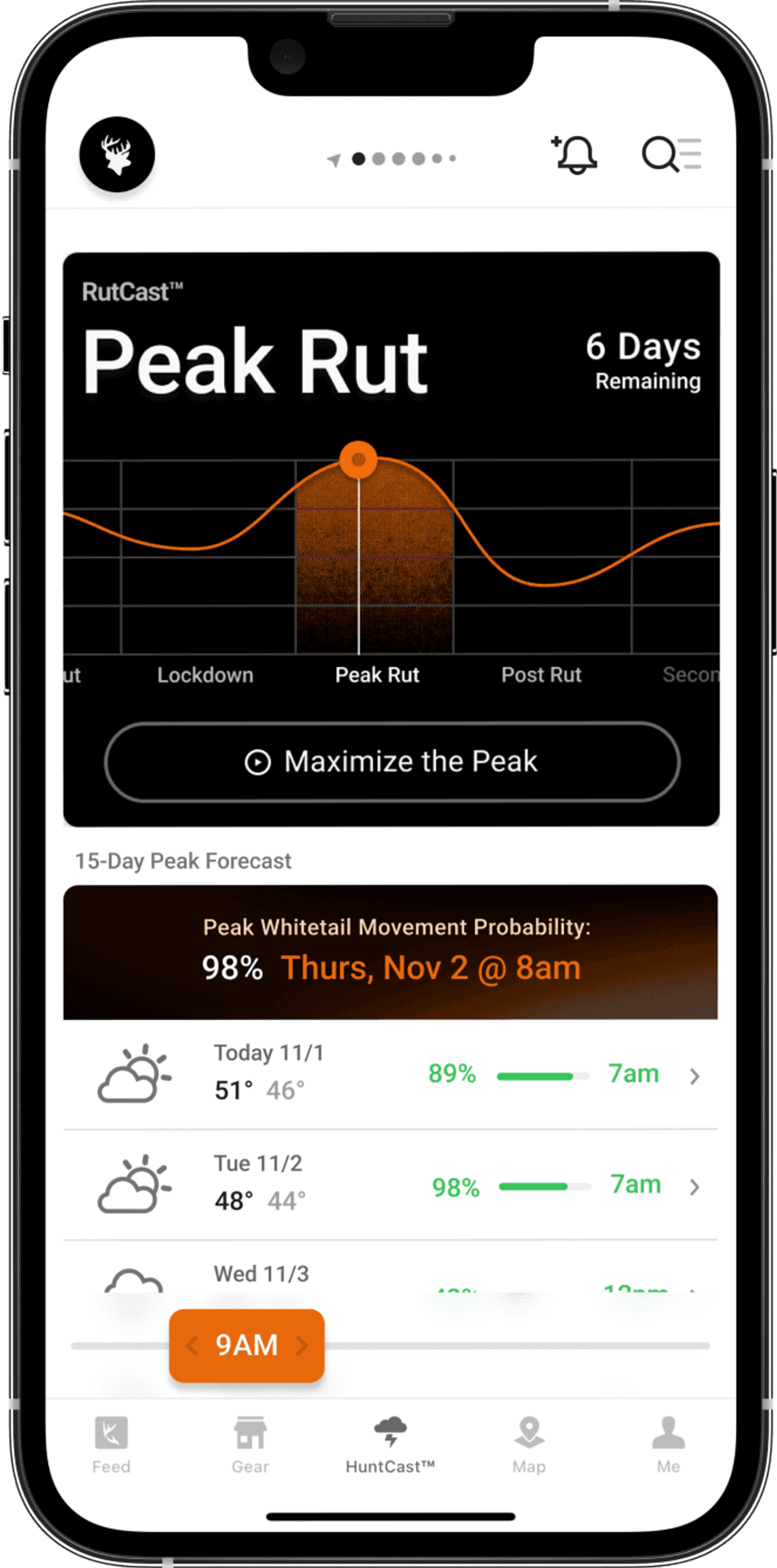
While weather does not impact the rutting schedule, it can trigger some movement, including how much of that movement is visible during daylight hours. Cold fronts can trigger deer activity during the day, pushing more movement into shooting light. Hunting right before or after a cold front during the rut can be a high-impact hunting window. Warm spells can push movement into the dark.
Regardless of weather patterning, the rut will still be happening on schedule. Don't wait for the perfect rut weather; follow the RutCast window and be prepared no matter what the conditions show.
How to Use RutCast
Setting up your localized RutCast forecast takes seconds and can save hours in research and cross-referencing from different sources. You select your county and target species, and you're good to go.
- Open your HuntWise app and navigate to your hunting county.
- Tap the RutCast icon and confirm your species (whitetail or mule deer)
- Read and make note of your county's predicted peak rut window.
- Organize your calendar and plan your time off for peak chasing (highest midday movement window).
- Track real-time rut activity reports from HuntWise users in your county.
- Make adjustments based on rut timing, such as stand choice. For example, peak chasing favors hunting funnels and natural trails, whereas lockdown favors targeting bedding edges and mixed environments.
With this approach, you'll build a systematic hunt plan based on rut timing instead of relying on broad estimates.
Let RutCast Tell You When to Be in the Field
Mastering the rut doesn't have to be guesswork. The rut is a window of interconnected phases, driven by photoperiod, not weather. To narrow down these peak hunting windows, use the RutCast feature for county-specific insights based on historical and regional data.
Understanding the rut phases pre-rut, peak chasing, lockdown, and post-rut is just as important as knowing the date, as this will impact your hunting strategy and approach.
Locking in a hunt and taking time off work is a big commitment. When you want to plan your hunting days around the highest-impact hunting window, use RutCast.
Start a free trial of the HuntWise app today and take the guesswork out of your next rut hunt.
Frequently Asked Questions (FAQs)
Q: When is peak rut where I hunt?
A: Peak rut timing varies by location, so there isn't one date that applies everywhere. In much of the Midwest, peak activity typically falls between November 5 and 15, but latitude and local breeding patterns can shift that window.
Q: Does weather change the rut?
A: Weather generally does not determine when the rut occurs. Photoperiod, or changing day length, is the primary biological trigger for breeding timing. Weather can still change how much rut activity you see during daylight. Cold fronts and temperature drops can increase visible movement, while warmer conditions may push more activity into nighttime hours.
Q: How do I use RutCast for mule deer?
A: Open your hunting area in HuntWise, select RutCast, and choose mule deer as your target species. Check the predicted rut window for your location, then use that timing to plan your hunting days and adjust your strategy as deer move through the rut. Mule deer rut timing can vary considerably by location, so a location-specific forecast is more useful than relying on a national date range.
Q: What's the difference between pre-rut, peak chasing, and lockdown?
A: Pre-rut is when bucks become increasingly active, establish dominance, and create rubs and scrapes. Peak chasing is when bucks actively search for and pursue receptive does, often increasing daylight movement. Lockdown occurs when bucks stay closely associated with individual does, which can make them less visible as they spend more time together in cover. These phases overlap and don't follow exact calendar dates.
Q: Does the moon phase affect rut timing?
A: Moon phase can be one factor considered when predicting daily movement. However, it shouldn't replace a location-specific rut forecast.
Q: Why does the rut happen at different times in different states?
A: Rut timing varies because deer populations have adapted to local environmental conditions and photoperiod. Latitude affects the seasonal daylight cycle, while genetics and regional breeding patterns also contribute to timing differences. That's why peak rut dates in one state may not match those in another.
Q: Can hunting pressure delay or shorten the rut?
A: Hunting pressure isn’t likely to reset the biological timing of the rut, but it can change how deer behave during it. Pressured deer may reduce movement, shift into areas with more cover, and become more active at night. This can make the rut look shorter or less active from a hunter's perspective without changing when breeding occurs.


