

To incorporate WindCast into your scent control deer hunting:
- Open the WindCast feature.
- Note the wind direction arrows at your stand or hunting location.
- Choose your access route and stand setup that keeps your scent moving away from predicted deer routes.
WindCast lets you read wind like a pro. In this guide, we explore how to use WindCast for hunting, such as reading wind at your stand, planning your entry and exit routes, and avoiding hunting into your own scent cone.
What Is WindCast and How Does It Work?
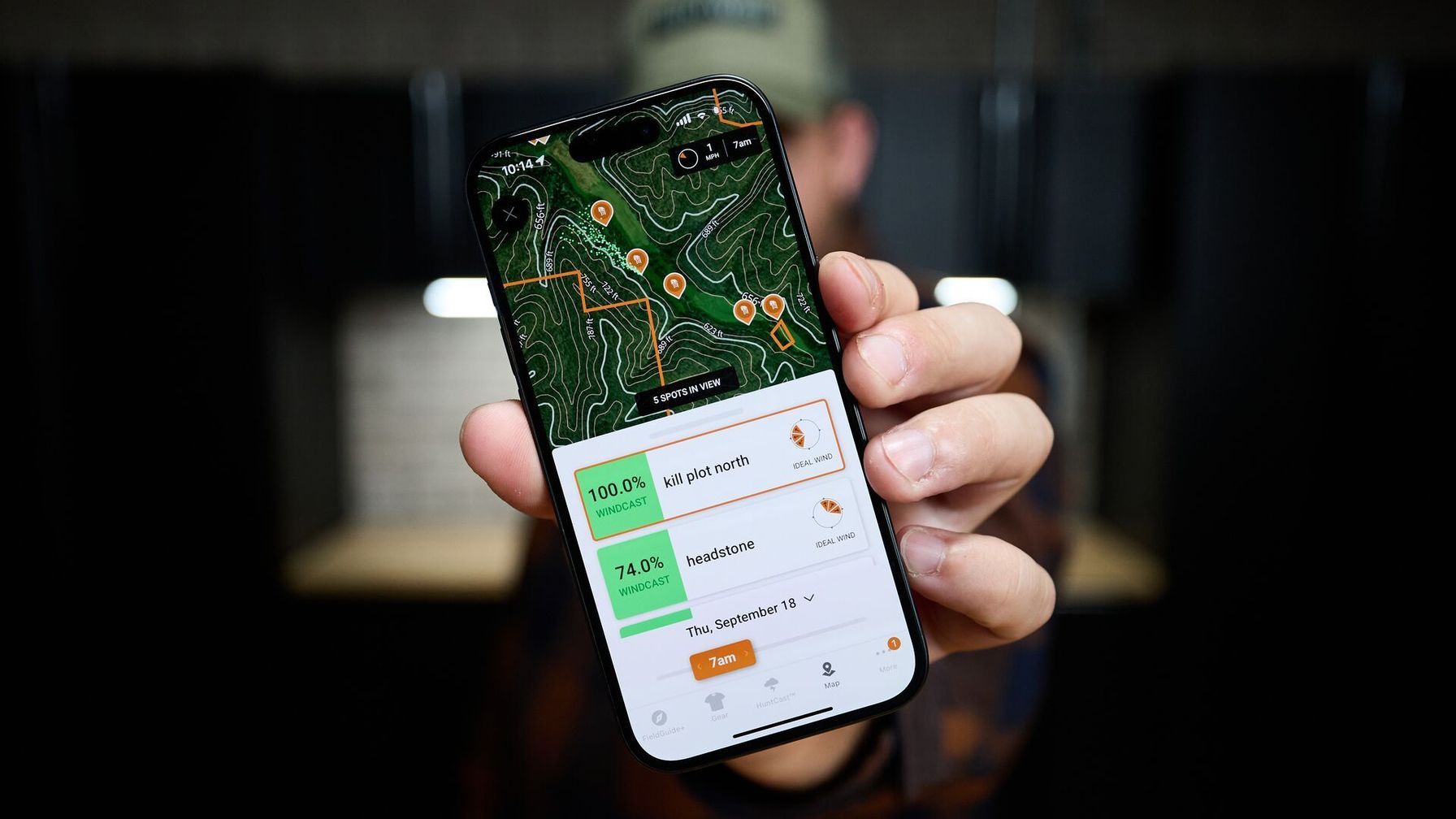
WindCast hunting app is a HuntWise wind layer that displays real and forecasted wind direction and speed over your map. To access the feature, open your HuntWise map and toggle the WindCast layer to view the arrows. The app uses precise wind intel, updated hourly, so you can both plan and adjust your hunting strategy based on wind patterns.
When you mark a stand location in HuntWise, you’ll be prompted to set your ideal wind direction deer hunting location. The feature will then compare the forecasted conditions against your ideal wind patterns.
With an Elite subscription, you’ll unlock the Ideal Wind Report, which takes it a step further by cross-referencing all your stand pins and ideal wind settings to highlight which stand will be the best option based on your intended hunting day or day range.
Why Wind Direction Is Everything for Deer Hunting
A deer’s nose is hard to beat. As hunters, we go to great lengths to minimize this impact, including using scent blockers. We also religiously check national wind forecasts.
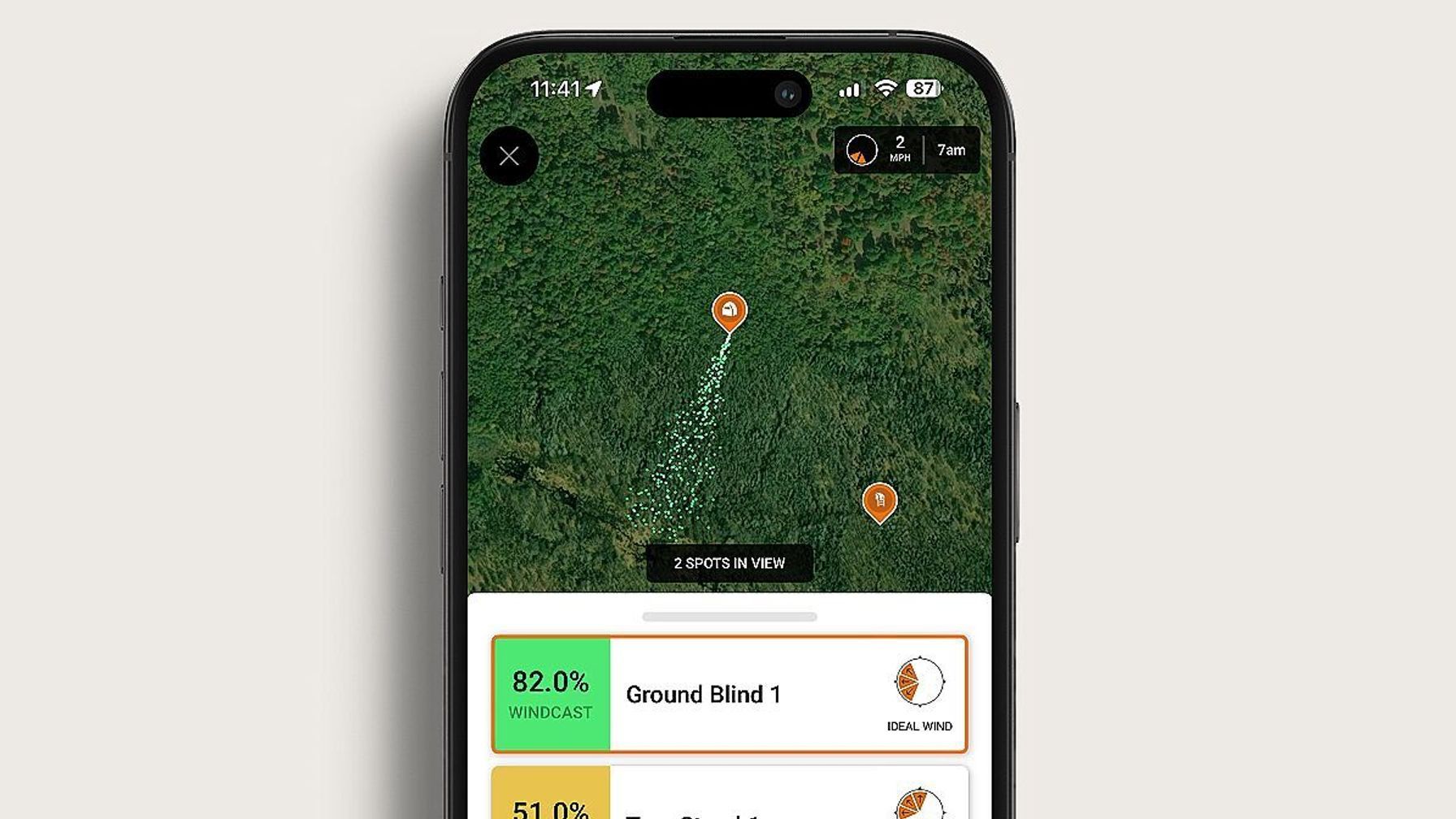
Learning how to hunt the wind is an essential skill for any successful hunter. Many game species, including deer, use their highly developed sense of smell to navigate and evade danger. Some research suggests their sense of smell is roughly 1,000 times that of a human's. The good news is that with the WindCast feature and some practice, you'll be able to hunt windy conditions like a pro.
As hunters, we must do everything possible to avoid getting winded, which is when your scent is carried to the animal by the wind. If this happens, your hunt may be as good as over. While it's impossible to eliminate scent, especially when hunting deer, hunting the wind means you're approaching from a direction that carries your scent away from the deer based on wind movement.
Getting winded can blow your hunt, as it alerts deer to your presence, meaning they may avoid the area for days or weeks. Scent is affected not only by wind patterns but also by thermal conditions, terrain, and humidity. The right weather app can improve your hunting, displaying critical insights and compiling information to help you make better decisions in the field.
How to Use WindCast for Hunting (Step-by-Step)
HuntWise's WindCast feature is a critical element in my hunting. I use WindCast daily during the season, as well as every time I get into the woods to scout.
WindCast not only helps me decide where to hunt on any given day, but it also helps me to determine specifically which tree I will choose to hunt from. And it gives me a better understanding of how the deer might use the wind to their advantage while working through the woods.
Here's a step-by-step guide for how to access WindCast in the HuntWise app:
- Open HuntWise and toggle the WindCast layer to "ON."
- Navigate to your stand location. Observe the wind direction and arrow speed.
- Trace your planned entry route. Does your scent reach your stand location before you do?
- Adjust your route as necessary to enter either cross-wind or downwind from your stand.
- Check the six-hour wind forecast. Winds can and will shift mid-sit, so you should always have a plan B ready.
- On morning hunts, you should expect thermals to pull downhill during the first hour, so plan accordingly.
Incorporating these steps into your hunting routine can help you zero in on the best location and timing to hunt.
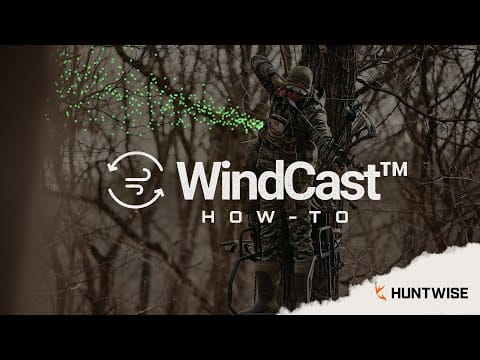
Learn more about using WindCast to predict Wind Direction in the video below from Quinn Badder.
What to Consider About Wind Direction for Different Types of Stands
Stand placement and approach routes will differ depending on your intended hunting area and how deer use the landscape. Before setting up, consider how the wind will carry your scent from your position, using the table below as a guide.
Hunting the Wind: Stand Types and Ideal Wind | ||
|---|---|---|
| Stand Type | Ideal Wind | Setup Note |
| Field edge stand | Wind crossing field, not blowing into woods | Sit on downwind corner |
| Funnel/pinch | Wind 90° to expected deer travel | Position 20 yards downwind |
| Bedding-edge stand | Wind blowing from bedding to your stand | Forces scent away from bedding |
| Water source | Variable; check thermals at dawn/dusk | Morning thermals fall. Evening thermals rise. |
| Crop-field corner | Wind across crop toward open ground | Deer enter from cover side |
Understanding Thermals: The Wind Factor WindCast Can't Fully Replace
Thermals are air currents driven by temperature differences. Hot air rises and cold air sinks. Thermals will impact your hunt, as they carry your scent horizontally, independent of the prevailing lateral wind direction based on the time of day.
- Morning thermals: In the morning, cool, heavy air settles in low areas and is consistently pushed downward by the overnight cooling. While this cool air is still flowing down in the morning, hunting low by establishing your stand at the base of a slope can be a strong strategy. As the sun rises and the temperature grows, the air rises, lifting your scent uphill.
- Evening thermals: Be cautious in the evening. Once temperatures start to drop and cool air sinks, stands high on ridges or field edges can betray your position, especially in the last hour of light.
- Transition windows: These are typically the first 30 minutes of light and the last 30 minutes before dark, when thermals are swirling, and you are most at risk of being winded.
Hunting thermals means you’ll not only need to consider the prevailing wind direction, but also how the temperature will impact your scent-control deer hunting strategy. Hunting areas with consistent thermal patterns, such as those completely in the sun or in full shade, means no movement, as the air is moving in a clear, predictable pattern.
Entry and Exit Routes: The Most Overlooked Part of Wind Strategy
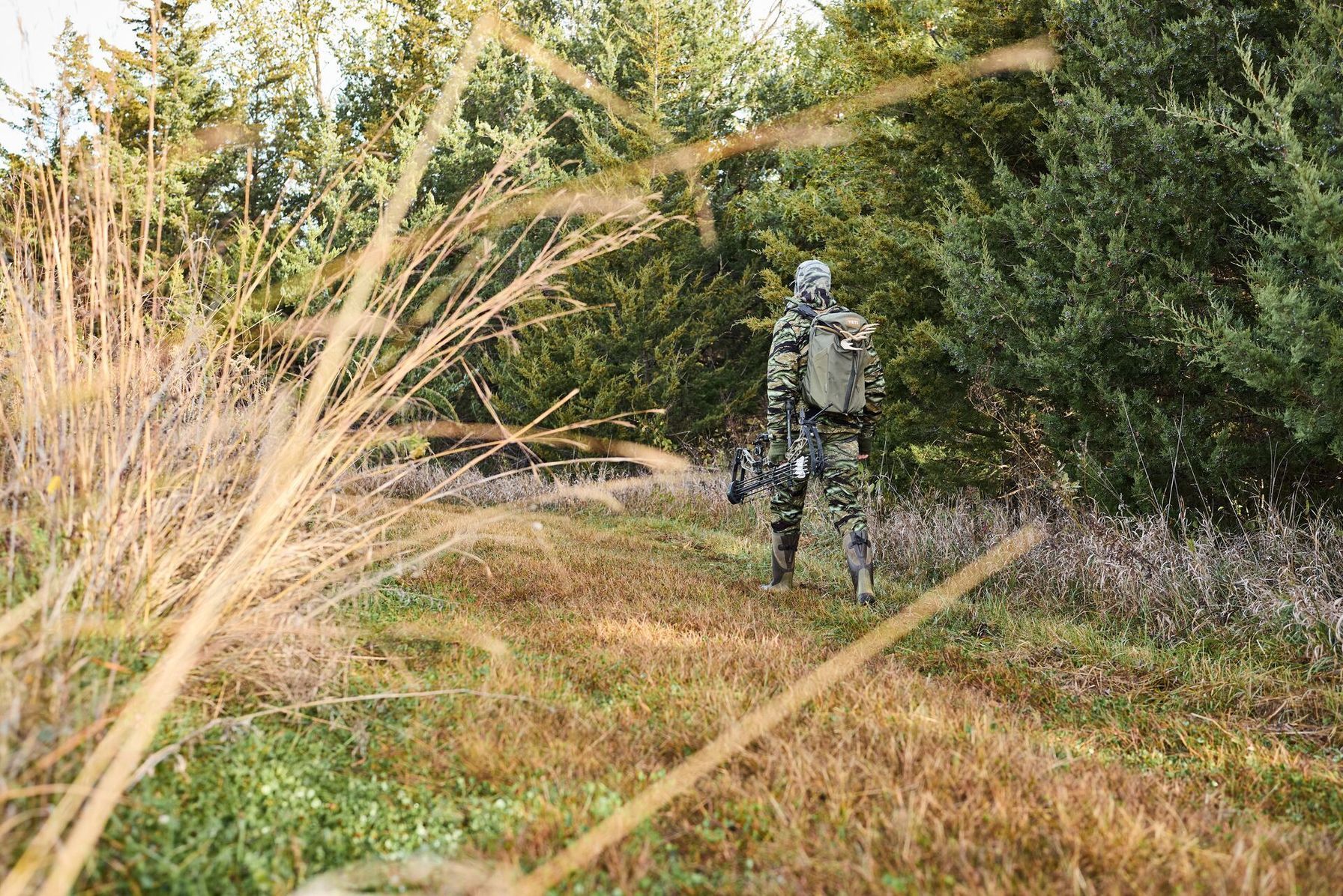
Access routes may not always be the most direct, as your entry route deposits a scent trail that deer will encounter long before legal shooting light. Patience is important here. Ideally, you wouldn’t want to access a stand until it is favorable for both the access route and stand position.
With the WindCast layer, you can trace your planned route to visualize whether your scent will drift across bedding areas, travel corridors, or the predicted deer lanes.
Low access with cover generally works well, and cross-wind entries are generally safest. An up entry can work when terrain allows, such as when approaching bedding or staging areas.
Many deer hunters focus on stand location and entry, failing to consider the impact of their exit routes. Deer will smell departing hunters and quickly pattern those areas as a danger zone to avoid. When using the WindCast layer and mapping, mark the entry and exit points as separate pins to build a complete picture of your approach.
WindCast shows the prevailing wind. When hunting, carry a physical wind checker (milkweed or powder) to verify what the thermals are doing at ground level after learning how to use WindCast for hunting.
Building a Wind-Smart Hunting Routine with HuntWise and WindCast Hunting App
It's important to use WindCast to formulate how you hunt your stand locations. I always check WindCast both the night before my hunt and the morning of.
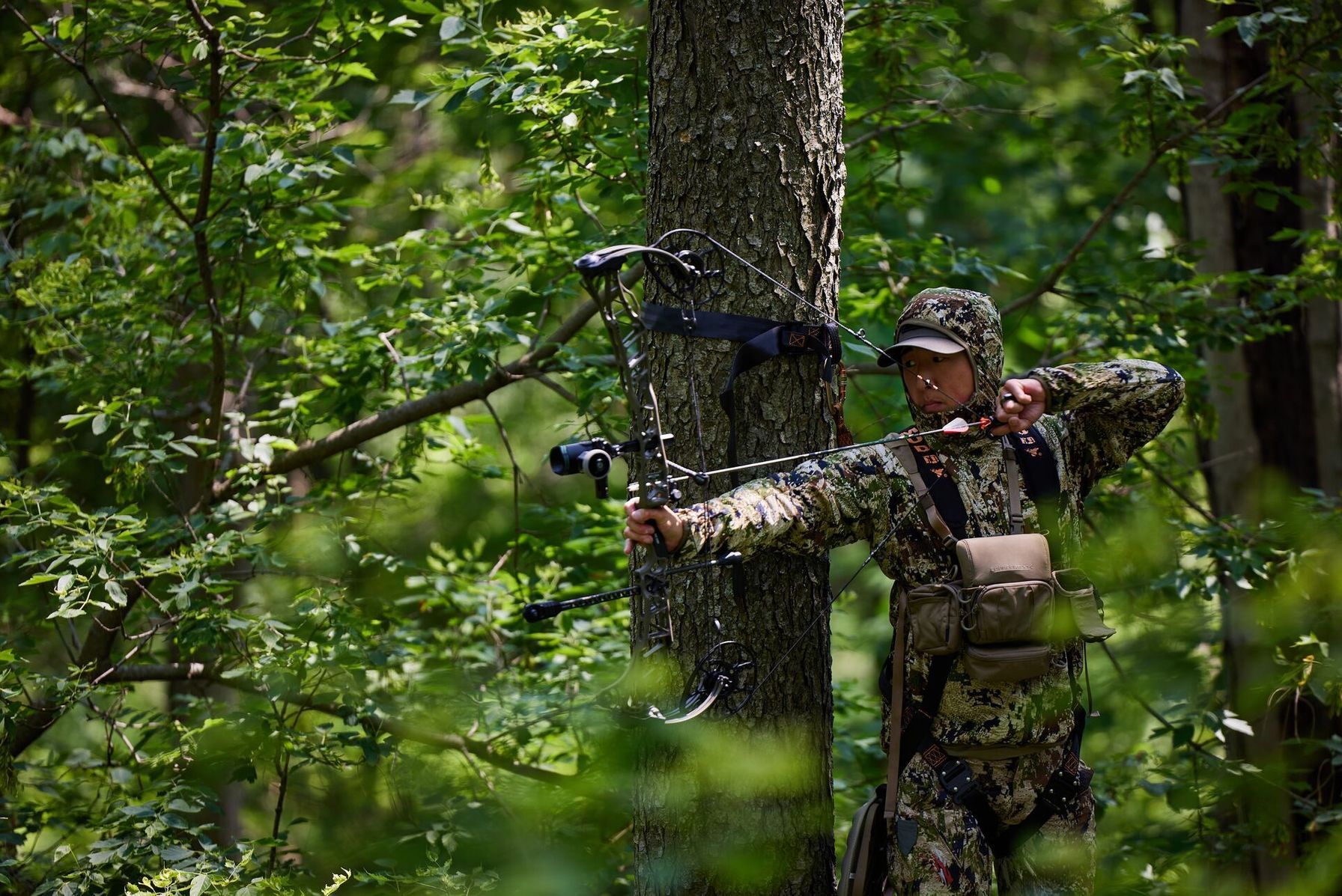
I've been burned one too many times in the morning after I neglected to check the wind on WindCast. The predicted wind is always changing. The more you stay on top of checking it, the more success you will have in not blowing your scent towards deer.
I also like to look at HuntCast and WindCast in conjunction with each other. Having HuntCast predict high deer movement is meaningless if you aren't using WindCast to help control your scent.
One of my favorite ways to use WindCast is to compare stand locations. If the tree I was hoping to hunt has a bad wind, I can use WindCast to compare that location to my plan B spot and pivot to wherever I need to. This takes a lot of the guesswork out of which stand I want to hunt.
The wind shifts regularly before sits and during sits. You can have WindCast alert you when the wind changes mid-shift so that you can pivot to a different location, or abandon hunting for that day altogether.
This is especially great for all-day rut sits. I've personally used this feature extensively, and those alerts have encouraged me to move stand locations multiple times, leading to more encounters.
Logging wind directions for specific hunts is a great way to build a database for which wind direction produces deer in a given spot. Perhaps equally as important, it will also serve as a reminder for which wind directions cause your hunts to simply spook deer. I recently started using this feature regularly, and I can already see a better pattern for the deer in the spots that I hunt.
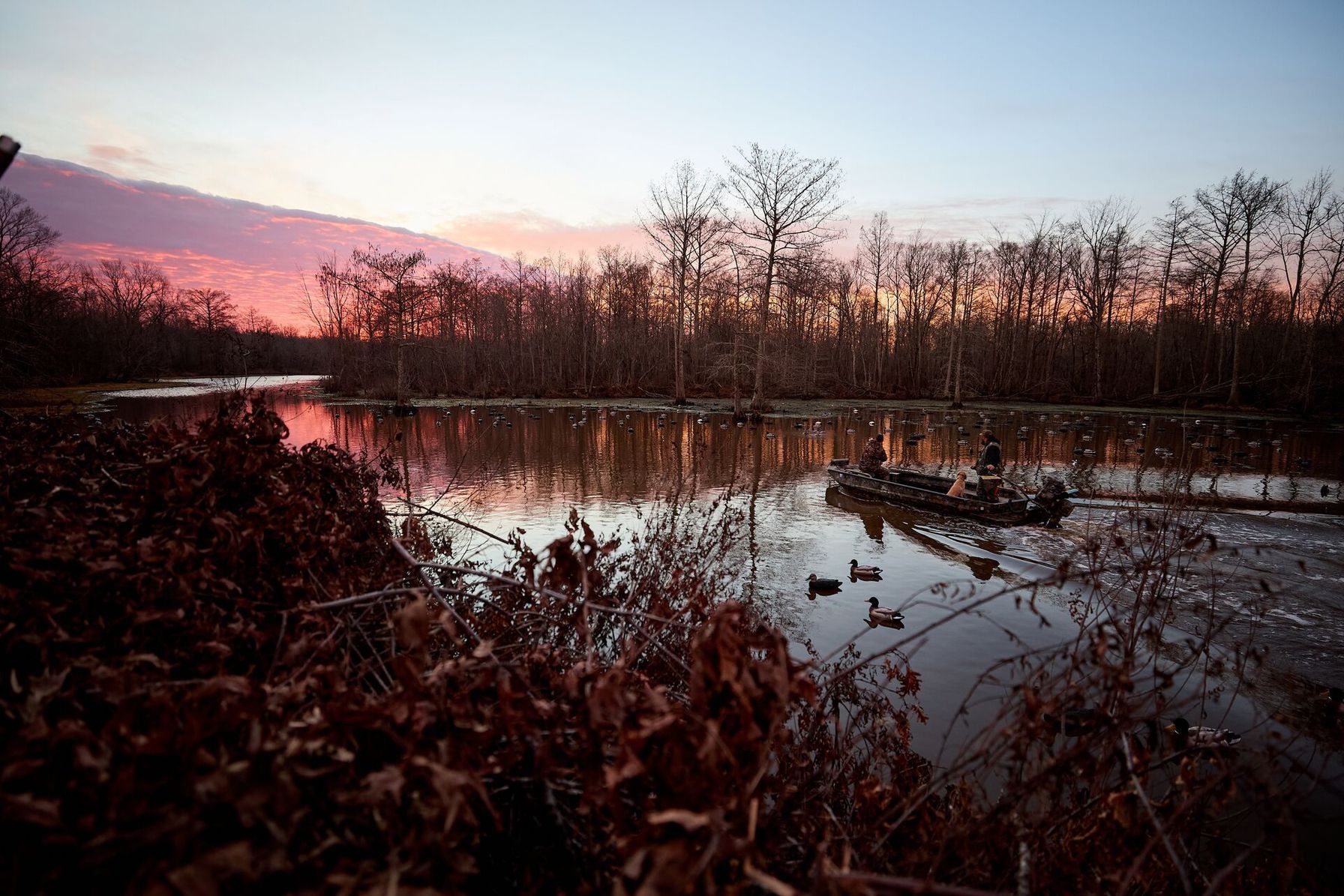
Wind Discipline Wins Tags. WindCast Makes It Easy.
Wind is one of the most important variables a hunter can account for. WindCast allows you to create a systematic, data-backed approach to your hunt. It involves more than just staying downwind of the animal. When preparing your hunt, check the layer, trace your entry, set your ideal winds, and have a backup stand to minimize the chances of getting winded.
You can’t control the wind, but you can control how you hunt with it. Wind discipline separates those who fill freezers from those who wonder where the deer went. Download the HuntWise app and use your free trial to explore WindCast, wind reports, and stand-specific settings for your next hunt.
Frequently Asked Questions (FAQs)
Q: How accurate is the wind direction shown in WindCast?
A: WindCast uses real-time and forecasted wind data that is updated hourly. Because conditions can change quickly and terrain can affect wind at ground level, use WindCast as a guide and verify conditions at your stand with a physical wind checker.
Q: What about thermals? Do they affect deer hunting?
A: Yes. Thermals can affect how your scent moves independently of the prevailing wind. Cool air tends to sink in the morning and evening, while warming air rises after sunrise. Pay attention to both wind direction and thermal movement when choosing a stand and planning your access route.
Q: Should I cancel a hunt if the wind is wrong for my stand?
A: Not necessarily. If the wind doesn't favor your primary stand, use WindCast to check another stand or adjust your approach route. If conditions shift during the hunt and put your scent toward deer, you may need to move or leave rather than risk alerting deer to your presence.
Q: Does WindCast work offline?
A: No. HuntWise supports offline maps and navigation, but WindCast relies on real-time wind data, so you should not expect its live wind information to be available without a connection. Download your HuntWise hunt area before leaving service so you can still access your maps, pins, and navigation in the field.
Q: What is the difference between WindCast and HuntCast?
A: WindCast focuses on wind conditions, showing wind direction and speed around your hunting locations. HuntCast focuses on predicting deer movement conditions. Using them together can help you identify a favorable hunting opportunity while also determining whether the wind allows you to hunt that location without sending your scent toward deer.
Q: How do I set my ideal wind direction for a stand in HuntWise?
A: When you mark a stand location in HuntWise, you'll be prompted to set your ideal wind direction. HuntWise can then compare the forecasted wind conditions with your preferred wind pattern. With an Elite subscription, the Ideal Wind Report can compare your stand pins and ideal wind settings for a selected hunting day or date range.
Q: Can I use WindCast for species other than deer?
A: Yes. WindCast displays wind direction and speed, so the underlying wind information can be useful when hunting other species. In addition to WindCast for deer, it’s also useful for waterfowl, as wind direction and speed influence how birds land. Being in the right position makes your shot easier.


