

Wyoming is a premium elk-hunting destination thanks to its incredibly diverse habitat, drawing hunters from all over to enjoy a true western elk hunt. The Wyoming OTC elk tags system is highly structured, designed to manage populations and access. This is why the Cowboy State is renowned for producing trophy bulls, but also why you might be waiting a little while for a hunt if you’re not a resident.
In this blog, we’re breaking down the Wyoming OTC draw system, exploring the different types of licenses, costs, access, and everything you need to know about a Wyoming elk hunt.
Are There Wyoming OTC Elk Tags?
Wyoming is not a true OTC elk state like Colorado is for rifle hunters, as non-resident hunters do not have immediate access to OTC elk tags. Instead, Wyoming runs a draw-based licensing system, requiring applicants to secure a tag through the draw before hunting or wait for leftover tags (more on this below).
Wyoming residents can purchase a general elk license over the counter beginning July 16 each year, without going through the draw. For non-residents, there are generally three ways to obtain an elk tag in Wyoming.
- The first and most common option is via the initial draw (regular or special), which uses preference points.
- If you don’t draw a tag in the main draw, your next option is the leftover draw, which is random and does not use preference points and includes both residents and non-residents.
- After that, any remaining tags may be available via a first-come, first-served leftover sale online or through licensed agents starting on July 16 at 8 a.m. Mountain Time (mark it in the calendar).
Leftover licenses are your closest option to an OTC tag as a non-resident and will likely be in more challenging regions or less desirable zones.
The leftover sale can sometimes be a good opportunity to secure a tag without going through the draw process, although availability is limited and highly competitive. The leftover draw is also a potential option, but it is still random and includes all eligible applicants.
Please note that one person may not hold more than three elk licenses in a calendar year, including full-price and reduced-price licenses.
What Is a Wyoming General Elk License?
Wyoming offers a mix of limited-entry and general-entry hunts.
General elk licenses are unlimited for Wyoming residents and permit hunting in any area designated as “general” during the applicable season window. General licenses are full-price, unlike cow and calf licenses, which entail different regulations and pricing structures.
As of 2024, due to rising hunting pressure and intense competition for tags, Wyoming split general elk areas into three regions: Eastern, Southern, and Western.
When applying, non-resident hunters must apply for one of the three regions. If successful, you’ll be permitted to hunt any general unit that falls within that region so long as it's open. Please note that you’re not permitted to hunt limited-quota areas even when they fall within these general zones.
Residents can still purchase a single general license valid across all general elk areas statewide.
A general license permits hunting during both the archery and rifle seasons. However, if you’re planning an archery hunt, you’ll need a separate archery permit purchased in addition to the base license (more on this below).
Wyoming Elk Hunting License Types Explained (OTC and Draw)
Let’s break things down a little further to ensure you’re on top of things when the deadline rolls around.
General License (OTC for Residents)
Wyoming general elk licenses for residents are typically available OTC in designated general areas and do not require going through the draw system.
These licenses allow residents to hunt in approved general elk units across the state, depending on the Wyoming hunting season and weapon type. These are what you would consider your Wyoming OTC elk tags.
For non-residents, general elk licenses are not OTC and must be obtained through the draw system, with tags allocated by region: Eastern, Southern, or Western Wyoming.
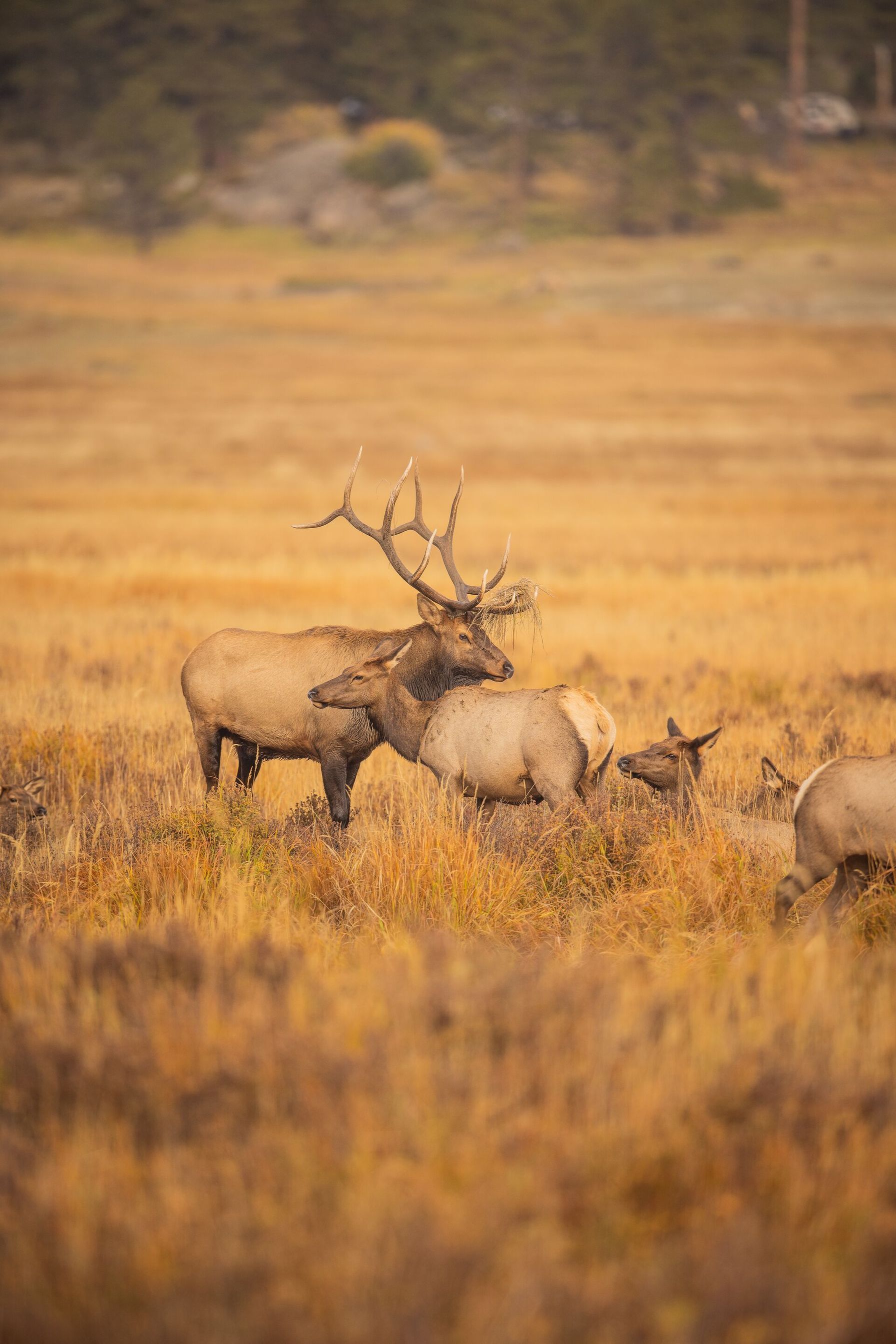
Hunters after an archery hunt under a general license must also purchase an archery stamp to participate in the archery season.
Limited-Quota Licenses (Draw Only)
Limited-quota draws apply to a single hunt area, and a finite number are issued. They are typically very tough to draw, as they offer controlled access, less pressured hunting, and trophy potential.
Reduced-Price Cow/Calf Licenses (Type 6, 7, 8)
These are reduced-price licenses issued for antlerless elk. These licenses are applied for through the draw system, but do not use preference points. The draw is random, and applicants are selected without regard to points.
They will set you back $48 for residents and $303 for non-residents. Note that non-residents cannot buy OTC cow tags.
Type 9 Archery-Only Licenses
Type 9 is a full-price archery-only license to hunt a designated area. This does not require the purchase of a separate archery stamp.
OTC Archery Stamp
Separate from a Type 9 archery-only license, hunters with a Type 1 or Type 2 license, which is typically a rifle hunt, can purchase an OTC archery stamp to add bowhunting during the general archery season.
This typically runs for all or part of September, depending on the intended unit, and applies to the unit or area you are assigned to.
Who Can Buy OTC Elk Tags in Wyoming? Residency Rules
The Wyoming Game and Fish Department (WYGFD) has its own threshold for residency status compared with other state and federal agencies. Check your status and then follow the steps below on how to buy elk tags in Wyoming.
It’s on the applicant to determine whether they fall into the definition before applying for any game and fish permits. A Wyoming resident must have been domiciled and physically resided in Wyoming for at least a year preceding the date of application.
How to Buy Elk Tags in Wyoming
Residents can purchase a general elk license over the counter starting July 16 without entering the draw. This assumes they do not already hold a limited-quota license. If unsuccessful in the limited-quota draw, residents can still purchase a general OTC license.
Non-residents must apply via the draw for general region elk licenses (in the intended region). The application window runs from January 2 to February 2 every year, with the draw results released in May.
Non-residents do not have the option to purchase OTC cow/calf tags at any point. When licenses go on sale after the initial draw and leftover draw, non-residents have the option to purchase OTC after July 16.
Note that there are critical access restrictions to federally designated wilderness hunt areas in Wyoming. Non-residents must hunt via a licensed outfitter or with a Wyoming resident acting as a legal guide in these zones. Always scout wilderness boundaries of your specific hunting unit using the HuntWise map feature.
Hunters born on or after January 1, 1966, are required to carry proof of hunter education certification while in the field. Wyoming recognizes hunter education certificates from all U.S. states and Canadian provinces.
How Much Does a Wyoming Elk License Cost?
Wyoming elk hunting license costs vary based on residency status, draw type, and additional fees, such as an archery permit.
Check the costs below and confirm with the WGFD for any changes to the cost structure so that you can budget your next Wyoming elk hunt.
Wyoming Elk License Costs | |
|---|---|
| License | Costs |
| Resident general elk license | $62 (includes $5 non-refundable application fee if applied through the draw. OTC purchase does not include this fee. Confirm exact OTC purchase price through WGFD.) |
| Non-resident full-price elk license (includes fishing privileges) | $707 (includes $15 non-refundable application fee) |
| Non-resident Special Draw elk license | $1,965 (includes a $15 application fee) |
| Non-resident youth elk license | $290 (includes application fee) |
| Reduced-price cow/calf elk license | $48 residents / $303 non-residents |
| Conservation Stamp (all hunters) | $21.50 (required for every hunter, every year) |
| Archery Permit (if hunting a special archery season) | $16 residents / $72 non-residents (not required for Type 9 license holders) |
| Non-resident application fee | $15 (non-refundable, per species) |
| Resident application fee | $5 (non-refundable, per species, if applying through the draw) |
OTC vs. Draw Elk Hunting in Wyoming: What's the Difference?
OTC general licenses are a more flexible option. They permit residents to hunt any open general area in Wyoming or within one of the three allocated regions for non-residents. These licenses vary wildly in terms of terrain, hunting pressure, and popularity.
Don’t overlook these options, as there are elite opportunities, especially for hunters looking to push a little further and take on more challenging terrain. The trade-off is that there are fewer trophy-class bulls and often more pressure than on limited-quota hunts.
Draw licenses are unit-specific and limited by quota. Due to these restrictions, they are typically a lower-pressure hunt with higher potential. Drawing a hunt, especially in hard-to-draw units, can sometimes take years to access, requiring five or more preference points.
The non-resident preference point system allocates 75% of the limited-quota licenses to the highest-point applicants and the remaining 25% by random draw. For non-residents, elk preference points cost $52 and do not carry over if you draw successfully. We recommend purchasing points each year to maintain your position.
There is an extra pool known as a Special Draw, which is a higher-cost option ($1,965). It does not guarantee a tag, but because of the high price, there are typically fewer applicants, meaning better odds in some units.
If you want to hunt Wyoming elk without waiting years to accumulate points and draw, then pursuing leftover OTC tags or a general hunting area is your best chance to get out there.
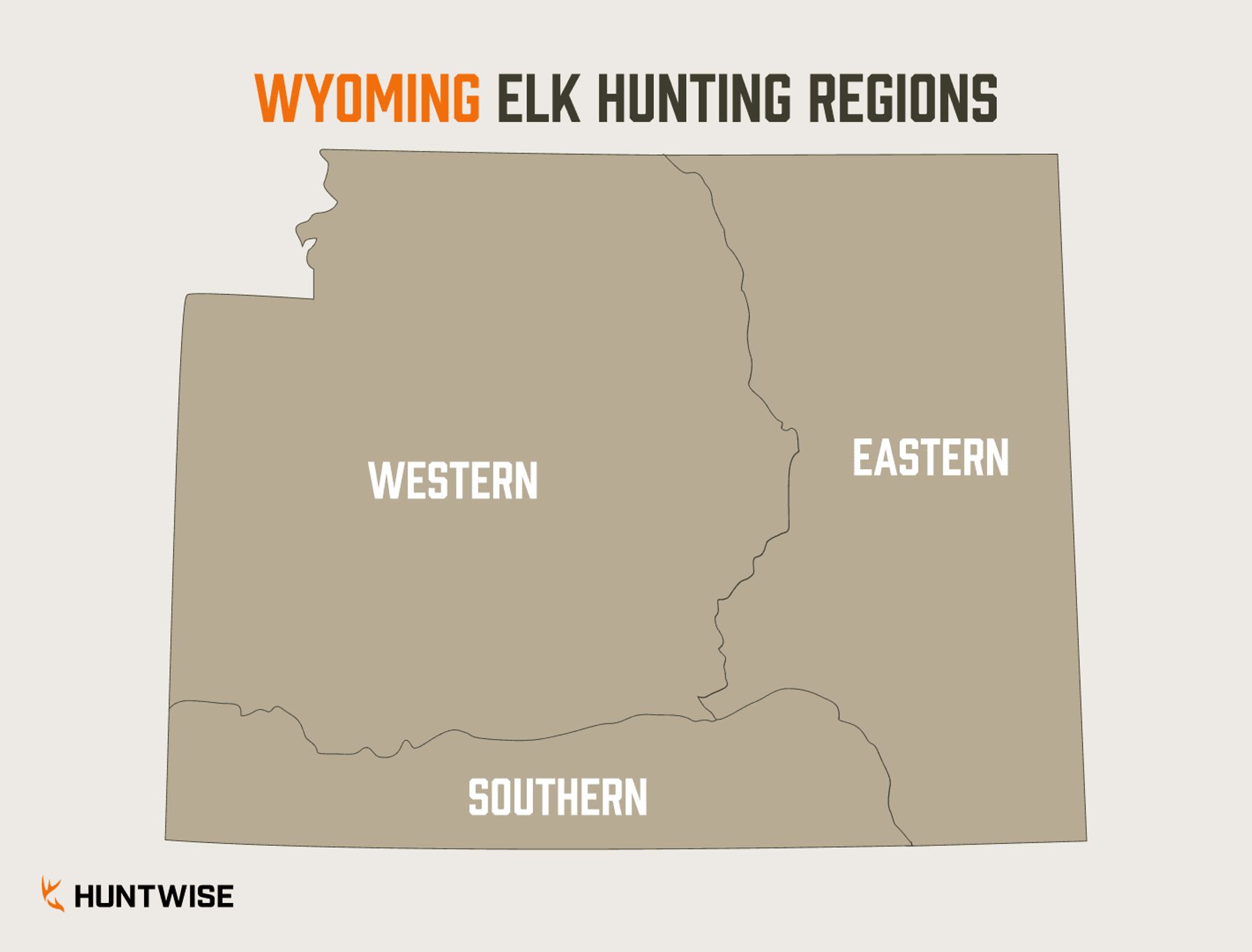
Where Are Wyoming General Elk Units? Regions and Access
Elk are native to all of Wyoming, meaning they inhabit extremely diverse terrain, from the high-altitude plains of the Rockies to arid desert regions in the western half of the state.
As a non-resident hunter, choosing your general elk region (added in 2024) will require consideration of your hunting experience, fitness, and hunting style. It’s this diversity that makes Wyoming one of the best states for elk hunting.
Eastern Region
The Eastern region comprises hunt areas 2, 3, 6, 116, 126, and 129. It typically sees lower demand, with three preference points usually enough to draw. The landscape is a blend of hills, sage country, and sloped, timbered patches crossed by high-density private land.
Elk may gather at these agricultural edges, and you’ll need to be careful with landowner access and rights. It will suit a newcomer to Wyoming and is considered a less physically demanding hunt.
Southern Region
The Southern region covers hunt areas 9, 10, 12, 13, 15, 21, 105–107, 110, 130, and typically experiences moderate demand. You’ll likely need five or more points to draw, which has been around the average for non-residents in recent years.
The landscape encompasses prairie lands and some mountains to the east and is known for strong elk populations and well-conditioned bucks.
Western Region
The Western region, which includes hunt areas 28, 36, 37, 56, 59, 60, 65–71, 73, 77, 78, 80–87, 89–92, 94, 96–98, 102–104, 127, 128, is the highest demand zone due to large elk numbers, extensive areas of public land, and trophy potential.
Similar to the Southern area, you’ll likely need more than five points as a non-resident for a chance at the draw.
Mature Bull Hunting
For zones that consistently produce mature bulls, target units that border Yellowstone and Grand Teton, the Bighorn Mountains, and the Teton Wilderness. This is due to a combination of rugged terrain, remote access, and extensive public land, particularly with lower hunting pressure in the backcountry.
Note: Many Wyoming general elk units, particularly in the Western area, contain or border federally designated wilderness areas. Non-resident hunters may not hunt in these wilderness areas unless accompanied by a licensed outfitter or a Wyoming resident acting as a guide.
Confirm specific units via the WGFD Hunt Planner before scouting, and use HuntWise to stay on top of all unit demarcation lines and private land.

How to Use HuntWise to Plan Your Wyoming Elk Hunt
Wyoming is among the top elk destinations, and for good reason. The general areas span millions of acres of public land. The elk population is around 100,000, and the landscape is incredibly diverse, offering a range of elk hunting experiences.
However, these benefits come with challenges, including hunting pressure, navigating varied terrain, and physical and mental preparation.
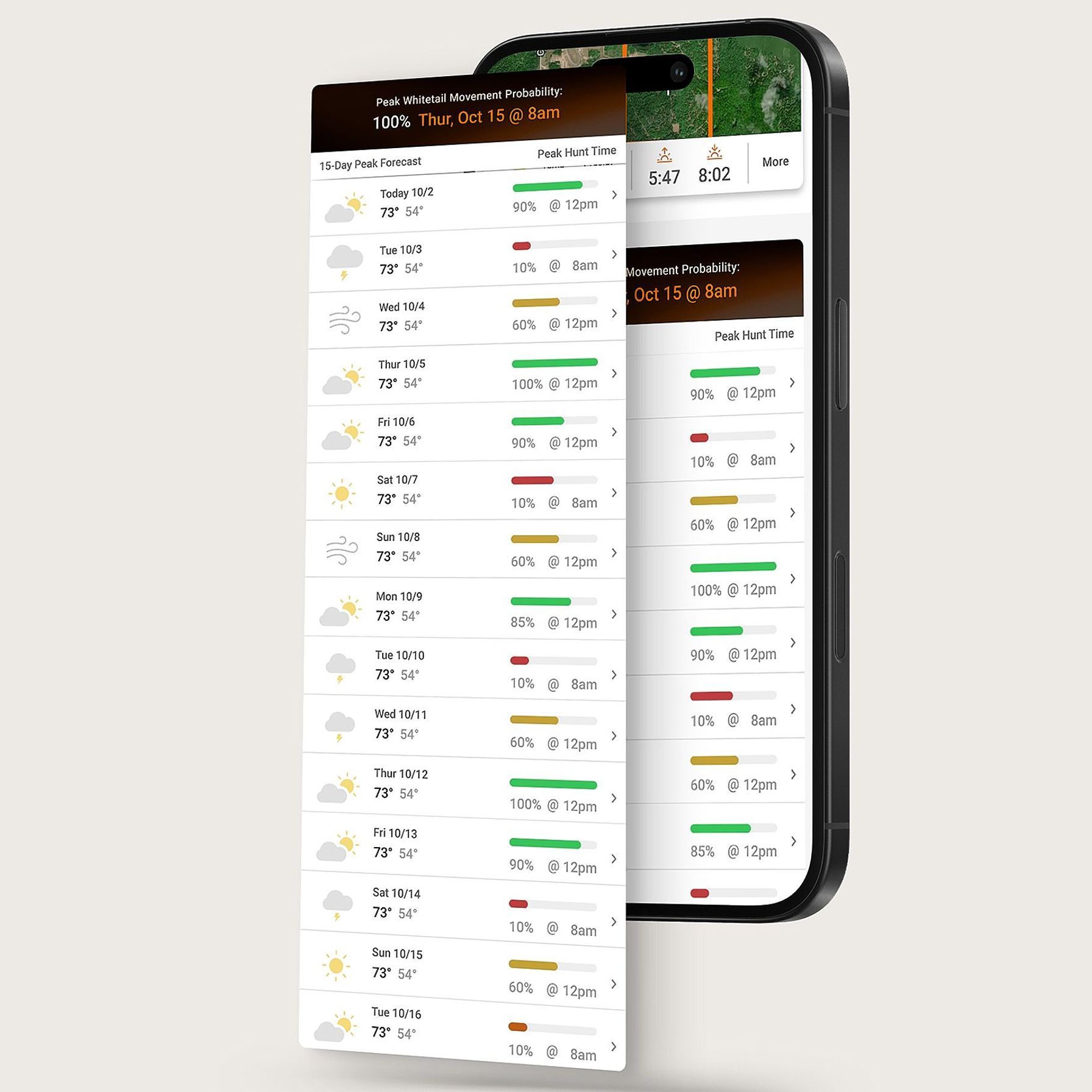
Here are some ways to narrow your focus using HuntWise to make your hunt as productive as possible.
- Use Public/Private Land Layers: Wyoming has a high proportion of public land but also significant private inholdings that can crisscross or 'checker' public land zones, often near critical elk transition areas used during migration. Use HuntWise public/private layers to verify land ownership and access before and during your hunt to avoid trespass issues, particularly in these mixed regions.
- Explore Topographical Mapping: Next, leverage the topo layers to pinpoint key terrain features, including drainages, ridge systems, and benches, where elk stage up during the rut and make transitions between elevations during the summer and winter ranges. This is essential in Wyoming's mountainous general units in the North and Northwest zones during migration hunting.
- Mark Waypoints: E-scout and drop pins on corridors, pinchpoints, water sources, wallows, meadow edges, and saddles so that you have a scouting map ready before you hit the ground. You can do this with a mix of topo and satellite to build a clear image of your intended hunting area.
- Explore Access Points: If you're prepared to lace up the boots and venture beyond the areas most hunters are willing to reach, you'll often find less pressure and better opportunities. Use the HuntWise mapping to plan legal access to general units and identify trailheads to reach backcountry areas that receive less pressure. Fitness and conditioning, especially at elevation, are major factors in a successful Wyoming elk hunt.
- Manage Weather: Wyoming weather patterns shift fast, particularly in October and November. With the HuntCast weather tool, you'll be able to monitor wind direction and incoming weather fronts, which can trigger and impact elk movement.
- Uncover Edged Habitat: For high-impact hunting, identify edge habitat where timber transitions meet open parks, meadows, and sage flats. These edge zones present some of the best times to hunt elk. They’re where elk feed and are visible at dawn and dusk.
Pre-season map work and scouting with HuntWise are essential for uncovering hunting opportunities other hunters may overlook, enabling you to adapt faster to elk movement and focus on high-impact hunting areas.
Tips for Success in Wyoming General Elk Units
As we’ve said before, some of the most successful hunts go to the best planners. Follow our tips for hunting elk across Wyoming.
- Focus on roadless terrain: While general areas see more pressure than limited-quota hunts, there is still plenty of opportunity to be had.
- A large proportion of elk harvest still comes from these general areas, and it's in the remote, roadless terrain beyond the nearest trailheads where you’re likely to have the highest rate of success.
- Plan an early archery season: September is a high-impact hunting window, as bulls are active, vocal, and rutting. They’re at a higher elevation and are less pressured. During the archery hunt, focus on wallows, water sources, and feeding meadows at the timberline. Tune in on doe/cow groups and work the edges of timber.
- Scout migration corridors: During the rifle season (October to November), elk begin their transition from rutting to winter ranges, which can be triggered by heavy snow. Scouting on migration corridors and mid-elevation benches is key.
- Hunt the rut: In Wyoming, bulls are typically visible and moving during the daylight between late October and mid-November. If you’re hunting around this time, focus on doe or cow groups and work the edges of timber.
- Do your homework: Wyoming backcountry elk hunts result from hard work and planning. The large acreage rewards hunters who do homework before the season, use e-scouting to identify multiple backup areas, and get in shape to tackle less-pressured terrain.

Use HuntWise to Hunt Elk in Wyoming This Season
Wyoming offers genuine OTC elk opportunities for residents and a more restrictive process for non-residents seeking leftover tags or to build preference points toward a general region license.
For your best shot as a non-resident, start planning early, get a handle on the application process, and mark key dates in the calendar.
With HuntWise, you’ll gain critical insights into terrain, access, habitat features, feature impacts, and more to help you both in pre-season and once in the field. Whether you’re hunting a general area or planning a future draw application, the more efficient the hunt, the greater the opportunity.
Download HuntWise and use Pro and Elite features to plan your Wyoming elk hunt free during your first week in the app.
Frequently Asked Questions (FAQs)
We’ve got answers to common questions about OTC elk tags in Wyoming.
Q: Can non-residents buy over-the-counter elk tags in Wyoming?
A: No. Non-residents cannot buy standard over-the-counter elk tags in Wyoming. They must apply through the state's draw system for full-price elk licenses. If tags remain after the regular and leftover draws, non-residents may have a chance to purchase leftover licenses during the leftover sale.
Q: Where can I get an OTC elk tag?
A: Wyoming residents can buy a general elk license over the counter beginning July 16, provided they don't already hold a limited-quota elk license. Non-residents cannot buy standard OTC elk tags, but may be able to purchase leftover licenses if any remain after the draw process.
Q: How much does a Wyoming elk license cost for non-residents?
A: A non-resident full-price elk license costs $707, while the Special Draw license costs $1,965. Additional fees, such as the required Conservation Stamp and optional archery permit, may also apply. Always check the Wyoming Game and Fish Department for current license fees before applying.
Q: What is the difference between a general elk license and a limited-quota license in Wyoming?
A: A general elk license allows hunting in designated general elk areas during the applicable season. Limited-quota licenses are valid only in a specific hunt area and have a fixed number of available tags, making them more competitive to draw. Limited-quota hunts often receive less hunting pressure because access is restricted.
Q: Do I need an outfitter to hunt elk in Wyoming as a non-resident?
A: Not everywhere. Non-residents only need a licensed outfitter or a Wyoming resident acting as a legal guide when hunting within federally designated wilderness areas. Outside those wilderness areas, non-residents may hunt on their own as long as they follow all state regulations.
Q: What part of Wyoming has the best elk hunting?
A: The right area depends on your goals. Western Wyoming is known for large elk populations, extensive public land, and strong trophy potential, while areas near Yellowstone, Grand Teton, the Bighorn Mountains, and the Teton Wilderness are recognized for producing mature bulls. Keep in mind that these areas are also among the most competitive to draw.
Q: What are the odds of getting a non-resident elk draw in Wyoming?
A: Draw odds vary widely by hunt area, license type, and the number of preference points you have. Wyoming allocates 75% of non-resident full-price licenses through the preference point draw and 25% through a random draw, giving every applicant a chance even without points. Reviewing the previous year's draw odds is the best way to estimate your chances.
Q: How many preference points do I need to draw a Wyoming elk tag?
A: There isn't a single number that guarantees a tag. Some general elk regions have historically been available with around three preference points, while higher-demand regions and limited-quota hunts may require five or more points, and some premium units take considerably longer. Drawing odds change each year based on the number of applicants and available licenses.


