

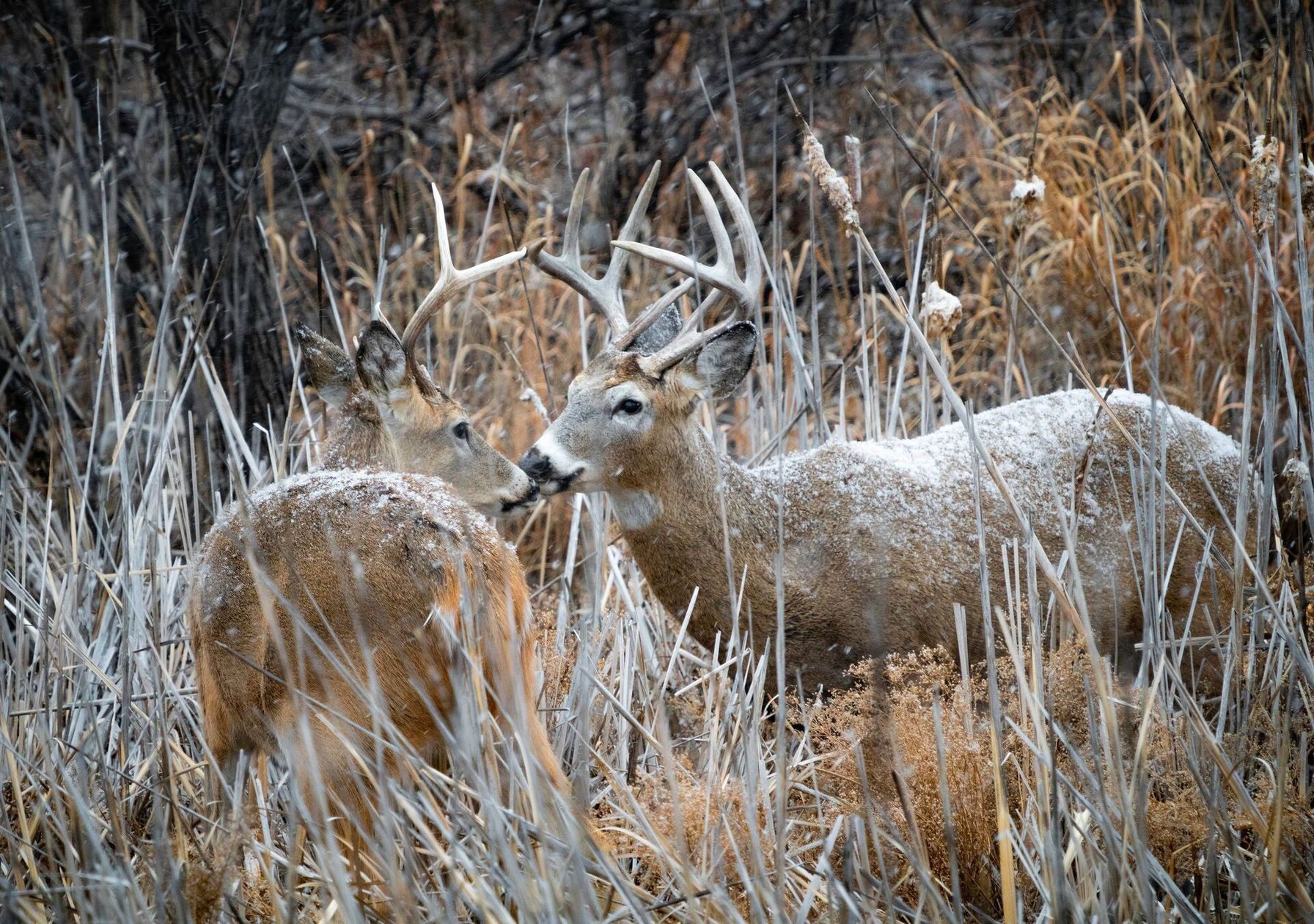
After the rut is over and the cold weather begins to make way, there is not as much of a reason for whitetail deer to be out and about as frequently as they were several months ago. At this point in the season, some whitetails have lost more than 20% of their body mass due to the rut, and with the cold weather breaking in, they are forced to eat and bed to survive.
So, if you still need to tag out for the season (or you simply like late-season whitetail hunting in the cold), here are a few tips for finding a blizzard buck. These late-season whitetail hunting tips amid harsh conditions (such as blizzards) should help you see success!
Updated December 16, 2025.
Deer Behavior During Blizzards
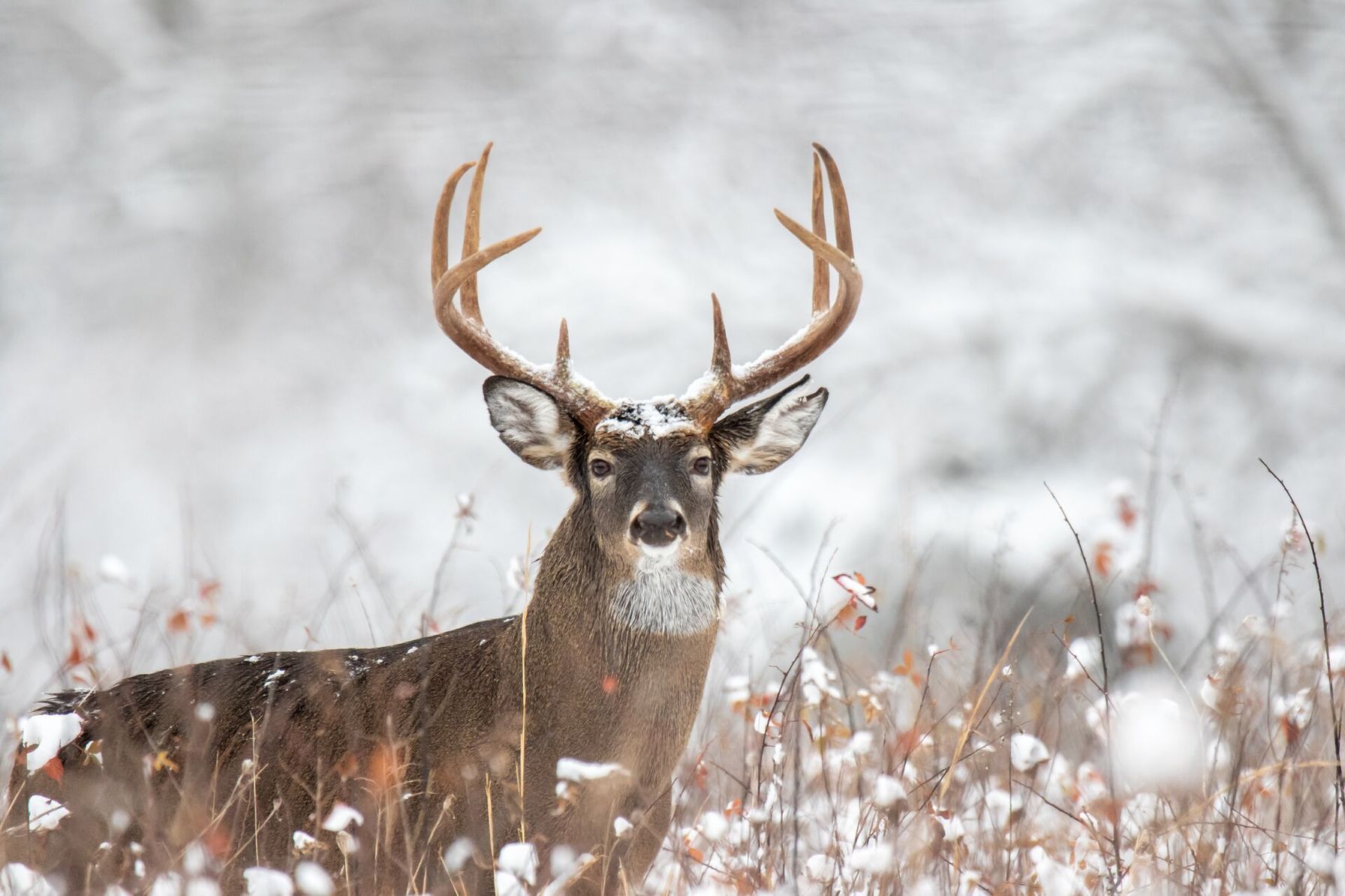
Hunting “blizzard bucks” means chasing whitetails in heavy winter storms, zeroing in on how they move between food and cover. Deep snow becomes an advantage for tracking, and the brutal cold pushes deer into predictable late-season patterns where food plots and exposed fields turn into prime feeding spots.
Success during this weather hinges on patience, solid cold-weather gear, and a willingness to brave tough conditions. Effective tactics include setting up on key food sources, targeting thermal cover (like evergreens), watching well-used travel corridors, and using fresh tracks to guide your approach. Hunters must also stay prepared for the challenge of hunting (and recovering) a deer in extreme wind and frigid temperatures.
You just might successfully take down a blizzard buck, so be sure you're equipped to be out in the snow a while longer and get that buck to your truck and back home!
Understanding Blizzard Buck Behavior
As you learn more about how bucks behave differently in snow and winter storms, you must also adapt your strategies and behaviors.
- Focus on food sources: In harsh winter weather, deer conserve energy and stick close to anything they can eat. They'll dig through snow for leftover crops or hold near accessible food plots. Setting up in these spots can be a winning move.
- Look for thermal cover: At this time of year, deer gravitate to dense thickets, evergreens, and leeward ridges (especially south-facing slopes during north winds) where they can stay warm and sheltered. Target these areas for the best chances of seeing bucks.
- Expect tighter movement patterns: Deep snow keeps deer from roaming far, so once you pinpoint their core area, their reduced travel makes them much more predictable. They'll move less, and you will too.
Understanding how deer move and behave in these conditions can take patience, but it's worth it for a late-season tag.
7 Tips for Better Blizzard Hunts
Aside from tracking different deer movement patterns and bundling up, what can you do to make sure you get a blizzard buck? Here are five tips!
1. Hope for Bad Weather
First and foremost, staying on top of the changing weather conditions during the time of year is very important.
For example, the Michiganders from HuntWise can experience about five inches of snow in mid-November. Then, after all the snow has melted, it can still
be about 20 degrees outside. Staying on top of these changing conditions is essential because whitetails read weather patterns like meteorologists.
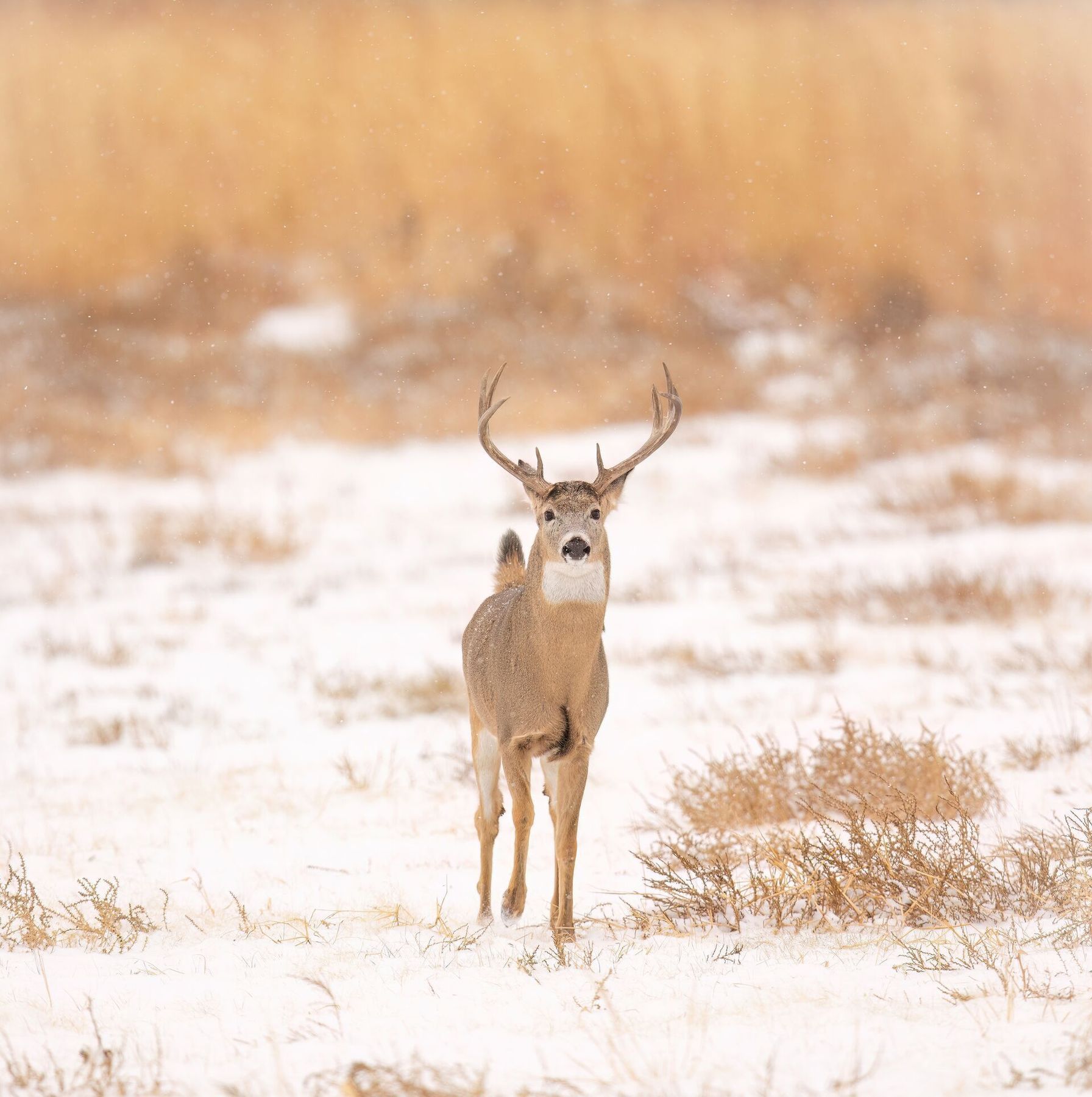
Any remaining buck survivors are extremely wary at this point in the season. So, if you are hunting anywhere north, you'd better hope for bad weather.
Yes, although that may sound strange, the worse the weather, the more likely you are to see that big buck that made it through the rut.
At this late stage in the season, whitetail do not need to expose themselves unless they are forced to react when blizzards, subzero temps, and gusty conditions swoop into a region. So, by understanding their reaction when the blizzard strikes, you're one step closer to success.
Start by planning your hunt just prior to an incoming winter storm or harsh conditions. If you're not sure you can trust the local weather person, the HuntWise app and the HuntCast feature can help with local forecasting for up to 15-days for Elite users.
2. Target Food Sources
Depending on the storm's ferocity, you'll want to hunt hours before the storm and up to a day or more in advance. Big storms often provide many pre-storm feeding frenzies for the whitetail, and that is why the most important place to look is food locations.
As we already noted, locating feeding sources will be the most crucial element of where to look during winter storms. Whitetail will flock to the best food sources, and carbs will have the greatest appeal because they create the most energy for them. Considering that these big bucks have lost 20-25% of their body mass, they will need energy to survive the winter conditions.
So, consider corn, soybeans, or grains when thinking about what whitetail would consume. Look at fields, both large and small, but focus on where the most significant numbers of deer are congregating. Occasionally, a buck might sidestep the crowds, but with the primary rut in the rearview mirror, bucks tend to stay close in case the action heats up via the secondary rut.
3. Put Your Safety First
Remember that you might have to hole up like a deer during the storm. Don't risk your life if warnings or travel advisories are in effect.
However, if you can get out, consider hunting inside thick cover to possibly meet up with a buck browsing near protective bedrooms. You might catch deer on the move to store away some food before they go back and bed for the storm.
4. Scout Smartly
Scouting is crucial to help you minimize the time you need to spend outdoors in the cold and snow. Use HuntWise maps and a trail cam to observe deer movement and plan the perfect spot for your sit. If conditions allow you to do so, an awesome time to hunt is to get out to the stand before the storm and try to endure the harsh conditions.
You can also go old-school and look for deer tracks in the snow and see where they lead for a chance to tag out during the late season. Identifying travel corridors can make it easier to spot tracks and see where deer travel between bedding areas and food sources.
5. Blend In (Adapt to the Snow)
Your early-season or dark camo won't cut it. You'll stick out for every blizzard buck to see you coming.
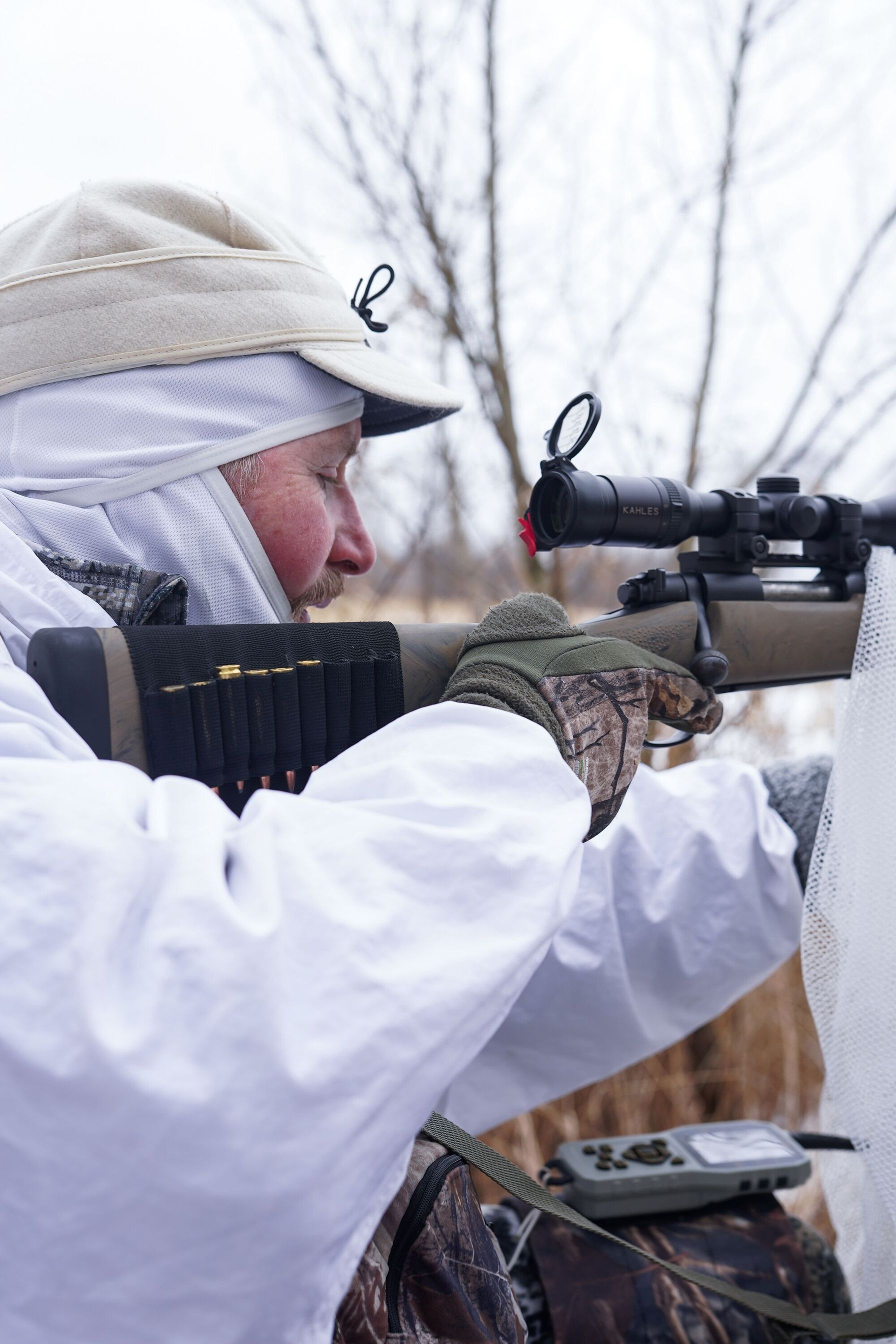
Instead, switch to white camo to blend into the snow-covered trees and thin cover. Your blind will also need to blend in with a snowy background vs early season camo.
6. Be Prepared for the Challenges of Cold Weather
Snow and blizzards come with extreme cold and wind. Dress in layers, including wicking layers that absorb sweat. Even in harsh conditions, deer can still smell you coming.
You might also encounter deep snow as you trek in and out of your hunting area. A good pair of comfortable, warm, and waterproof boots are a must-have for snowy hunts.
Your equipment can also suffer and work differently in the cold. Rifles, bows, arrows, and your fingers may not work as well as they do in warmer conditions. Think about keeping your fingers and hands warm during your sit, and be prepared to take quick follow-up shots if your firearm or bow doesn't cooperate for the first shot.
7. Know How to Recover Your Buck
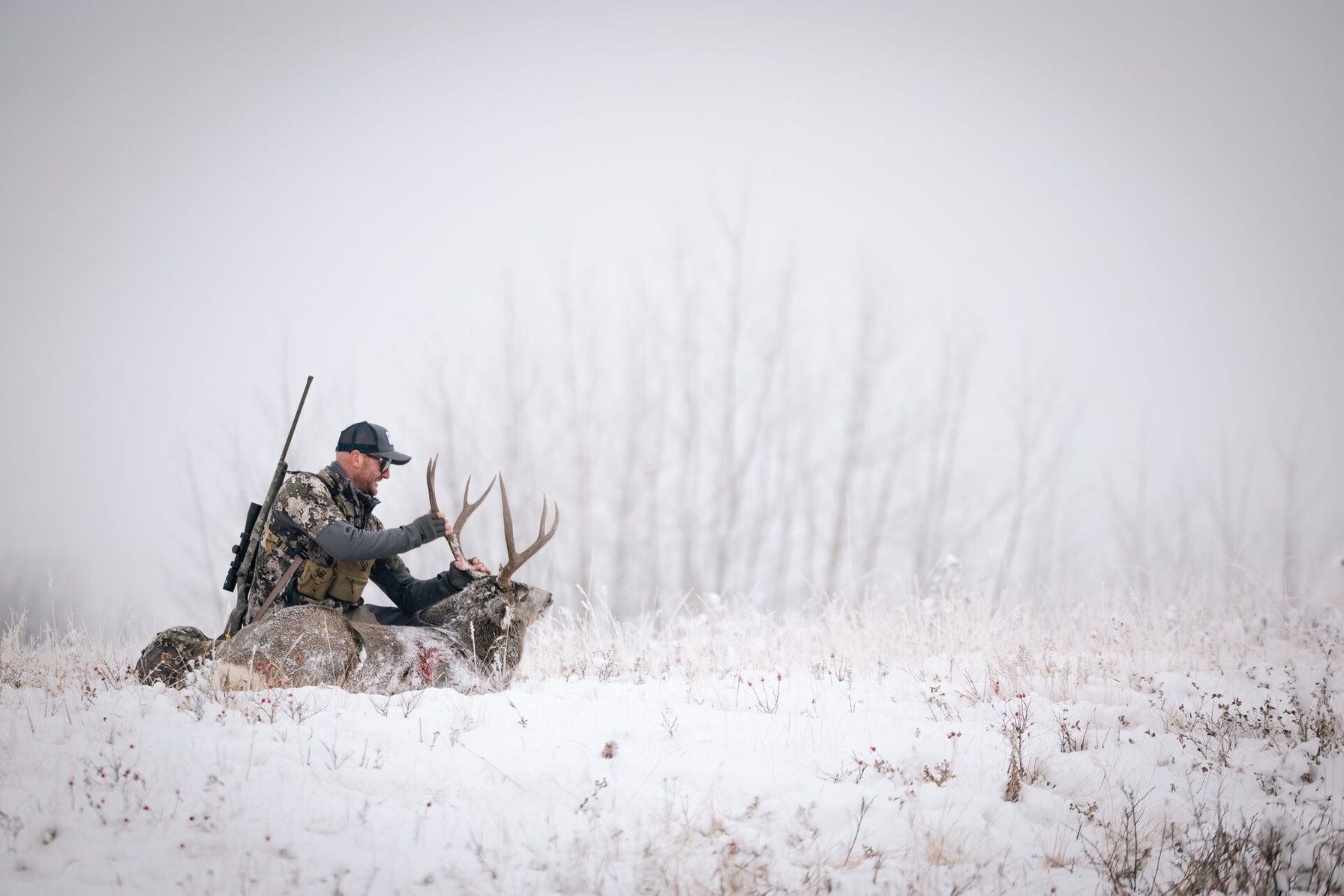
Recovering and harvesting your buck is a different ballgame in the snow. If you hunt before or during a snowstorm, fresh snowfall can cover tracks and blood trails.
Be prepared for a long, difficult trek to follow your buck's trail. Work quickly when you find it to field dress the deer before your fingers get too cold. However, the cold will work in your favor to preserve the meat.
As you track, mark your walking path in HuntWise and make notes about your surroundings. When the woods are covered in snow, everything can look the same. Mark your path so you can more easily find your way back to the truck with your harvested deer.
Late Season Whitetail Deer Hunting is Better with HuntWise
In reality, for hunters, any time is a great time to hunt. However, the late season gives us many different variables that we must take into account.
It is most important to stay on top of the weather and gauge how the current conditions will change deer activity and accessibility to food sources. Doing this will increase your chances of landing that big buck on your trail cam.
Remember to use HuntWise no matter when you hunt! The app can be especially helpful for tracking the weather and different animal behavior after the rut. HuntWise can also help you locate the best spot to post up and wait for a buck to come out of bedding in search of food.
It's free for your first week!
Content most recently reviewed and updated December 16, 2025.
Frequently Asked Questions (FAQs)
We have answers to your questions about hunting blizzard bucks!
Q: Will deer move in a blizzard?
A: Yes, deer will move in a blizzard, just less than in warmer temps. They often hunker down during the worst of it, but will move before and after the heaviest snowfall.
Q: Is it good to hunt while it’s snowing?
A: Light to moderate snow can be great for hunting late-season whitetail bucks. Deer feel safer moving, visibility softens, and tracking gets easier.
Q: How to hunt whitetails in the snow.
A: To hunt whitetails in the snow, focus on fresh tracks, stick to natural travel corridors and food sources, and move slowly so you don’t skylight yourself against the white backdrop.
Q: Is it hard to hunt deer in the snow?
A: Yes, it can be hard to hunt deer in the snow. Cold, quiet conditions make noise control tough, but the tracking advantages often outweigh the extra effort.


