

But some years, the turkeys aren't doing what you were hoping. When you post up for the morning hunt and start to scratch your slate call, you don't get a thunderous gobble in response.
**When hunting turkeys, it's important to prepare—**not just rely on experience. If you spend time learning what the birds are doing before turkey season, you could end up with fun memories and filled tags. Here are some of the best ways to improve your turkey scouting strategy.
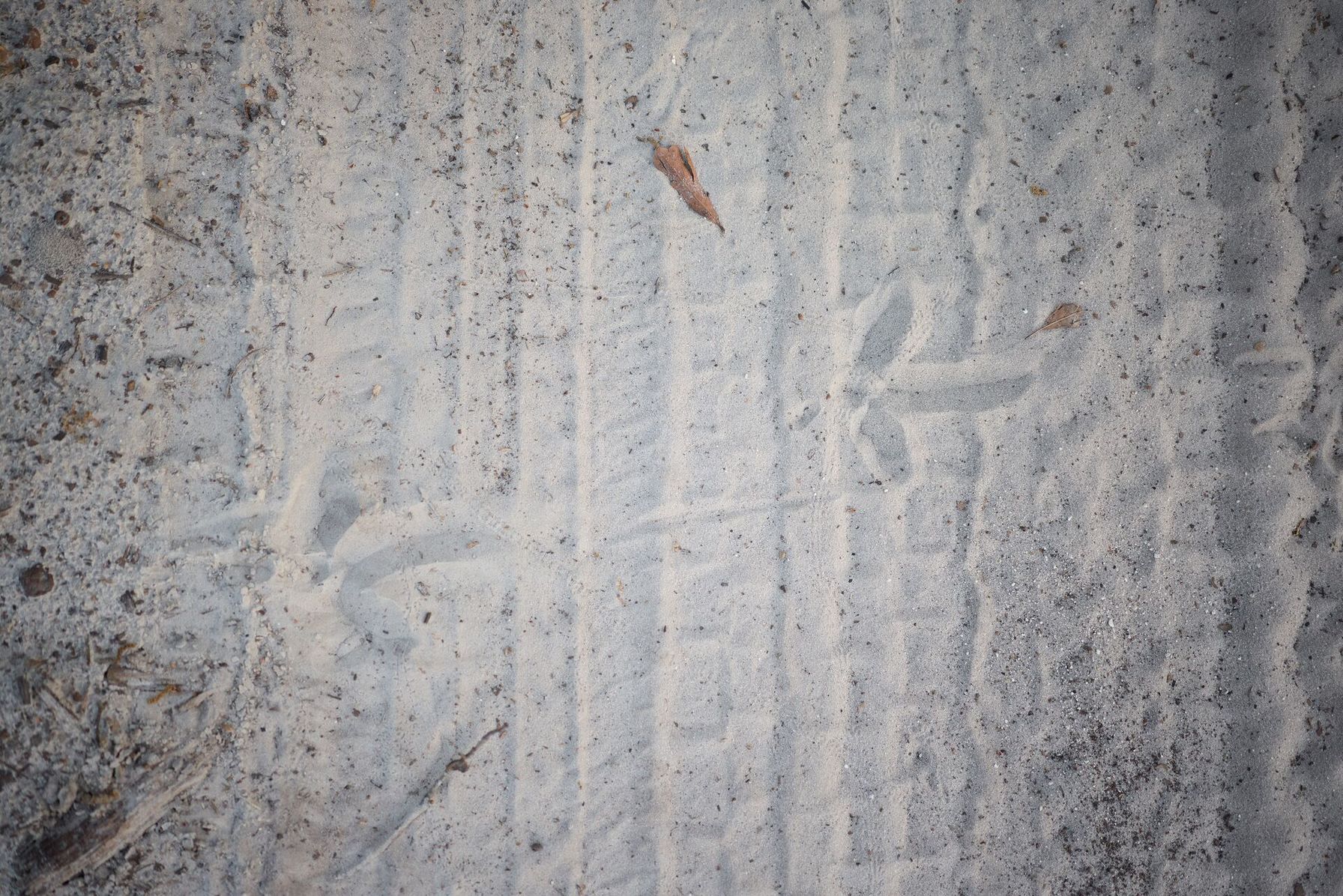
Turkey tracks in the sand.
How to Scout for Turkey (What to Look For)
When I scout for spring turkey season, I like to use my whitetail scouting to help me find turkey sign. I start looking for shed antlers in February and March, and while I look for them, I keep my eyes open for turkey sign as well.
If I find tracks, feathers, droppings, turkey scratching marks, or actually see a bird, I always mark those spots on HuntWise and revisit them later to scout more thoroughly.
Look for Sign
When I'm out on the field, I'm looking for sign that gives me the most confidence I'll be able to find and call birds during the season. A feather here or there is great for learning travel routes and potential feeding and strutting zones. However, what I'm really looking for is a concentration of sign that indicates "turkeys love spending time here."
Look for turkey poop around roost trees, as well as tracks and feathers in feeding or dusting areas. When you can compile different types of sign in one area, you're more likely to be in a high-traffic area for turkeys.
Observe Turkeys
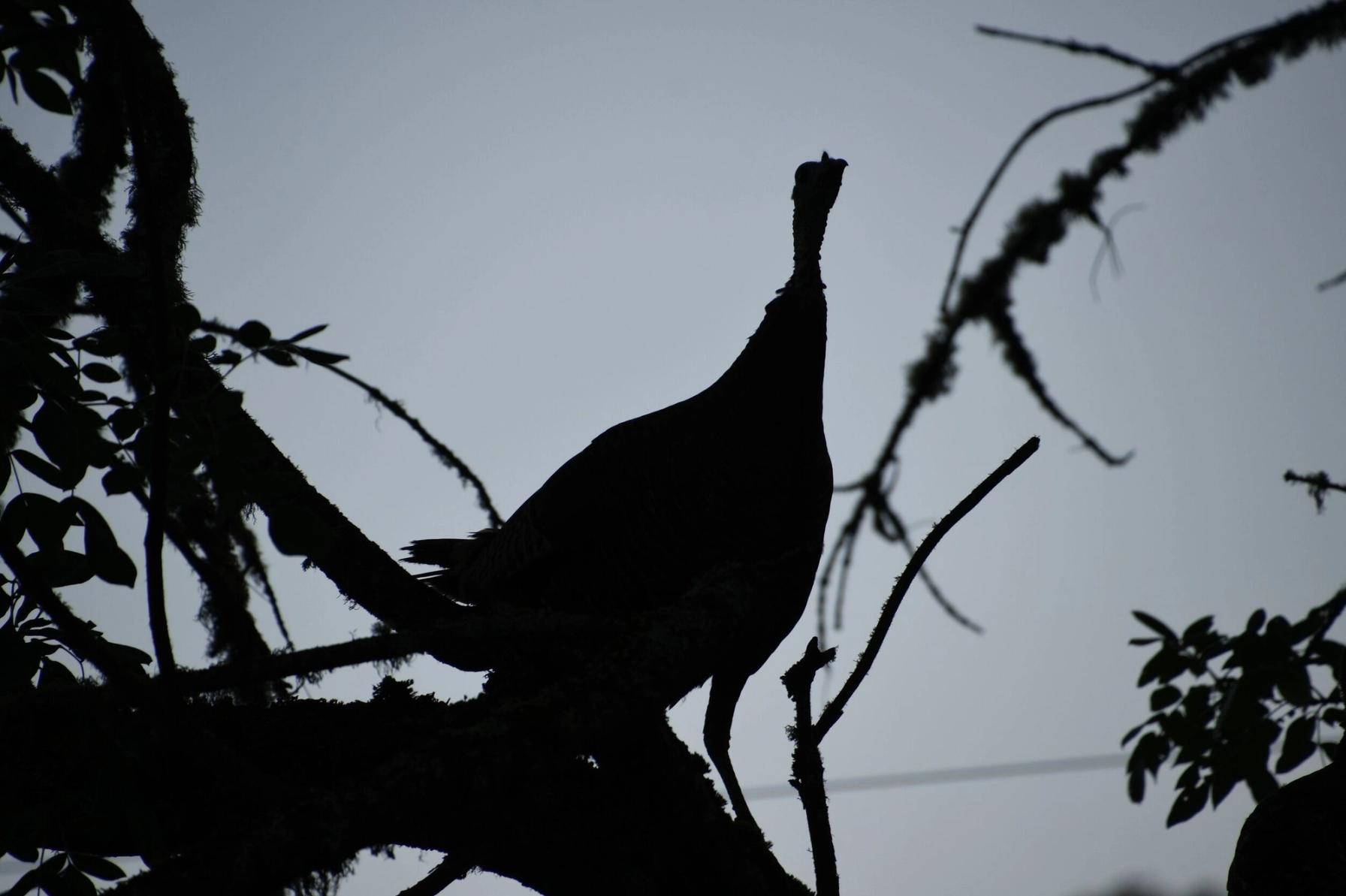
A turkey roosts in a tree.
Once I locate an area with a group of turkeys—or better yet, a roost tree—I like to return before daybreak and listen. Hearing turkeys gobble off the roost or fly down into a field to start feeding for the day can give you the closest thing to a guarantee that you'll have a shot at a gobbler when you get out for a hunt.
Another huge benefit of filling your turkey tag this spring is seeing turkeys in the field while scouting. If you can get into cover early and observe turkeys from a distance, the information you can gather can help you in your next hunting season. No matter where you're hunting for turkeys, observe how they use the landscape, where they enter and exit fields, and where they like to stop and spend time.
Remain Quiet
When I go into the field and get close to turkeys, I'm very careful not to alert them to my presence. If turkeys want to gobble on their own, that's great, but I won't try to call to them. I try not to be seen or heard because whenever I alert a turkey to my presence in its territory, it becomes more cautious.
A few years back, I made the mistake of calling turkeys during a scouting trip. I found an area with all the sign I was looking for, and instead of listening for gobbles and fly-downs, I started trying to call. I heard gobbles and even saw a couple of turkeys—but they saw me too, and they moved on from that small parcel of public land that I was planning to hunt.
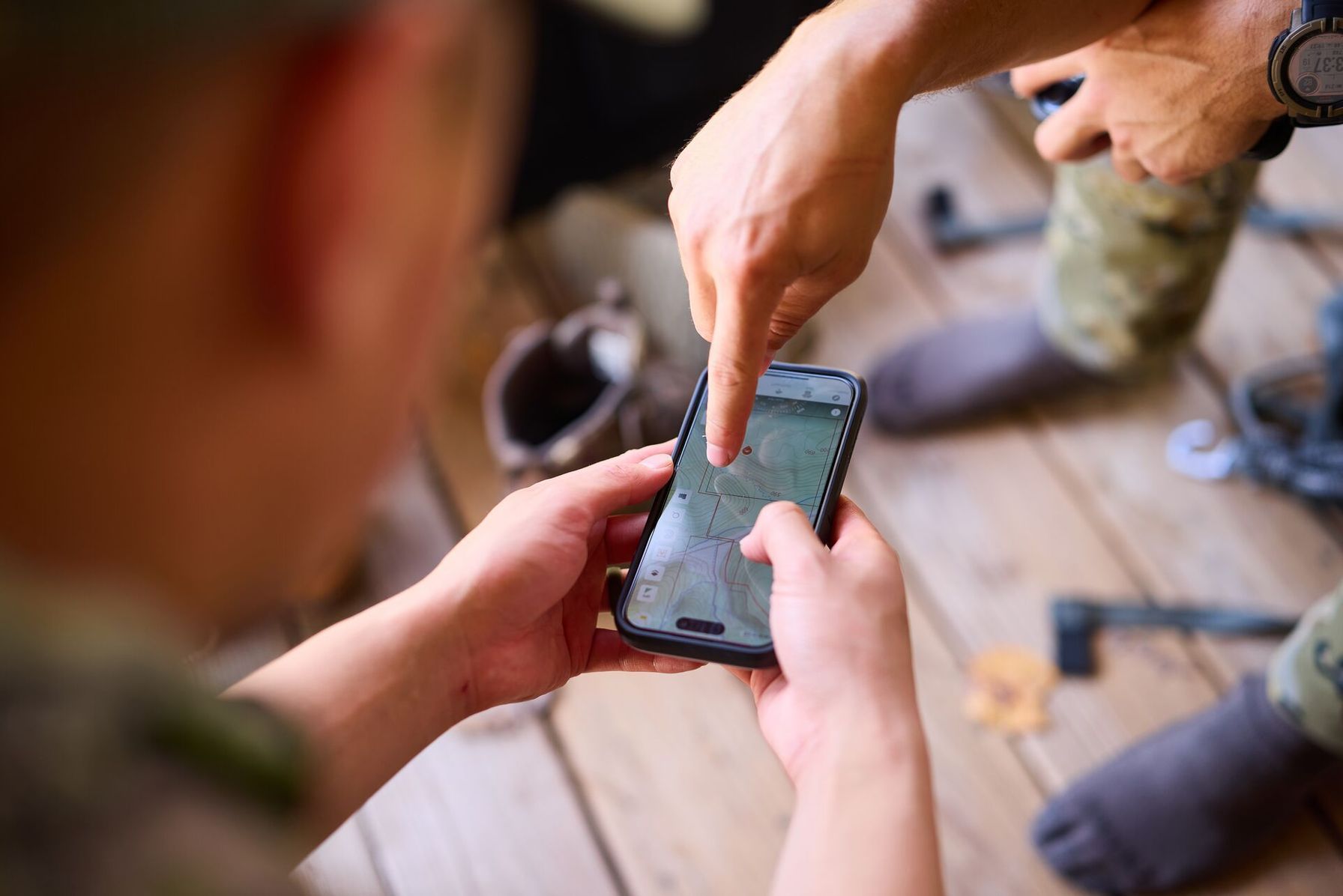
E Scouting with HuntWise
My focused effort in scouting for turkeys begins at home, where I use the HuntWise app to determine how to e scout for turkey. With HuntWise, I can toggle several map layers on and off to help locate key features that will concentrate turkeys and make them easier to hunt.
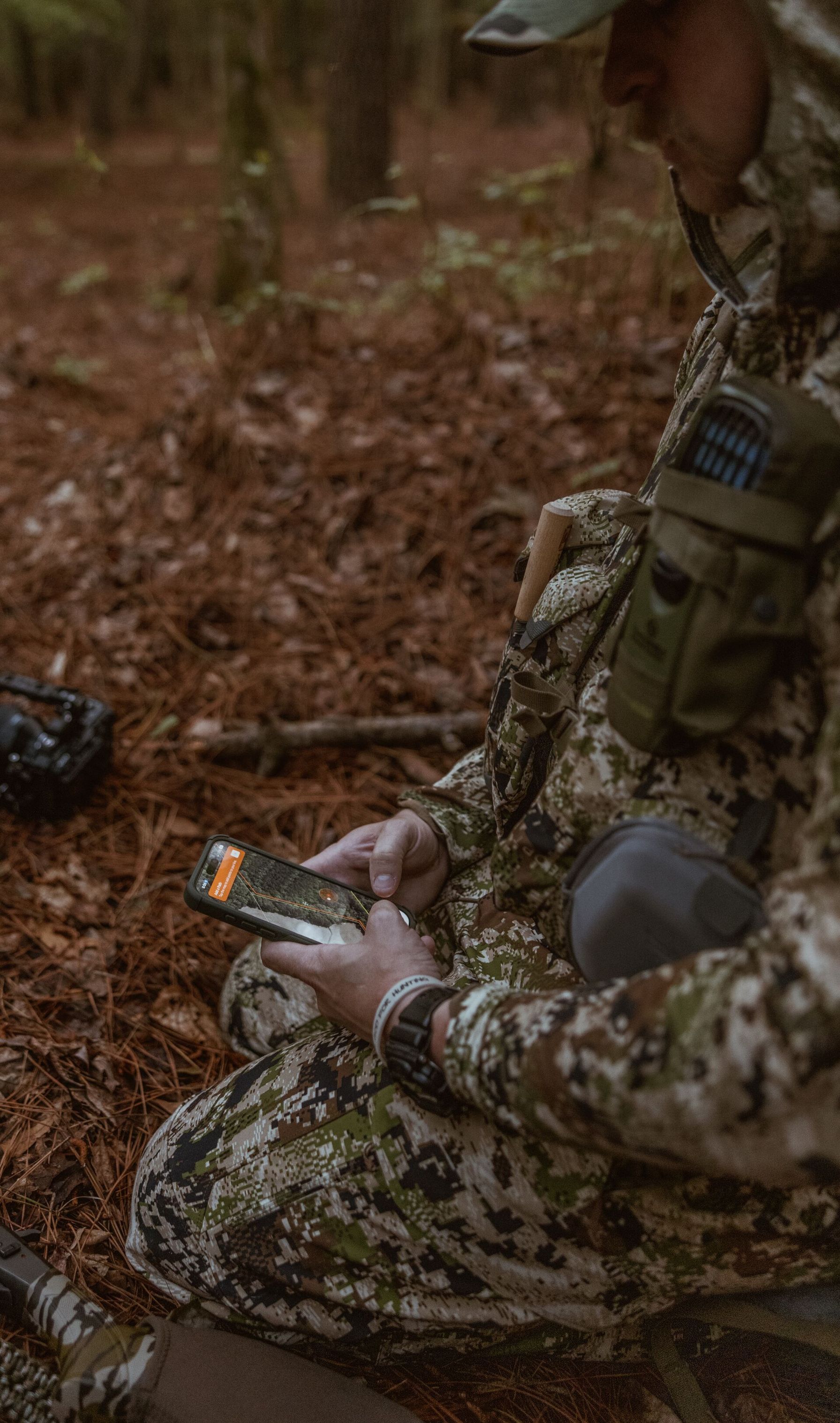
Start with Map Layers
First, I like to look at the land cover layer, which shows the type of vegetation in a specific area. Roosting turkeys like tall mature trees such as oaks and pines, so identifying where those trees are growing is a helpful first step.
I also look for water sources, such as creeks and ponds, and feeding areas. Turkeys are omnivores, and they like to be in open fields to forage for bugs and seeds, because that's where their eyesight can work to their advantage the most.
Check Out LiDAR
Next, I like to use LiDAR and satellite layers during my e-scouting. The HuntWise Pro Satellite with contours lets me see where dense vegetation meets open fields and hardwoods. Much like deer, turkeys will use dense vegetation to escape predators and more open areas to feed and attract the attention of other turkeys.
The LiDAR layer removes all vegetation, allowing you to view the landscape unimpeded. This way, you can look at drainages and ridges that turkeys might use to travel through during the day.
Map and Mark with Pins
I also like to use HuntWise's 3D mapping when e-scouting for turkeys. This feature really helps me visualize exactly what the terrain is doing and plan for where turkeys will roost and travel. With 3D mapping, I can clearly see drainages and fields, helping me pinpoint where turkeys will go immediately after leaving their roosts.
As I look through layers on HuntWise, I drop pins in areas I want to check out later, focusing on locations where several key factors come together. For example, if there's water near a big oak ridge that backs up to a recent clear-cut, I know that's a spot where turkeys have resources for mating and survival. I like to mark any spot that could be a roost, feeding area, or travel route, then check it out with boots-on-the-ground scouting as soon as I can.
Learn more about using map layers in HuntWise in the short video below!

Download HuntWise for Smarter Turkey Scouting
Many folks view turkeys as easier to hunt than other animals, and sometimes that's true. However, the more you know about scouting and locating good areas for turkeys, the easier it is to hunt them.
Before this turkey season kicks off, spend some time on HuntWise making a plan. Then, get into the woods for the turkey season opener and get ready to capture the grip and grin we all want to see.
Download the app and enjoy it free for your first week.
Start scouting with HuntWise for free! Download the app and enjoy it free for your first week.
Frequently Asked Questions (FAQs)
We have answers to your questions about how to scout turkey!
Q: How to scout for turkey for beginners?
A: When scouting for turkey as a beginner, start with the basics: look for tracks, droppings, scratchings in leaves, feathers, and dusting spots. At sunrise or sunset, listen for gobbling from roosted birds. Use maps to locate hardwood ridges, field edges, and water sources. Turkeys love transition areas. Glass from a distance and avoid bumping birds.
Q: When should you start scouting for turkeys?
A: Ideally, you should start scouting for turkeys 3–4 weeks before the season opens. Early scouting helps you locate winter flocks and travel routes. As the season gets closer, focus on identifying roost trees and strut zones. In-season scouting (midday) can also reveal fresh sign without pressuring birds too much.
Q: Should you call for turkeys when scouting?
A: Generally, no, you should not call for turkeys when scouting—especially before the season. Calling can educate birds and make them wary. Instead, listen naturally at fly-up or fly-down times. If you do call, keep it minimal and subtle, and avoid overdoing gobbler calls.
Q: Can you use a drone to scout turkeys?
A: In most cases, no, you can't use a drone to scout turkeys. Many states prohibit using drones to scout or hunt wildlife, and it’s often considered unethical or illegal during hunting season. Always check your local regulations before using any aerial device.
Q: How to use HuntWise.
A: To use HuntWise for e scouting turkey, download the app, create an account, and select your state and species (turkey). Use map layers to identify public/private land, terrain features, food sources, and property boundaries. The wind and weather tools help plan setups, and the activity forecasts can guide timing. Drop pins to mark roost sites, tracks, and setups.
Q: What is the best turkey hunting app?
A: It depends on what you value. While there are a few turkey hunting apps to choose from, HuntWise is the ultimate all-around app with property lines, map layers, and forecasts for weather and animal behavior. It's the best tool for scouting.


