

- In the Central Midwest (Iowa, Illinois, Indiana, Ohio), peak chasing falls between November 7–15.
- In the Northeast, the peak runs November 8–15.
- In the mid-South (Virginia, North Carolina, Kentucky, Tennessee), the peak changes to mid- to late-November.
- In the Deep South, variation among counties is greater, and the peak rut can run from December through January in some herds in Florida and South Texas.
Contrary to a common assumption, temperature does not impact rut timing. Temperature influences deer visibility and movement during the rut, which is driven by biological windows. While a cold front during peak rut may increase daytime movement and warmer weather may shift activity toward sundown, the rut still occurs within these established biological stages.
Follow this guide for a closer look at the rut, when the rut season will be for your region, and how to use HuntWise’s RutCast for location-accurate rutting insights and a county-level peak rut window to successfully hunt the whitetail rut.
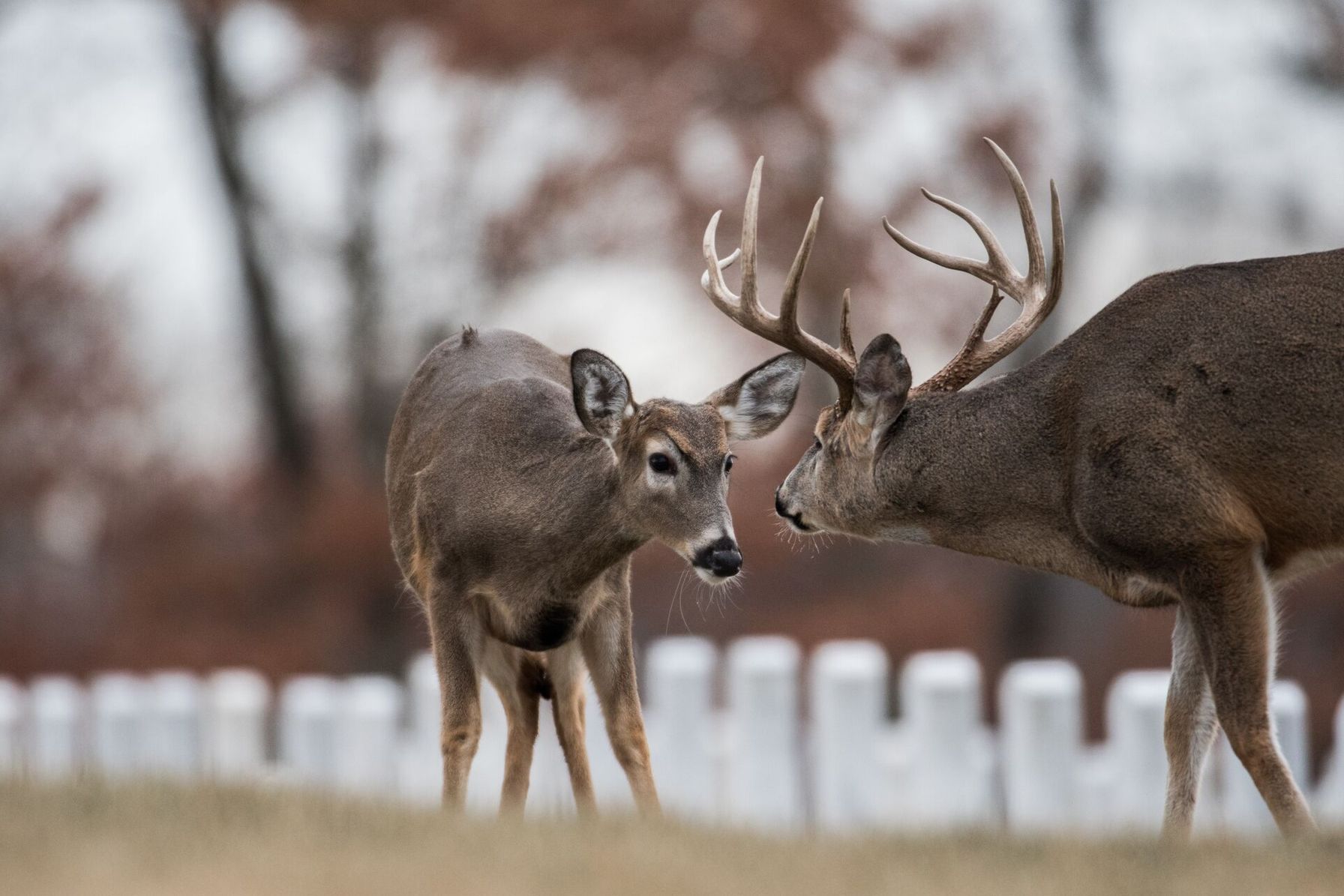
Why the Rut Happens on the Same Dates Every Year
Deer regulate their seasonal cycles based on day length, also known as the photoperiod. This refers to the duration of daylight relative to darkness during a 24-hour cycle.
As the days get shorter, deer produce more melatonin, along with other biological signals that trigger a hormonal chain telling them it's time to reproduce or go into estrus. This chain leads to the mating season, also known as the rut.
Understanding the science of the whitetail rut can help you hunt more accurately and maximize your time in the field. While there are common hunter myths, such as cold snaps, moon phases, and mast crops, credited with triggering the rut, the photoperiod is the primary biological marker that establishes seasonal timing.
Rut timing is the fixed window of activity that is set by daylight and geography. In contrast, rut visibility varies with weather and hunting pressure. While the two interact, rut timing (photoperiod) always determines the rut season.
To better understand how rut timing will impact your hunt, check the hunt calendar to see how this biology varies across regions.
2026 Regional Peak Rut Season Calendar
When will the rut start? It’s a common question and highly dependent on your location. Whether you’re planning to hunt in your home state or have an interstate trip in the works, refer to the rut chart calendar below for the best times to hunt deer by state.
Whitail 2026 Regional Peak Rut Calendar | ||||
|---|---|---|---|---|
| Region | Pre-Rut Begins | Peak Chasing | Lockdown | Post-Rut |
| Northern Midwest (MN, WI, MI UP) | Oct 25 | Nov 5–12 | Nov 13–17 | Nov 18–25 |
| Central Midwest (IA, IL, IN, OH) | Oct 28 | Nov 7–15 | Nov 16–20 | Nov 21–28 |
| Great Plains (KS, NE, SD) | Nov 1 | Nov 8–15 | Nov 16–20 | Nov 21–Dec 1 |
| Northeast (NY, PA, NJ, VT, MA) | Nov 1 | Nov 8–15 | Nov 16–22 | Nov 23–30 |
| Mid-South (VA, NC, KY, TN) | Nov 5 | Nov 10–20 | Nov 21–26 | Nov 27–Dec 5 |
| Deep South (GA, AL, MS, FL) | Varies by county | Dec or Jan in some areas | n/a | n/a |
| Mountain West (CO, WY, MT – mule deer) | Nov 5 | Nov 15–25 | Nov 26–30 | Dec 1–5 |
Use this chart as your starting point as you map out your rut hunt. Variation can occur at the county level, so we recommend confirming local rut forecasts before heading out.
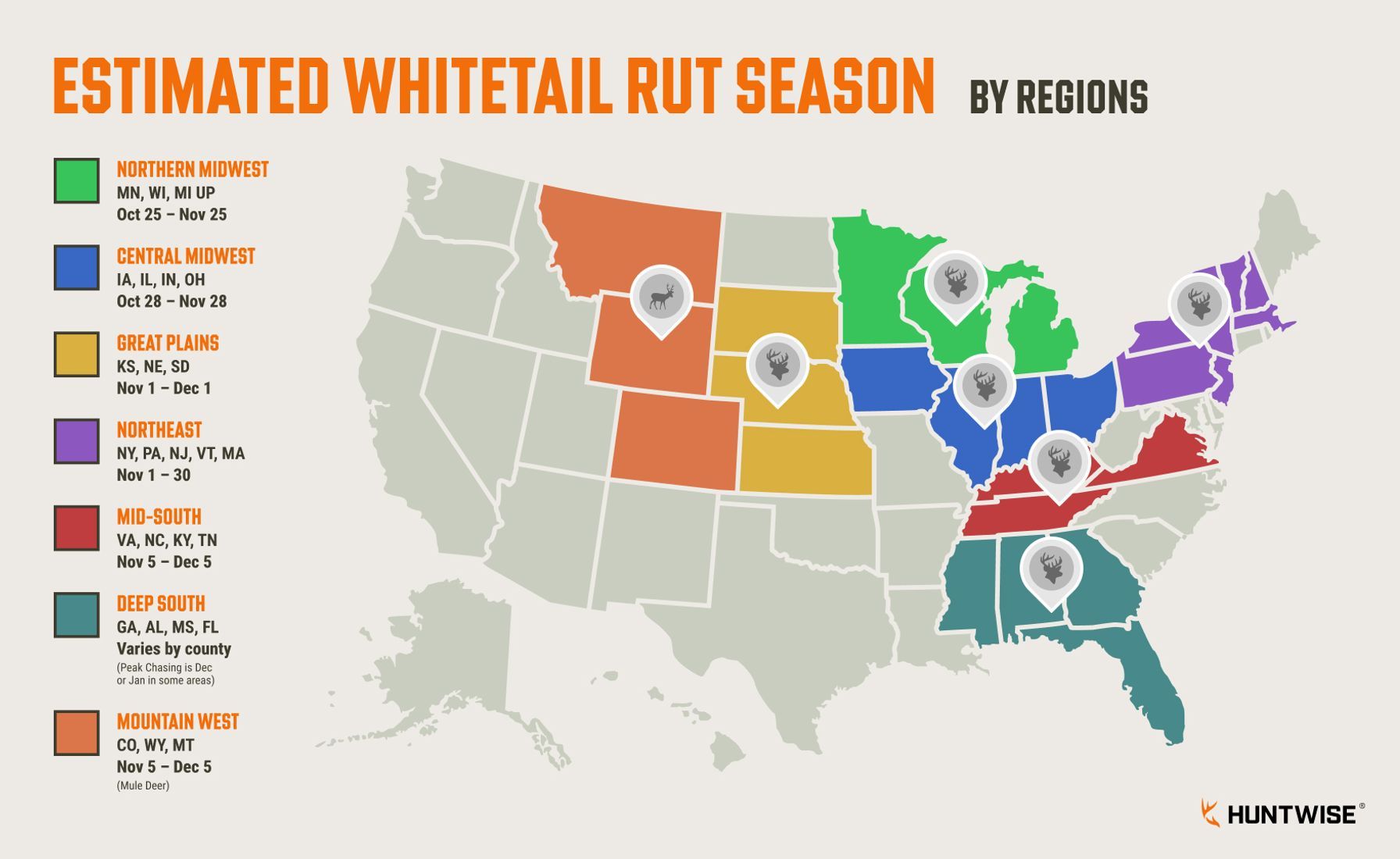
Regional Breakdown: What's Different by Region
The rut can run anywhere from August through to February, depending on where you are. Explore the key regional differences below to understand peak rut timing better.
- Midwest: Rut timing remains highly consistent across the Midwest thanks to latitude and strong photoperiod signaling. Peak breeding tends to occur heavily in the first couple of weeks of November.
- Northeast: The Northeast shares similar rutting patterns to the Midwest, with things kicking off just a touch later and with a slightly longer lockdown window. The best days to hunt in the north will depend on where you are, as the rut tends to start later depending on how far north you plan on hunting.
- Mid-South: In the southern regions, rut timing is more variable. Patterns are far more spread out than the Midwest, with ruts occurring more towards late November. Variation from county to county can also swing massively.
- Deep South: Rut dates vary widely, creating large county-to-county differences. Genetics and herd demographics play a role, as mid-20th-century restocking brought deer from diverse regions into a single zone, contributing to these fluctuations.
- Mountain West/Mule Deer: In higher-elevation regions, mule deer (a distinct species) follow a later peak rut than whitetails.
As the rut follows the same pattern year after year, knowing where you’re going to be hunting is critical to finding the right window.
Temperature vs. Timing: Debunking the Cold Front Myth
Temperature doesn't affect the rutting window. Temperature affects deer behavior, which can increase movement during the rut, while the underlying time frame remains the same.
For example, a cold front may trigger increased deer activity during the daytime, creating stronger hunting conditions. Deer will continue rutting even during warmer periods, and activity may shift to nighttime hours, making deer harder to observe.
If you track the fawning dates, you’ll notice a clear pattern in breeding times. The majority of fawns are born in a concentrated window, with some born before and after this peak period, creating a bell curve distribution. Working backward, the gestation period stays consistent across timelines, helping us track peak breeding windows.
Weather can affect deer movement, but the underlying biological processes that trigger the rut remain at play. If there’s a warm-weather report, adjust timings or locations, but keep this window in mind; you’ll want to be out as much as possible during mid-November.

How to Use HuntWise RutCast to Time Your Rut Hunt
To time the rut, you’ll need a tool like RutCast to track deer movement. RutCast transforms your regional calendar into a county-specific plan based on photoperiod and local movement data. If you want to hunt the rut successfully, here's how:
- Open your HuntWise app and view your hunting county.
- Open the RutCast function and choose whitetail as your intended species
- View and note the predicted peak rut period. This is a seven-day range based on previous years' movement data and photoperiod input.
- Check the regional calendar above and cross-reference with the RutCast window to confirm historical patterns.
- Set aside time, either holidays or PTO, around the peak-chasing window. Harvest rates indicate that the seven days around November 10 in the Midwest states are the peak hunting time.
- Develop some pre-rut hunting strategies, such as targeting food and rub lines (in late October) before switching focus to travel corridors during peak times.
With these dates set aside, you’ll be better positioned for high-impact hunting no matter whether you’re hunting whitetail before the rut or planning a peak-rut approach.
How to Use the Rut Calendar for Hunt Planning
If you prefer to start more generally, hone in on a county. Then you can similarly start planning from the rut calendar.
- Start with the peak rut dates from the regional calendar above.
- Next, use your HuntWise RutCast to check timing for your intended county, as county-level data is more accurate than regional projections.
- Apply for PTO or time off during the peak-chasing window, as it is the highest-impact hunting window on the calendar.
- Consider hunting whitetails pre-rut, as it leads into the rut. Focus on food and deer sign before transitioning to travel corridors as the rut peaks.
- During the peak window, focus on stand hunting near these work hunting corridors, as bucks will be active at all hours.
Whether you start with RutCast or the regional hunting dates and then refine with RutCast, determining that peak window is critical for a productive hunt.
Stop Guessing When the Rut Starts and Start Planning Around It
The science behind the rut is firmly established. The photoperiod schedule triggers biological mechanisms, which produce consistent rutting windows year after year. While weather can affect movement, rut timing is independent of warm or cool fronts.
To make the most of this exciting hunting window, start with your regional calendar before zeroing in on your county with county-level forecasts and the RutCast feature, available with a free trial of HuntWise Elite. Before locking in your PTO, fine-tune your strategy and set aside hunting dates to make the most of this high-productivity hunting time.
Frequently Asked Questions (FAQs)
Q: When does the whitetail rut peak in the Midwest?
A: In much of the Midwest, peak whitetail rut activity occurs in early to mid-November. In the Central Midwest, including Iowa, Illinois, Indiana, and Ohio, the peak window is generally November 7–15. Local conditions and breeding patterns can shift the timing somewhat by county.
Q: Does temperature affect when the rut starts?
A: No. Photoperiod, or changing day length, is the primary biological trigger for rut timing, so temperature does not determine when the breeding season begins. Weather can influence how much deer move during daylight, though. A cold front may increase visible movement, while warmer conditions can push more activity toward nighttime.
Q: When is the rut in the South?
A: Southern rut dates vary considerably by location. In the Mid-South, peak activity generally occurs from mid- to late November, while some areas of the Deep South can experience peak breeding in December or January.
Q: How accurate is HuntWise RutCast for predicting rut timing?
A: RutCast provides a county-specific seven-day peak rut window using factors such as photoperiod, historical local rut data, and regional patterns. It’s designed to narrow broad regional timing to a specific hunting area, but treat it as a forecast, not a guarantee. Local deer behavior can still vary.
Q: When is the mule deer rut compared to whitetail?
A: Mule deer generally rut later than whitetails, with breeding commonly occurring in November. HuntWise's current regional RutCast calendar places the Mountain West mule deer peak around November 15–25, compared with roughly November 7–15 for the Central Midwest whitetail rut. Exact timing varies by location.
Q: What are the three phases of the rut, and how long does each one last?
A: The rut is commonly divided into pre-rut, peak rut, and post-rut. There is no fixed number of days for each phase because breeding timing varies by region and herd. But generally, each phase lasts about two weeks.
Q: Can HuntWise RutCast track rut phases for species other than whitetail?
A: Yes. HuntWise currently supports mule deer and whitetail in RutCast. Select your hunting area and target species to view the applicable rut forecast.


