

"Shed hunting" is simply the search for deer antlers that have naturally fallen off the deer.
Shedding season happens in late winter after the rut, which typically takes place in February or March in most of the United States. Finding antlers helps hunters who want to continue their season year-round. Shed hunting has also been known to help hunters take "inventory" of bucks that have made it through the last hunting season in preparation for the next season.
How can you master shed hunting to help your in-season deer hunt success? Keep reading as we share nine tips to help you master shed hunting and enhance your search for whitetails.
Updated January 8, 2026.
Tip #1: Look for Quality, Not Quantity
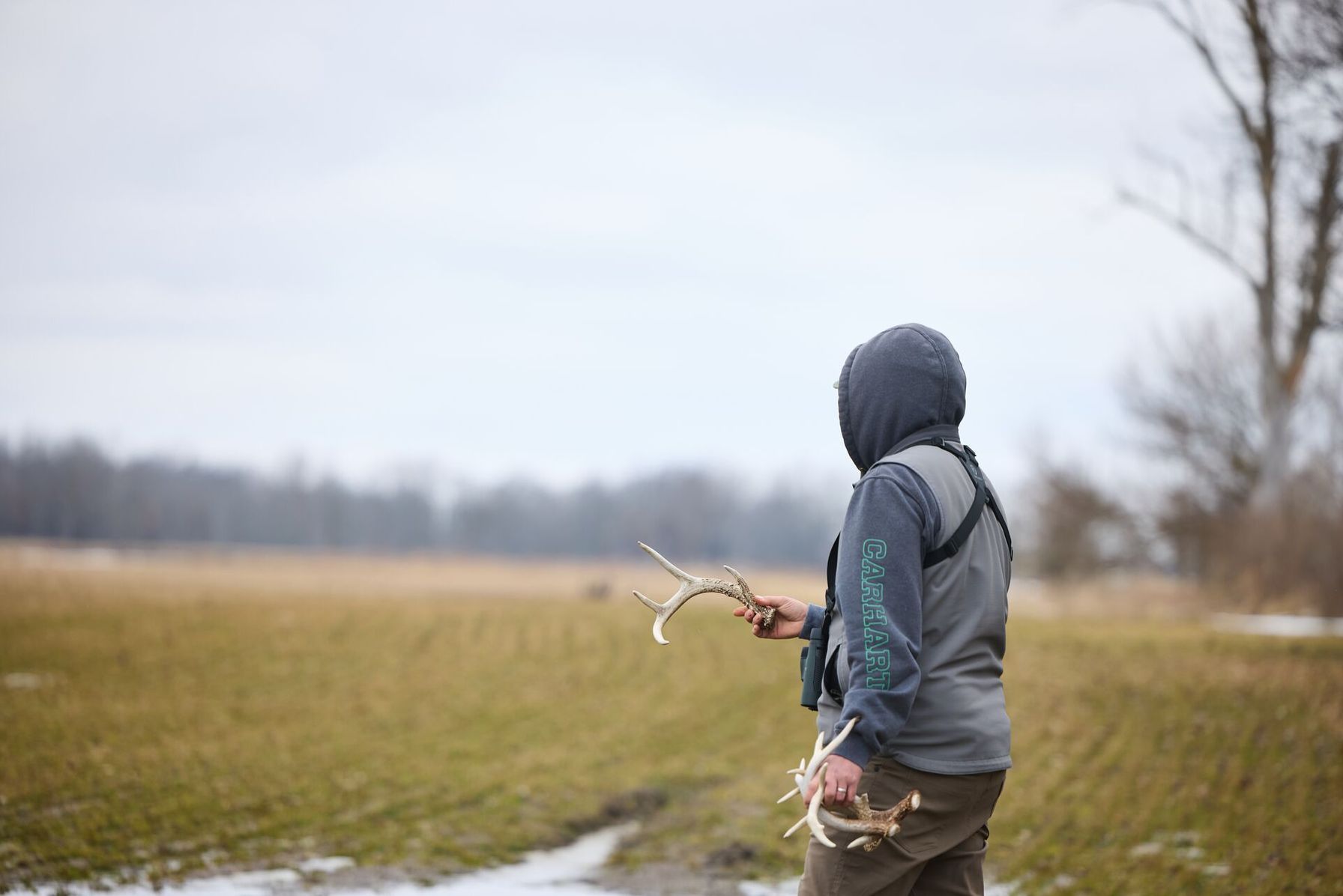
If you try to find every set of antlers that could be in your potential hunting areas, your eyes will get tired after searching acres of property. Instead of "more," go for "less is more," and focus on quality sheds and the information you can glean that could be helpful when hunting season starts again.
You don't have to find every antler (or piece of antler) to have a successful shed hunt. Try to hone in on some small areas more likely to hold bedded bucks.
Thoroughly searching a small yet high-potential area can yield a far higher return than meandering throughout dozens of acres.
Tip #2: Explore Thick Brush in the Woods
Deer feel safe in the thick brush of the woods. This also happens to be where many antlers fall off a buck.
Don't be afraid to dive deep into the woods during your search for sheds. When you find antlers in these areas, mark them on a map in your HuntWise app so you'll know where to hunt and find deer next season.
Tip #3: Look High and Look Low
We don't mean you need to climb trees to look "high."
Bucks bed on high ground most of the year, particularly on points or ridges. These "high" locations can be a great spot to find sheds from a whitetail.
Then, when the weather gets rough and the wind starts picking up, bucks will seek shelter, which sends them between ridges or in creek bottoms (or "low").
As you plan your search for sheds, conquer the high ground as well as the low spots of the land plots you're targeting for your hunt. You'll get a more well-rounded view of deer movements when you go everywhere they might go.
Pro Insight: Start your search with a good pair of binoculars that can help you locate sheds in the distance.
Tip #4: Locate Whitetail Crossings
Knowing where to find deer sheds can help you be more efficient when you have to get out and hunt for them.
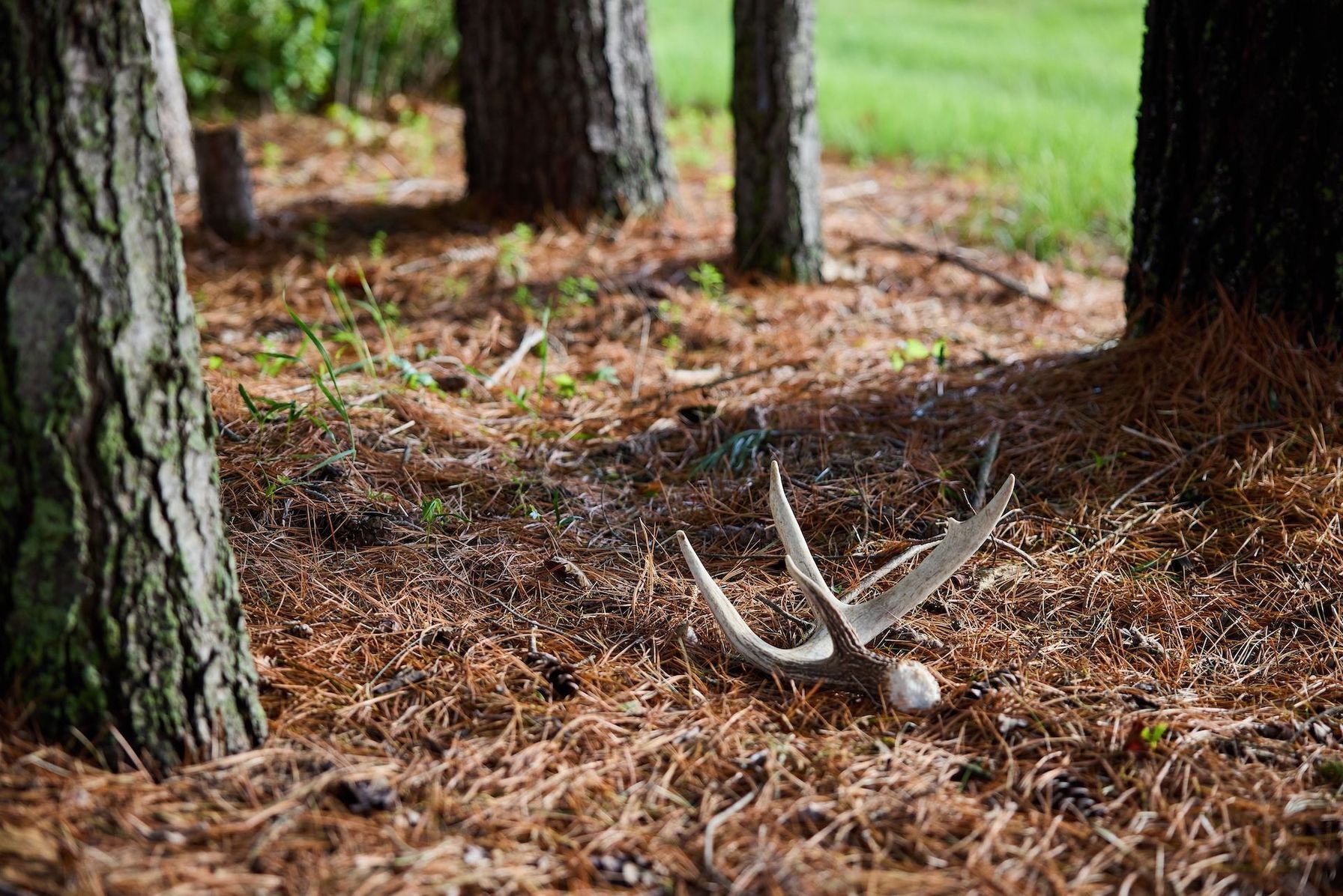
Look anywhere a deer would have to jump or duck: a creek, a fence, a downed tree, or even a tree suspended over a major whitetail highway. These locations make for great spots for a pair of sheds jarred off from a buck passing through.
However, be careful when crossing or approaching the fence lines of a property. Make sure you have permission to cross onto private land before doing so.
If you shed hunt with the HuntWise app, you have access to the most updated property lines and property owner information. Contact a private land hunter during your hunt so you don't lose valuable time or information that could help you tag a deer next season.
Tip #5: Seek Whitetail Shelter
Hunters often look only down at the ground sheds when they should actually be looking for a lone cedar or pine. Whitetail deer love these areas, as they offer additional shelter from snow and wind.
When hunting sheds, try to look under every pine tree and cedar, as these are common areas for a whitetail to take shelter. Antlers on the ground in these areas can be worth marking in your HuntWise app to return to during whitetail season.
Tip #6: Look on the South Side
The south side of a ridge tends to receive the most sun. Deer will often bed in these locations, especially on sunny days in winter.
So, don't forget to walk the south side of a hill on any land you plan to hunt. You could walk into a goldmine of sheds and an excellent spot for your hunt next season.
Tip #7: Don't Be Afraid to Meander Close to Suburban Neighborhoods
Whitetails are just like any other animal. When hungry, they search wherever the hunt leads them and do whatever it takes to find food.
Therefore, you might not have to wander deep in the woods to find shed antlers.
Don't be shy about walking close to neighborhoods with wooded areas. A whitetail doesn't mind robbing a birdfeeder or grazing near homes where food can be found. Mark these spots on your map, but be careful about hunting too close to homes or people when the season starts.
Use information about deer and shed antlers near neighborhoods to deepen your understanding of their movements and how they ultimately move through private or public hunting land in the area.
Tip #8: Hunt for Shed on a Sunny Day with No Snow
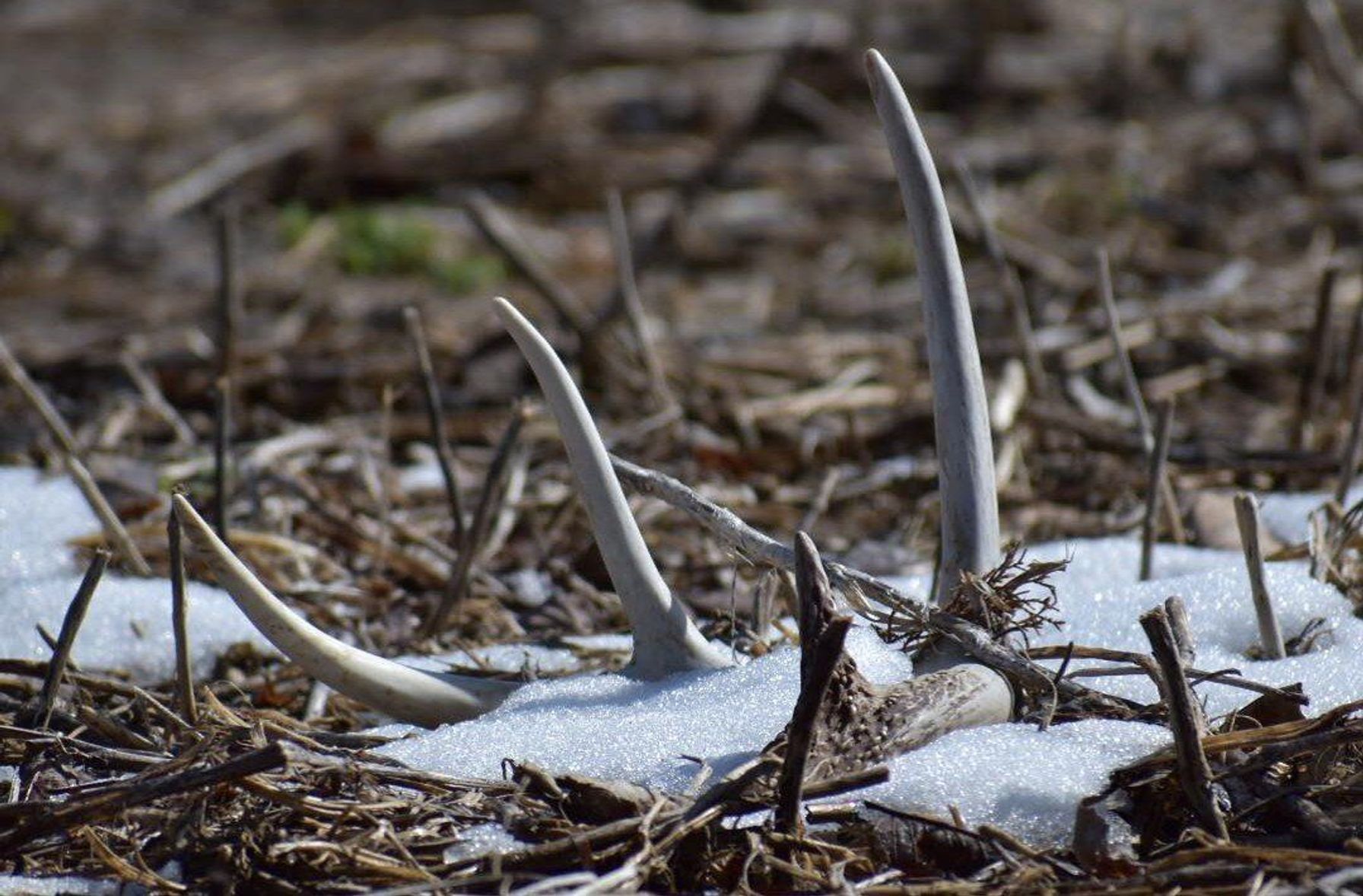
Antlers are generally light brown to off-white and can easily blend into a snowy environment. This can make shed hunting somewhat difficult.
Therefore, if you have the time and flexibility, always prioritize your shed hunting time on bright days with minimal snow. The contrast in color between antlers and matted-down leaves or the snow-free ground makes them far easier to find.
Just remember to keep the sun at your back. This helps reduce the glare on the ground and improve your visibility. Even without snow on the ground, sheds can often be hard to spot in the leaves, grass, and mud.
Tip #9: Mark Where You Find Your Shed on HuntWise
We've mentioned it throughout these tips, but this top tip deserves its own place on our list.
Bucks often bed in the same general areas every winter. This means that the sheds you collected this year will likely be a hot spot for the next year.
As you collect sheds, mark the locations where you found them on the HuntWise app, just like you would mark a tree stand, and prepare yourself for another incredible hunting season each year.
Bonus Tip: Target the Best Time to Find Sheds
Just as with hunting live game, timing can be your ally in successful shed hunting.
Early spring can be the ideal time to find sheds, as winter snow melts away and you likely have some downtime between hunting seasons. Starting early in the day can also be a good time to get out and find shed antlers before lunch.
Use These Shed Hunting Tips and HuntWise to Find Those Antlers
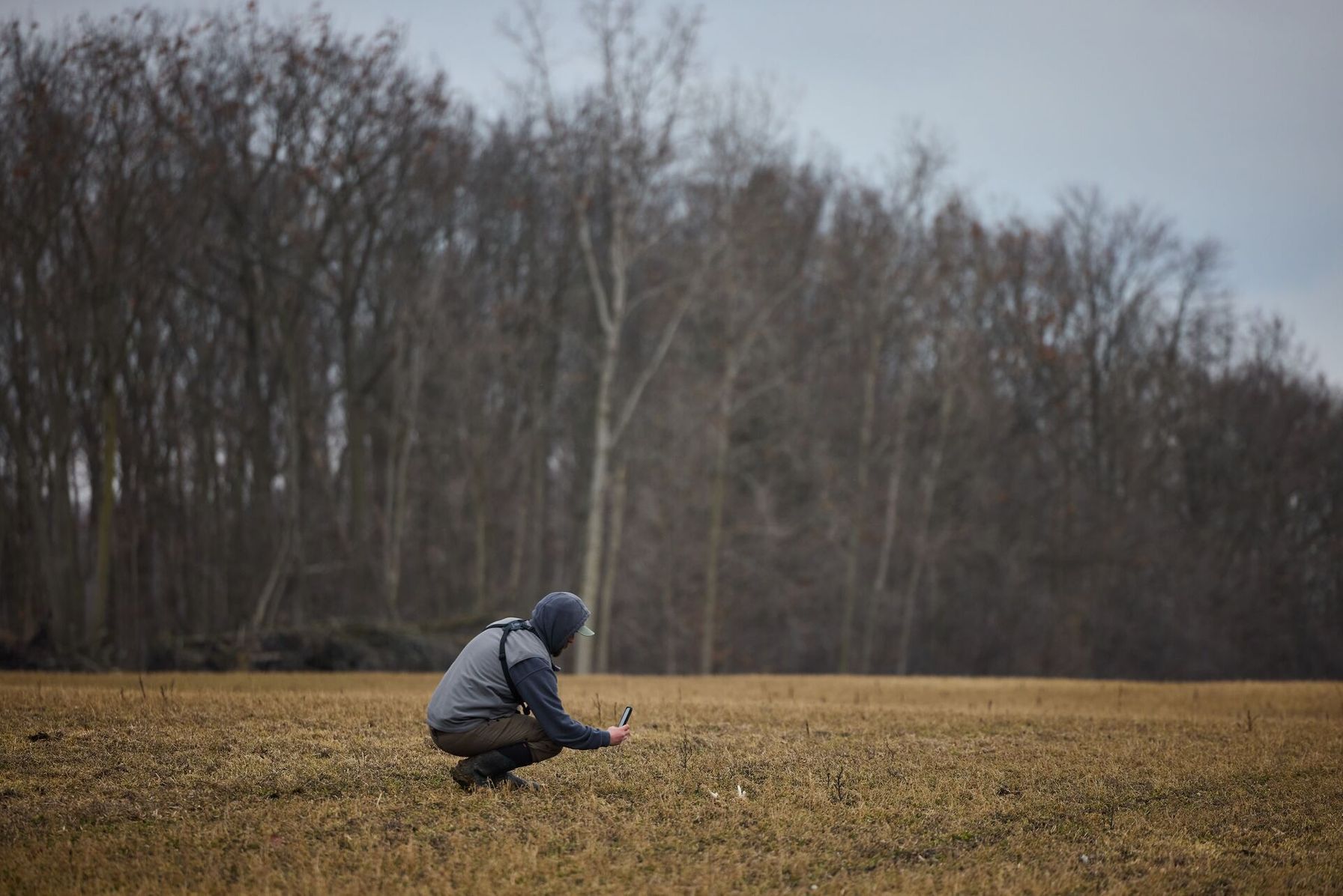
Using good technology and a solid strategy can help you find more shed antlers, thus informing your hunt next fall! Shed hunting and scouting go hand-in-hand, so make sure you're tracking your path in HuntWise and making good notes about what you see and where you find antlers.
Even with these tips, remember that shed hunting should be fun! It's a good reason to get outdoors between hunting seasons. Be patient, take your time, and enjoy it.
Download HuntWise and hunt for sheds using the app free for seven days!
Content most recently reviewed and updated January 8, 2026.
Frequently Asked Questions (FAQs)
We have answers to common questions about shed hunting!
Q: Why is it illegal to collect sheds?
A: In some areas, collecting sheds is illegal seasonally or in specific places to protect wildlife (especially deer and elk) during late winter and early spring when they’re stressed and low on energy. The rules are intended to reduce pressure from people pushing animals out of critical habitat. However, outside of those windows or areas, shed collecting is often legal.
Q: What’s the best time of year to go shed hunting?
A: The best time of year to go shed hunting is late winter through early spring (typically February to April) after bucks have dropped their antlers but before new vegetation makes them hard to spot. Exact timing depends on species, weather, and location.
Q: How to be better at shed hunting.
A: To be better at shed hunting, focus on where animals winter: south-facing slopes, food sources, bedding areas, fence crossings, and travel corridors. Walk slowly, glass often, learn local movement patterns, and time your trips after storms or snowmelt when sheds stand out.


