

If you are new to turkey hunting and want to be successful in the woods, planning your journey beforehand will be crucial to your outcome. However, aside from using the right hunting app (i.e., HuntWise), nothing will increase your chances of success like learning to lure birds into range successfully.
So, that's why we want to give you our expert insights on properly selecting and using turkey calls to your utmost advantage.
Below, we share some of our best tips for selecting the right turkey call (or calls) and for practicing and familiarizing yourself with your newly purchased turkey calls. We also highlight our top three favorite turkey calls for beginners.
Updated March 23, 2026
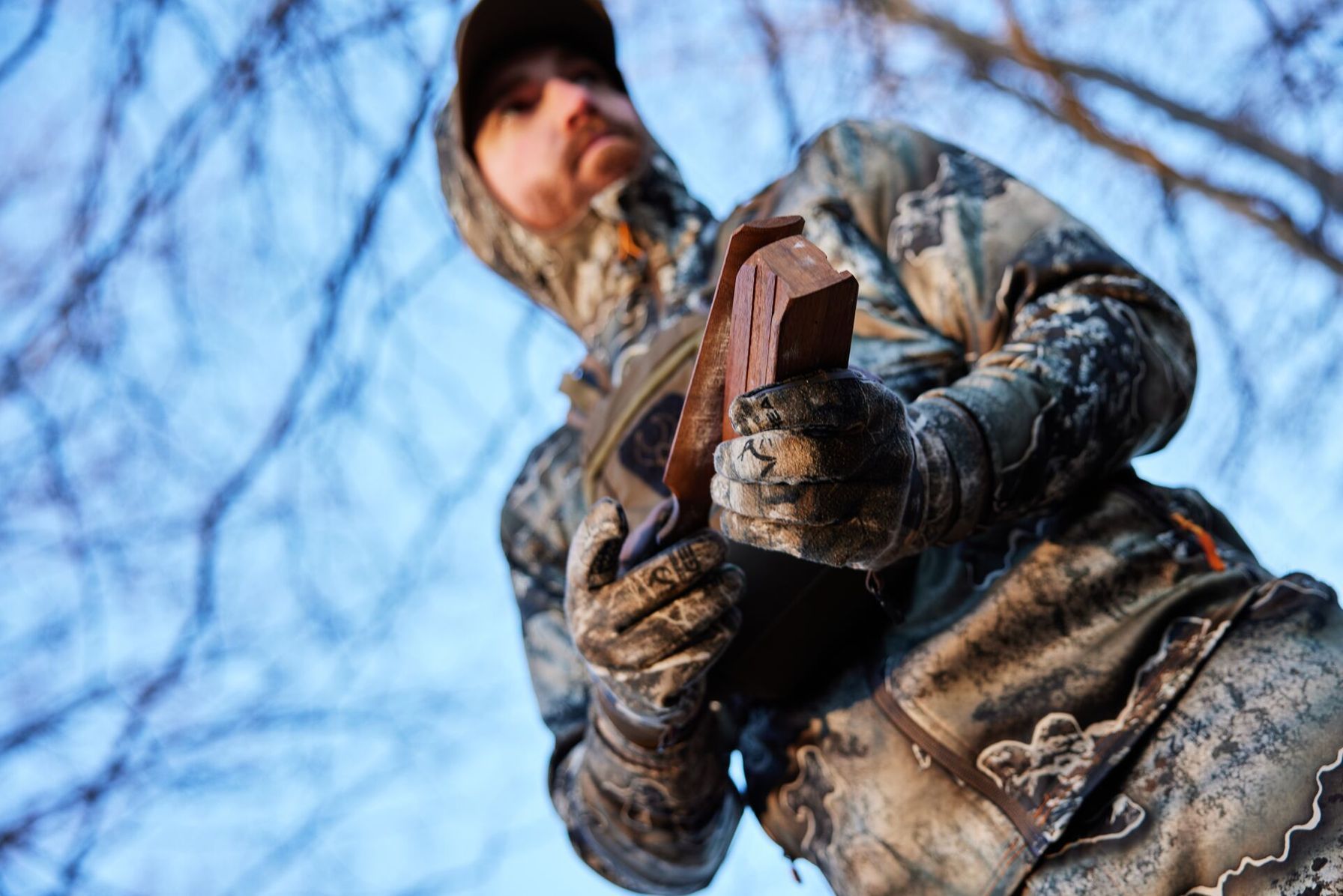
What Are the Best Beginner Calls?
Some of the most popular and timeless calls are box, push-and-pull, diaphragm, and crow calls.
Each call has specific reasons for what makes them the most popular, but ultimately, choose something that makes you feel confident going into your fundamental season. Do your research, check them out in person, and get a feel for a variety before you gear up with your call of choice.
The Top 3 Beginner Turkey Calls to Get You Started
Let's cut to the chase of where to start building your turkey call collection. Here are HuntWise's top three recommended calls for new turkey hunters.
Top 3 Turkey Calls for Beginners | |
|---|---|
1. Houdini Strut Commander Box CallWe can describe the Houdini Strut Commander Box Call in three simple words: the highest quality. This box call is perfect for beginners and experts alike, as they are hand-built and tuned by the pros of the Strut Commander crew. These folks are deeply passionate about turkeys and produce quality calls ideal for beginners to make a variety of sounds. | 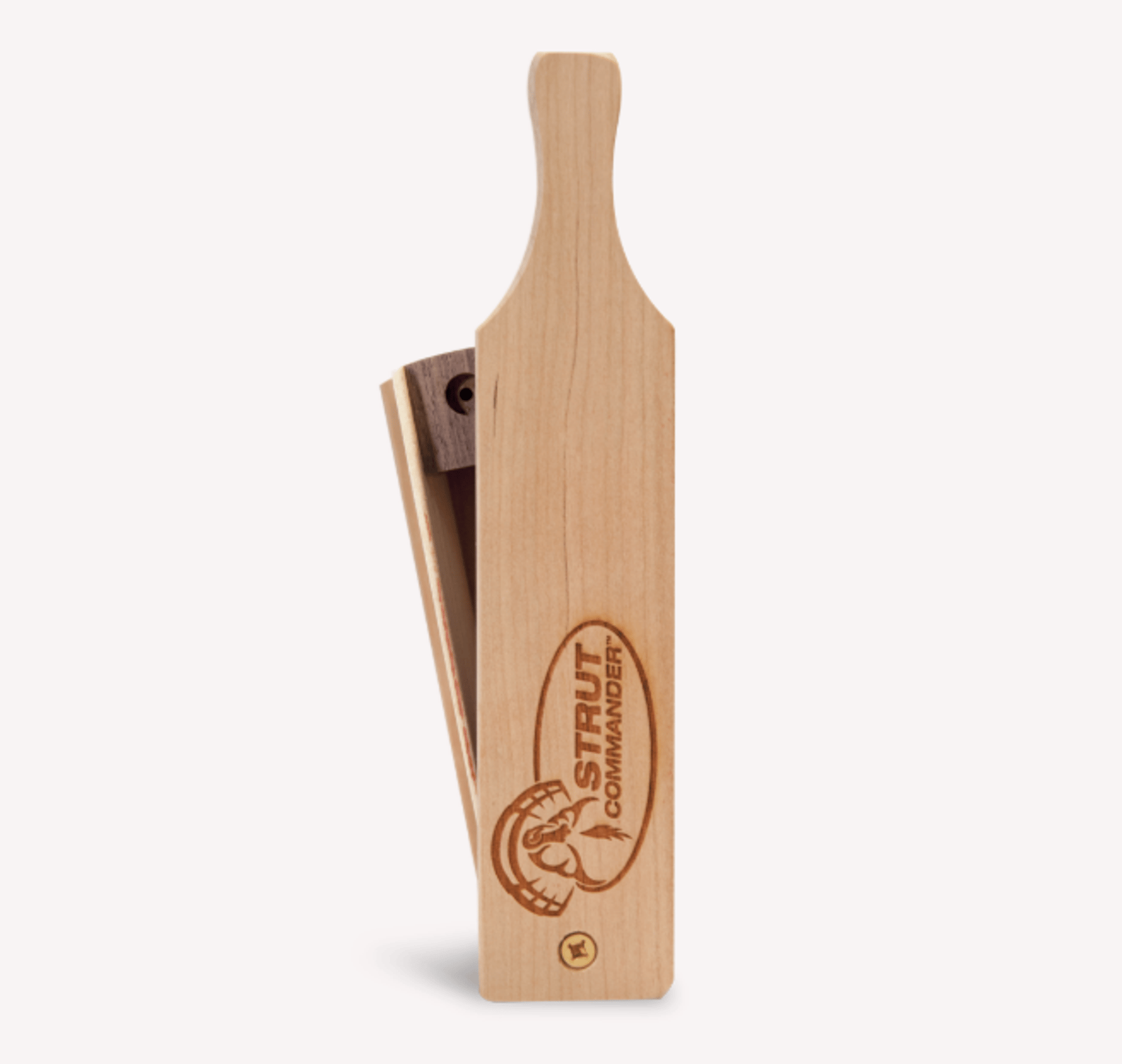 |
2. 3 Pack Strut Commander Mouth CallsThe Commander 3-Pack Strut Commander Mouth Calls from H.S. Strut® is ideal for beginners. Not only do you receive three mouth calls for about $22, but their smaller build makes it very easy for younger or new turkey hunters to get a feel for mouth calls. | 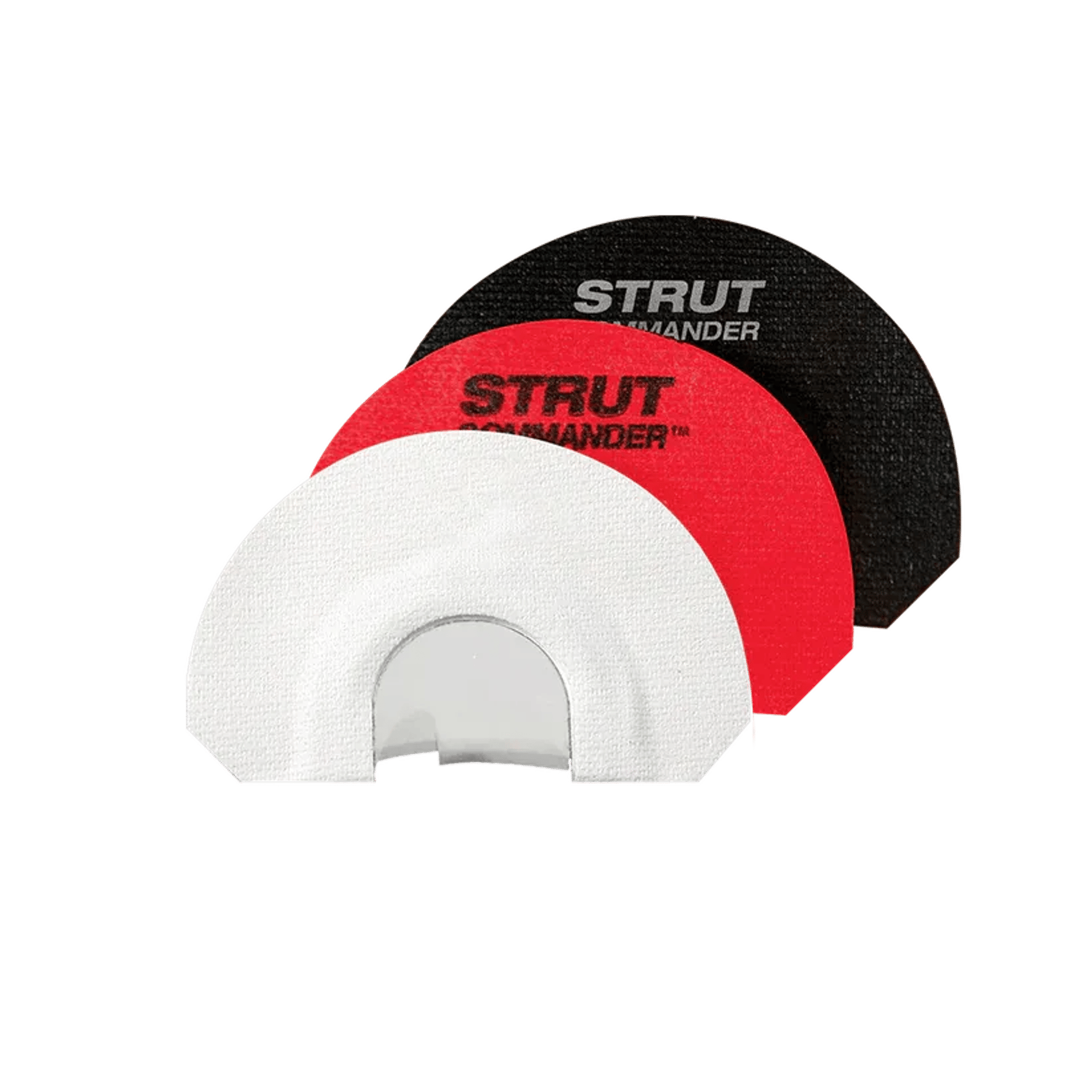 |
3. Quaker Boy Cyclone™ Waterproof Push-Pin Turkey CallFinally, the Quaker Boy Cyclone Waterproof Box Call is incredibly easy to use. It has adjustable volume, making it very easy for beginners to practice the intensity of their call. It also does not require sanding or chalking, making it very easy to use year after year. This call is an excellent option to start with as you learn to hunt turkey. | 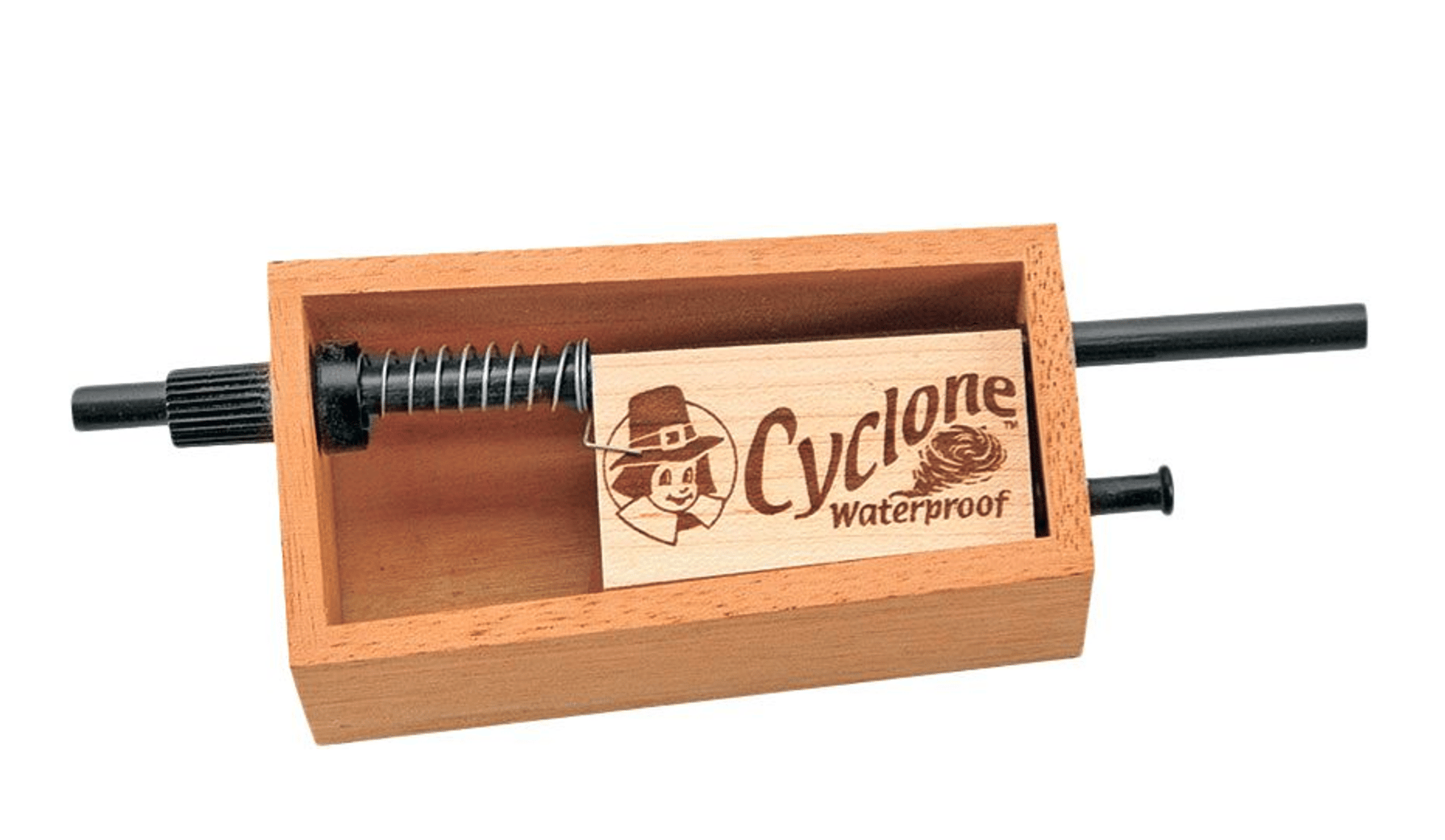 |
Next, we'll highlight how different calls work and when and how to use them in the field.
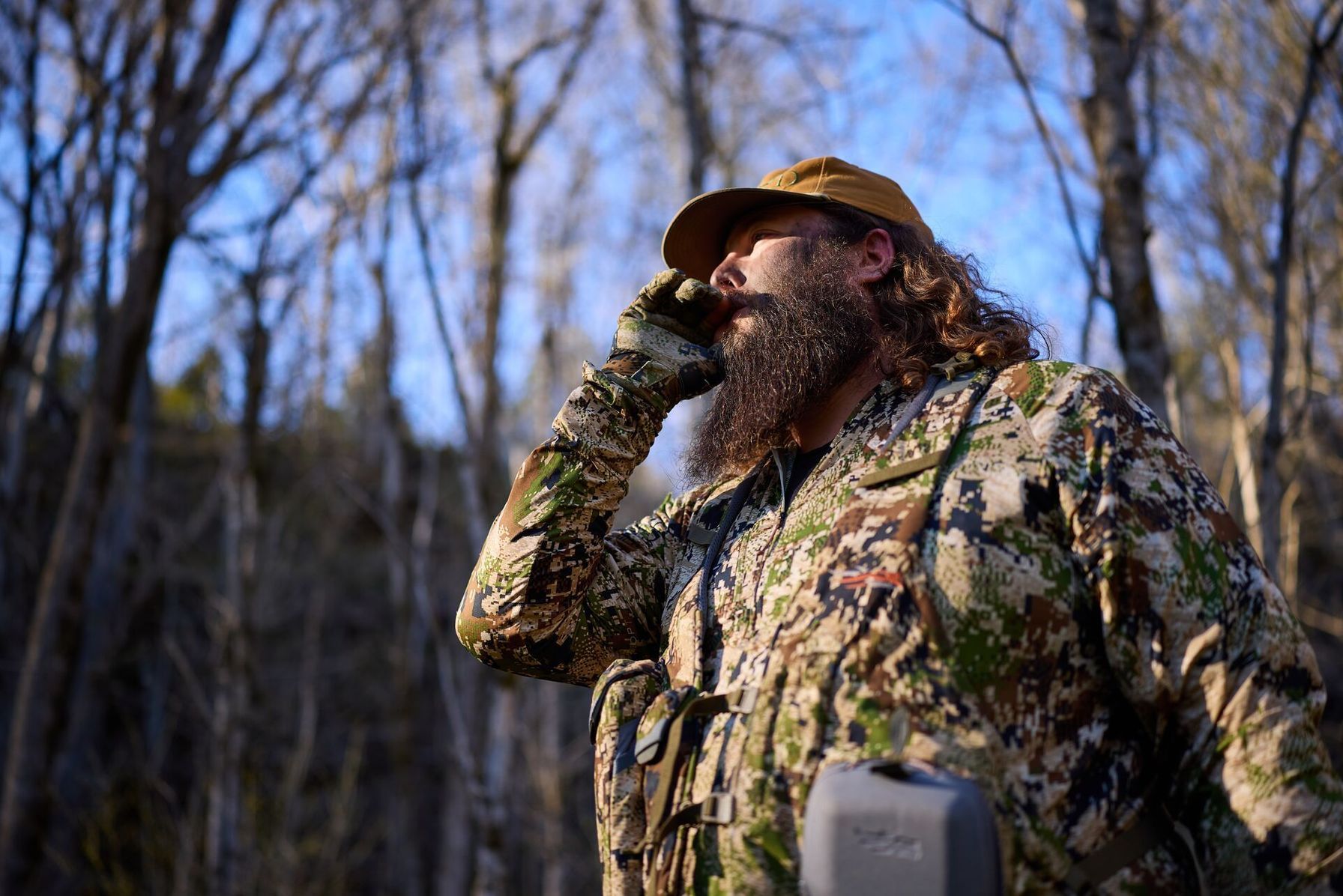
5 Turkey Calls (and Their Specializations)
Let's go a bit beyond "just" beginner calls and talk about some of the easiest turkey calls to use and what each turkey call is known for. These five popular calls work differently from each other and serve different purposes on a hunt. Even if they're on the list of beginner calls, experienced turkey hunters use these calls routinely to call in turkeys during a hunt.
1. Box Calls
What is the easiest turkey call to use? Box calls are a wonderful beginner call for turkey hunters. They are easy to operate, and their vocals sound very realistic.
With different grips, you can sound like more than just one turkey. This type of call is considered a "friction call."
Most box calls are made of wood and make noise when creating friction using the paddle. Box calls are often louder than other turkey calls, making them ideal when the woods are fairly quiet.
2. Push-and-Pull Calls
Push-and-pull calls, once mastered, are very consistent. These calls are known for their consistent sounds that pressure a bird to respond or react.
However, these calls are often overlooked by experts — but they can be very useful for beginner hunters.
Push-and-pull calls can cut into almost any condition with loud, realistic vocals. Most of these calls have a wide range of vocalizations, making them an excellent call for beginners.
3. Diaphragm Calls
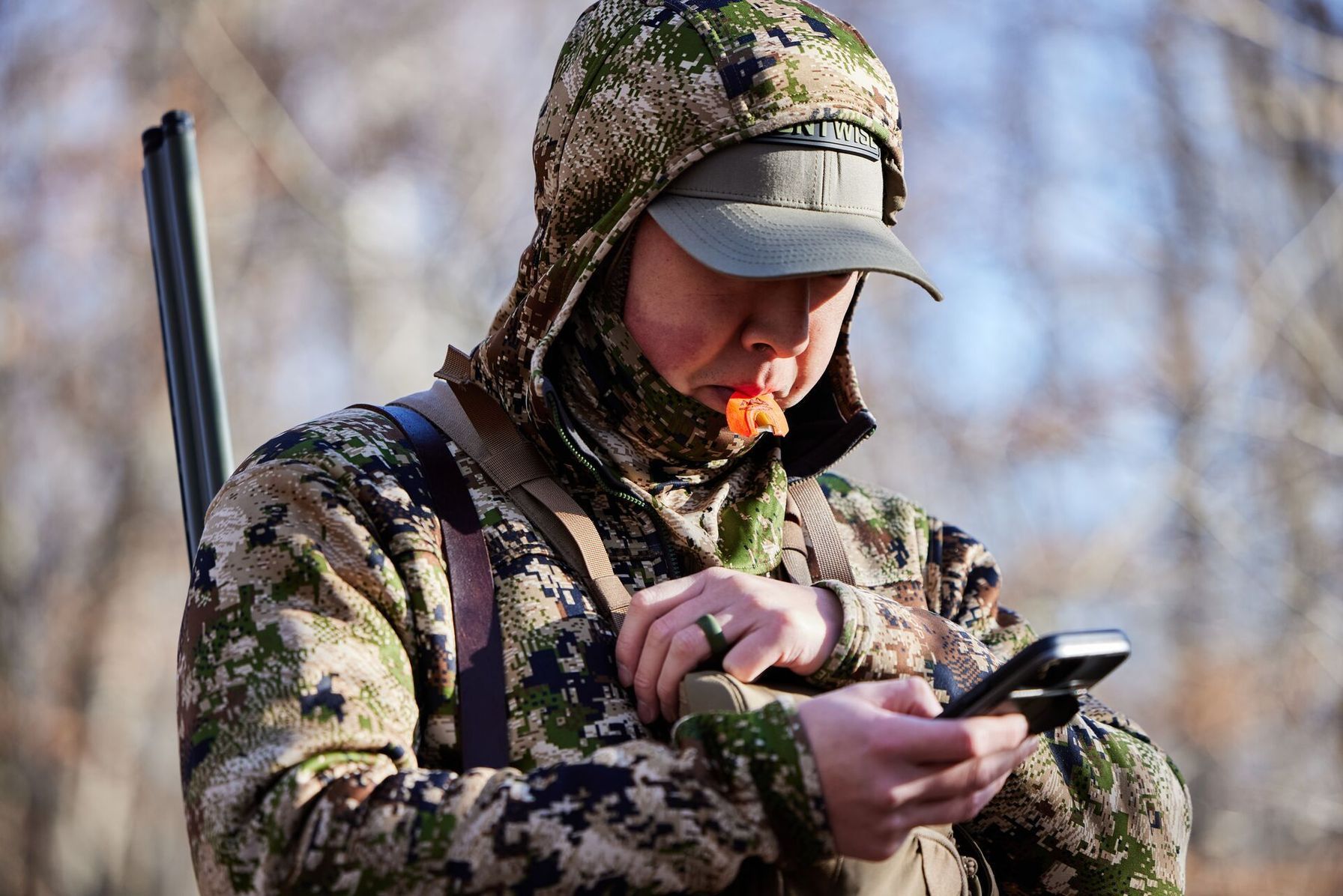
These calls are often referred to as "mouth calls" and are among the most inexpensive yet overused in the woods. Although it can be very handy, as it is small and easy to carry around for a long day in the woods, these calls take quite a bit more practice.
You work a diaphragm call by using your tongue against the rubber at the roof of your mouth. Nevertheless, although you may not be using this call right away, it is not bad to purchase and practice with one daily, since they are small and fairly cheap to buy.
4. Crow (Locator) Calls
A crow call is ideal for locating a turkey and eliciting a response. This call almost forces a gobbler to answer, helping you easily target his location.
One of the best times to use this call is when the woods are almost silent, with no activity. At this time, the turkey is most likely irritated by the lack of mating action and will respond.
Therefore, if your hunting day is going slow for the most part, pull out your crow call and get to locating those birds.
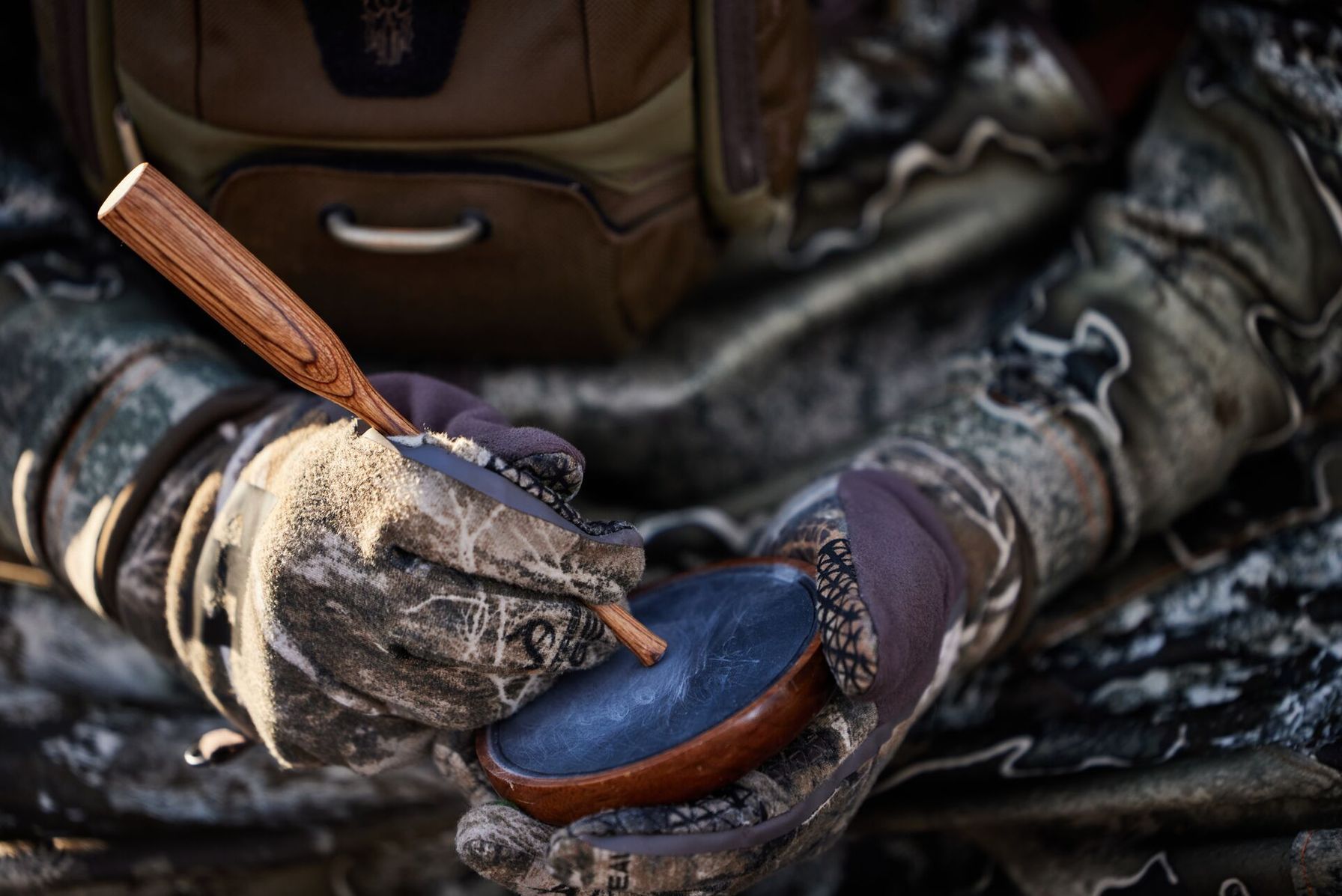
5. Slate (or Pot) Friction Calls
The slate call stands out for its ease of use and its ability to produce incredibly lifelike turkey sounds. Unlike some calls that require significant practice to sound convincing, most hunters can pick up a slate call and start making realistic hen vocalizations with just a little effort.
This makes it especially appealing for beginners, while still offering the control and nuance experienced hunters appreciate.
Another major advantage is its reliability in less-than-ideal weather. Windy conditions or shifting weather patterns can make other calls harder to control or hear — but a slate call cuts through the noise with consistent, natural tones.
A slate call consists of a round “pot” with a friction surface (often slate, glass, or ceramic) and a striker. By dragging or tapping the striker across the surface, you create vibrations that mimic the sounds of a hen turkey.
How To Select Your First Turkey Call
When selecting the turkey call you plan to use for a hunt, there are two things you must keep in mind:
- How easy it is to use
- How comfortable you are carrying it with you
As a less-experienced turkey hunter, the best thing you can do is help yourself feel comfortable and confident. No one wants to go to the field worried they won't make the right sound or have enough time to make the correct call.
So, choose a turkey call that helps you feel confident, assured, and ready to harvest.
How To Familiarize Yourself With Your New Call
As we mentioned, feeling comfortable and confident using your new turkey call is crucial.
One of the best things you can do to ensure that you are comfortable is to practice with your call a lot. You know that saying, "practice makes perfect." Well, as cliché as that saying may be, it couldn't be truer.
Practice in advance before going into the field to bring home a gobbler. Turkeys are easy to fool yet very stubborn at the same time. That's why it's crucial to understand your type of call's specialty and the types of vocalizations it is best known for.
Check out the video below for a quick overview of some of the calls we highlighted today!
Call Your Way to Success With the Right Turkey Calls This Spring
Although there are hundreds of different shaped, sized, and colored calls — all with different specialties — we feel that the calls we highlighted today will help you feel confident (with a little practice) and help you become a more well-rounded turkey hunter.
With your turkey call in one hand and your HuntWise maps in the other, you will surely see success. Our property line information is the most up-to-date you'll find in a hunting app, allowing you to find the best plots of land to set up and call in those gobblers. Then, using the map layers and satellite imagery, you can find turkey habitats on the land you plan to hunt.
Download and try HuntWise for free! Explore Pro and Elite features free during your first week in the app.
Content most recently reviewed and updated March 23, 2026.
Frequently Asked Questions (FAQs)
We have answers to your questions about the best turkey calls for beginners!
Q: What are the best turkey calls for beginners?
A: For beginners, friction calls like slate (pot) calls are often the best choice because they’re easy to learn and produce realistic sounds quickly. Box calls are another great option. They’re simple to operate and loud enough to locate birds at a distance. If you’re willing to practice more, diaphragm (mouth) calls offer versatility but have a steeper learning curve.
Q: How to use a turkey call for beginners?
A: To use a turkey call for beginners, start by learning a few basic sounds: yelps, clucks, and purrs. With a slate call, lightly drag the striker across the surface to create smooth, even tones. Focus on rhythm more than volume. Teal turkeys aren’t perfect, so slight variation helps. Practice short calling sequences, then pause and listen. Calling too often is a common beginner mistake.
Q: What attracts turkeys the most?
A: Turkeys are most attracted to realistic hen sounds, especially yelps and soft clucks that signal comfort and curiosity. During breeding season, gobblers respond strongly to hen calls. Movement, setup, and timing also matter. Being in the right place and sounding natural is often more important than calling loudly.
Q: What mistakes should you avoid when turkey calling?
A: The biggest mistake is overcalling. Too much noise can make turkeys cautious. Other common issues include calling too loudly when birds are close, using unnatural rhythms, and moving too much while calling. Also, avoid calling without a plan; always be ready, because a gobbler can appear quickly and quietly.


